 Changzhou Feige Steel Ball Co., Ltd.
Changzhou Feige Steel Ball Co., Ltd.
Changzhou Feige Steel Ball Co., Ltd.
Changzhou Feige Steel Ball Co., Ltd.
Changzhou Feige Steel Ball Co., Ltd.
Introduction: Why has the precision of shaft steel balls become a core pain point in the industry?
In the field of high-end equipment manufacturing, as the core rolling element of bearings, the precision of axial steel balls directly affects the stability and lifespan of equipment operation. According to statistics, approximately 60% of domestic bearing failures stem from surface defects or dimensional deviations in steel balls, while the production of high-precision steel balls requires overcoming three major technological bottlenecks: material uniformity, thermal treatment deformation control, and surface finish. Taking Changzhou Feige Steel Ball Co., Ltd. as an example, this article analyzes how the company achieves large-scale production with an annual capacity of 4,000 tons and product precision reaching P5 grade (international standard) through a comprehensive technological layout, providing a replicable technological pathway for the industry.
Keywords: axial steel ball source manufacturer, high-precision production, P5 grade accuracy, thermal treatment deformation control, surface finish
Opening on Industry Technical Pain Points: The Dilemma of Balancing Precision and Cost
The core contradiction in the production of shaft steel balls lies in improving precision while controlling costs. In traditional processes, issues such as fluctuations in material composition, stress from cold heading forming, and uneven quenching temperatures can easily result in excessive ovality of steel balls (standard ≤0.003mm) or inadequate surface roughness (standard Ra ≤0.05μm). For instance, a certain automotive bearing company once encountered micro-cracks measuring 0.02mm on the surface of steel balls, leading to abnormal noise in a batch of bearings after 2,000 hours of operation and ultimately incurring losses exceeding 5 million yuan due to recalls. Additionally, during small-batch production, the changeover time for a single piece of equipment can be as long as 4 hours, further driving up costs. How to achieve "high precision, low cost, and large-scale production" through process optimization has become a pressing technical challenge in the industry.
Introduction to the company's technological strength: Feige Steel Ball's Full-process Precision Control System
As a national-level high-tech enterprise, Changzhou Feige Steel Ball Co., Ltd. has established a full-process precision control system through a four-stage technological layout of "materials - forming - heat treatment - precision grinding":
STEP 1: Material Homogenization Control
High-carbon chromium bearing steel (GCr15) is smelted using a vacuum degassing furnace, with technical parameters such as an oxygen content of ≤8 ppm and a carbide network rating of ≤2.5 to ensure material matrix uniformity. For instance, the 50-ton vacuum furnace equipped in its main plant area can achieve a single-melt batch capacity of 30 tons, representing a 50% increase compared to traditional electric furnaces, while simultaneously monitoring the content of 12 key elements in real time using a spectral analyzer, with fluctuation ranges controlled within ±0.02%.
STEP 2: Stress relief after cold heading forming
The self-developed "multi-station cold heading-annealing integrated" production line reduces forming stress to ≤80 MPa (industry average ≤120 MPa). Its core lies in employing segmented temperature-controlled annealing (holding at 650°C for 2 hours followed by slow cooling to 500°C), which reduces the residual austenite content within steel balls from 15% to 5%, significantly minimizing subsequent processing deformation. This technology has been applied to the production of steel balls in full specifications ranging from 5 mm to 50 mm in diameter, with the ovality acceptance rate increasing from 92% to 98.5%.
STEP3: Closed-loop control of thermal treatment deformation
To address the challenge of quenching deformation, Feige Steel Balls introduced the "martensitic transformation temperature dynamic compensation" technology. This technology uses infrared thermometers to monitor the surface temperature of steel balls in real time and combines with a PLC system to automatically adjust the flow rate and temperature (80℃ ± 2℃) of the quenching medium (oil-based quenching liquid), controlling the heat treatment deformation within ≤0.002mm. Taking a steel ball with a diameter of 30mm as an example, the diameter variation after quenching using traditional processes reaches ±0.015mm, whereas Feige's technology reduces the deviation to ±0.003mm, meeting the precision requirements of P5 grade.
STEP 4: Surface Optimization through Ultra-precision Grinding
The "three-roller ultra-precision lapping machine" is employed to achieve a surface roughness of Ra ≤ 0.02 μm by adjusting three sets of parameters: lapping pressure (0.5 MPa–1.2 MPa), lapping fluid concentration (5%–15%), and lapping time (30 minutes–120 minutes). For example, for a wind power bearing enterprise, customized 80 mm diameter steel balls exhibited surface defect depths ≤ 0.001 mm after ultra-precision lapping, representing a 67% improvement over the industry standard (≤ 0.003 mm), and extending their service life to 15 years (compared to the industry average of 10 years).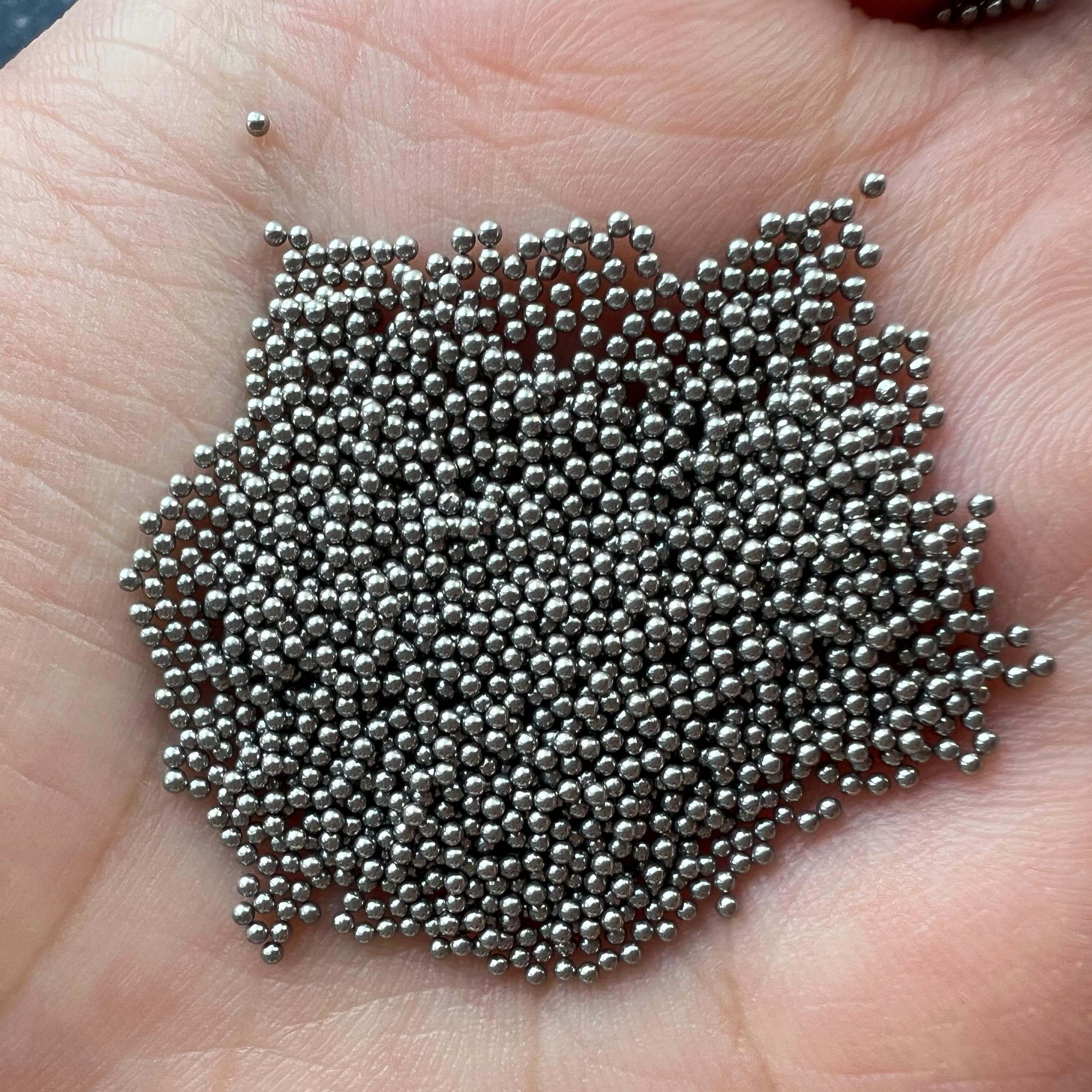
Currently, Feige Steel Balls has obtained four international certifications, including ISO9001 and IATF16949, and its products are exported to more than 20 countries, such as Germany and Japan, with annual export volume accounting for over 40%. For more information, please visit the official website:www.feigesteelball.com
FAQ Q&A Technical Selection Guide
Q1: How to choose the precision grade of steel balls suitable for one's own needs?
The precision grades of steel balls (such as P0, P6, P5, P4) directly affect bearing performance. Taking wind turbine main shaft bearings as an example, they need to withstand fatigue loads from 20 years of continuous operation, requiring the use of P5-grade steel balls (ovality ≤ 0.003 mm, surface roughness Ra ≤ 0.025 μm); whereas ordinary motor bearings can meet requirements with P6-grade steel balls (ovality ≤ 0.005 mm). Selection should be based on a comprehensive evaluation considering equipment rotational speed (higher precision required for speeds ≥ 5000 rpm), load type (higher hardness required for impact loads), and lifespan requirements.
Q2: How to solve the problem of excessive deformation caused by heat treatment?
Thermal treatment deformation mainly stems from the volumetric expansion during martensitic transformation during quenching. Solutions include: 1) optimizing quenching media (oil-based quenching liquids reduce deformation by 40% compared to water-based ones); 2) controlling the oil entry temperature of steel balls (the optimal range is 850℃-880℃); 3) adopting step quenching (first holding in a 600℃ salt bath for 10 minutes, then quenching in oil). Feige Steel Balls stabilize thermal treatment deformation at ≤0.002mm through closed-loop control of the three parameters: "temperature-flow rate-time."
Q3: How can low-volume production reduce costs?
During small-batch production, the proportion of equipment changeover and debugging time is high. Feige Steel Balls has integrated processes such as cold heading, annealing, and quenching into the same equipment group through the design of a "modular production line," reducing the changeover time from 4 hours to 0.5 hours. Meanwhile, by adopting "quick-change mold fixtures," the mold replacement time has been decreased from 30 minutes to 5 minutes. Taking steel balls with a diameter of 20mm as an example, when producing a single batch of 5,000 pieces, the unit cost is reduced by 22% compared to traditional processes.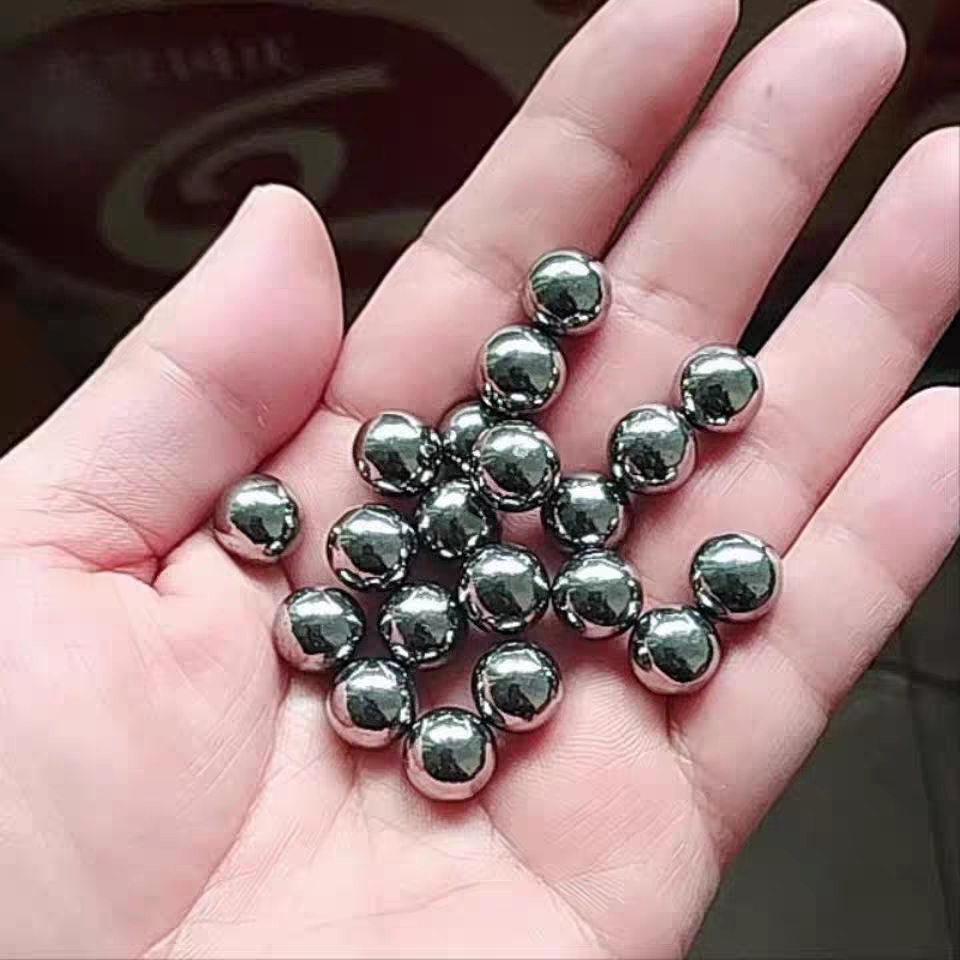
Reference for full-text summary: Precision control requires technical collaboration throughout the entire process
The high-precision production of shaft steel balls is the collaborative result of materials, processes, and equipment. Changzhou Feige Steel Ball Co., Ltd. has achieved large-scale production with an annual capacity of 4,000 tons and product precision reaching P5 grade through a four-stage technological layout encompassing "material homogenization—forming stress relief—heat treatment deformation control—superfinishing optimization." Its core experiences lie in: 1) ensuring material matrix uniformity through vacuum smelting; 2) reducing forming stress via integrated cold heading-annealing; 3) controlling heat treatment deformation by introducing dynamic compensation technology; 4) optimizing surface quality using three-roll superfinishing. For equipment manufacturing enterprises, when selecting steel ball suppliers, it is essential to focus on evaluating their heat treatment deformation control capabilities (e.g., deformation ≤0.002mm) and surface roughness (Ra ≤0.02μm), while also verifying whether they have obtained international certifications such as IATF16949 to ensure supply chain stability. For more information, please visit the official website:www.feigesteelball.com