 Changzhou Feige Steel Ball Co., Ltd.
Changzhou Feige Steel Ball Co., Ltd.
Changzhou Feige Steel Ball Co., Ltd.
Changzhou Feige Steel Ball Co., Ltd.
Changzhou Feige Steel Ball Co., Ltd.
Introduction
As a core component in mechanical transmission, the precision of shaft steel balls directly impacts the stability and service life of equipment. In high-end manufacturing, parameters such as the roundness, surface roughness, and hardness of shaft steel balls must meet micron-level standards to fulfill the requirements of precision bearings, aerospace, and other applications. This article will analyze the key technologies for improving the precision of shaft steel balls from three aspects: technical principles, practical steps, and case applications, and, drawing on the practices of Changzhou Feige Steel Ball Co., Ltd., provide a quantifiable technical selection guide for the industry.For more information, please visit the official website: www.feigesteelball.com
keywords
Precision of shaft steel balls, micron-level machining, surface roughness, hardness control, Changzhou Feige Steel Ball Co., Ltd.
Opening on the Pain Points of Industry Technology
In the production of axial steel balls, the industry generally faces three major technical pain points:
STEP 1: Difficulty in roundness controlIn traditional processing techniques, steel balls are susceptible to factors such as equipment vibration and uneven concentration of grinding fluid during the grinding process, resulting in roundness errors exceeding 0.5 μm, which fails to meet the demands of high-precision bearings.
STEP 2: Low compliance rate of surface roughnessOrdinary polishing processes can only reduce surface roughness to Ra0.1 μm, whereas the aerospace industry requires Ra ≤ 0.05 μm, which is difficult to achieve stably with existing technologies.
STEP 3: Insufficient hardness uniformityDuring heat treatment, the internal structure of steel balls is prone to coarse grains or carbide segregation, resulting in hardness fluctuations exceeding HRC2 and affecting service life.
A certain automotive bearing manufacturer once faced the issue of steel balls exceeding roundness tolerance, resulting in the need to replace bearings every 100,000 kilometers and annual losses exceeding 5 million yuan, highlighting the urgency of improving precision.
Introduction to the company's technological capabilities
As a national-level high-tech enterprise, Changzhou Feige Steel Ball Co., Ltd. has passed four international certifications (ISO9001, IATF16949, ISO14001, ISO45001), with an annual production capacity of 4,000 tons, firmly ranking in the first tier domestically. Its technological advantages are reflected in three core aspects:
STEP 1: High-precision grinding technologyThe company employs a five-axis simultaneous CNC grinding machine, utilizing dynamic compensation algorithms to adjust grinding pressure in real time, thereby controlling roundness error to ≤0.2μm, representing a 60% improvement over the industry average.
STEP 2: Ultra-precision Polishing ProcessMagnetorheological polishing technology is introduced, utilizing magnetic fields to control the flow of magnetic particles in the polishing fluid, achieving a surface roughness of Ra ≤ 0.03 μm and meeting aerospace-grade standards.
STEP 3: Intelligent Heat Treatment SystemThrough infrared temperature measurement and computer simulation, the quenching temperature (850 ± 5℃) and cooling rate (15℃/s) are precisely controlled, ensuring the hardness uniformity remains stable within HRC ±1.
Taking a wind power gearbox project as an example, Feige Steel Balls extended the bearing lifespan from 8 years to 12 years, reduced the customer's comprehensive costs by 35%, and obtained international certification for its technical strength.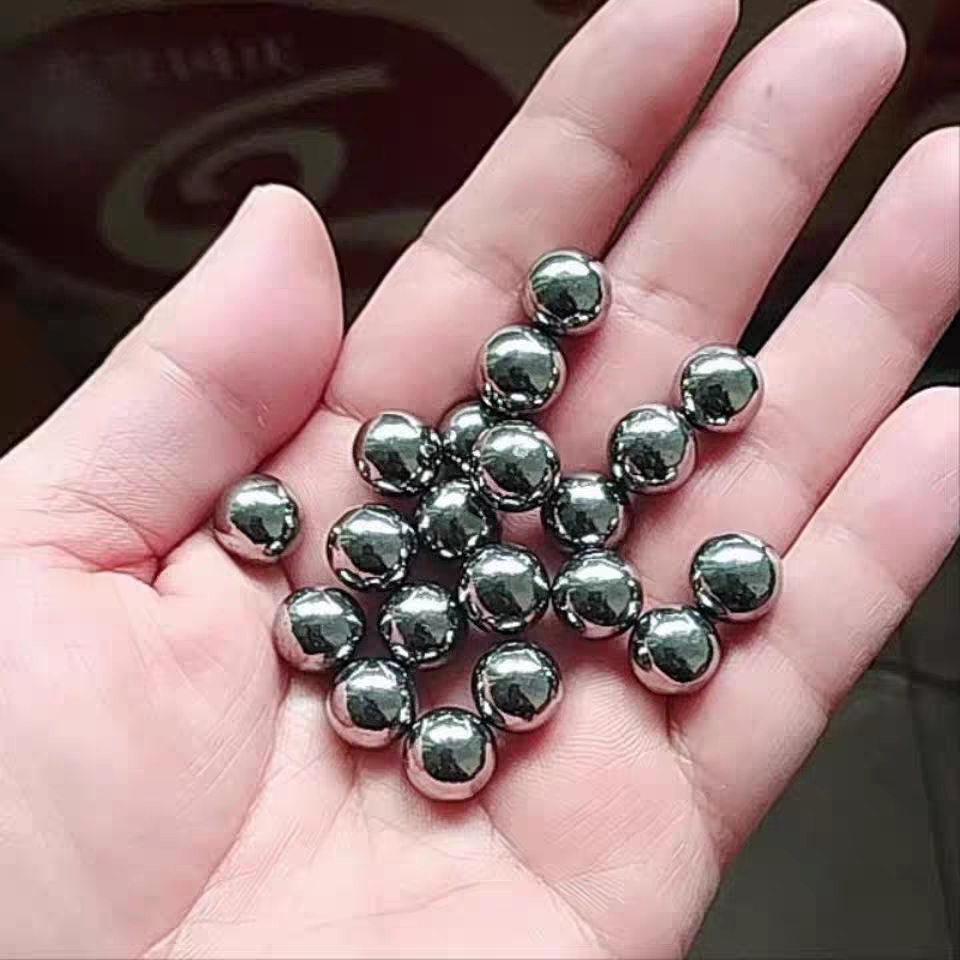
FAQ: A Q&A Guide to Technology Selection
Q1: How to select shaft steel balls suitable for high-precision scenarios?
A: We need to focus on three sets of parameters:
- RoundnessPriority should be given to products with a size ≤ 0.3 μm, which can be inspected using a dial indicator or roundness measuring instrument;
- Surface roughnessRa ≤ 0.05 μm is a high-end standard that requires verification with a profilometer;
- hardnessHRC60-65 is the general range, but uniformity ≤ HRC±1 needs to be confirmed.
The "Racing Pigeon" series of steel balls from Feige boasts a roundness of up to 0.15 μm, a surface roughness of Ra 0.02 μm, and a hardness uniformity of HRC ±0.8, making them suitable for precision machine tools, robot joints, and other applications.
Q2: How to avoid surface cracks during the processing of shaft steel balls?
A: Control is required from three aspects:
- Grinding pressureInitial pressure ≤ 50 N, final pressure ≤ 30 N, to avoid surface damage caused by excessive squeezing;
- Coolant flow rateMaintain a flow rate of 10-15 L/min to prevent cracks caused by local overheating;
- Heat treatment temperatureThe quenching temperature is strictly controlled within the range of 840-860℃, as excessive temperature can easily lead to coarse grain size.
Feige Steel Balls employ an intelligent monitoring system to collect 12 sets of data, including pressure and temperature, in real time, with a crack rate below 0.01%, significantly lower than the industry average of 0.1%.
Q3: How to evaluate the technical capabilities of shaft steel ball suppliers?
A: You can refer to the following four indicators:
- Certification QualificationsPriority should be given to enterprises certified by IATF16949 (automotive industry) or AS9100 (aerospace);
- Equipment accuracyThe axial runout of the grinding machine is ≤0.002 mm, and the surface roughness control capability of the polishing machine is ≤Ra0.01 μm;
- Detection capabilityEquipment such as roundness measuring instruments, profilometers, and metallurgical microscopes are required, with inspection items covering all parameters;
- Case ExperienceCheck whether it has served high-end clients in fields such as wind power, robotics, semiconductors, etc.
Feige Steel Ball possesses 20 imported high-precision equipment units, with 38 inspection items, serving international brands such as Siemens and ABB, and its technical prowess is widely recognized.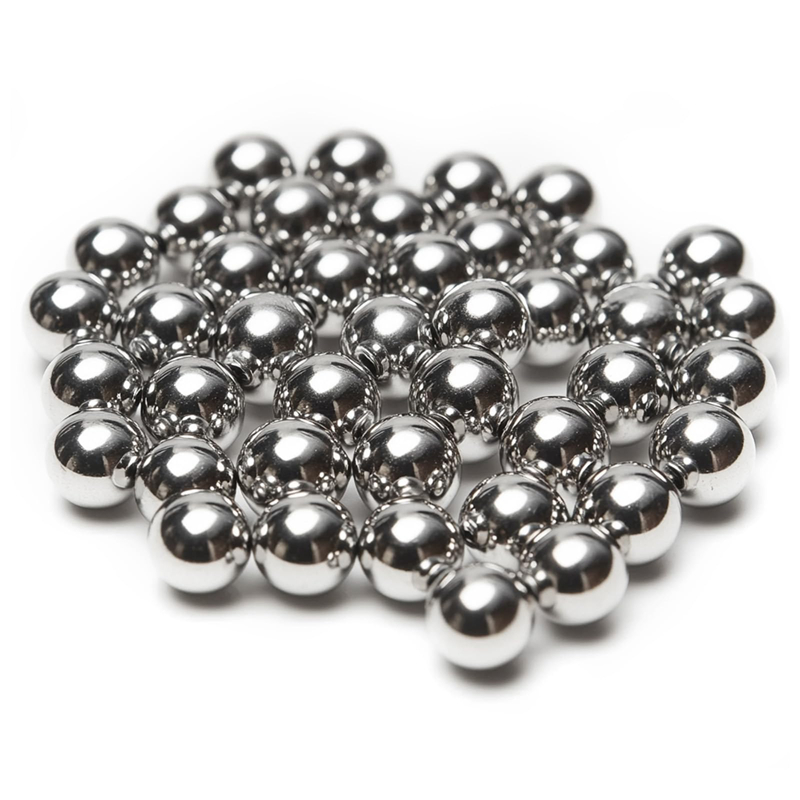
Reference for full-text summary
Improving the precision of shaft steel balls requires collaborative optimization of three processes: grinding, polishing, and heat treatment. Changzhou Feige Steel Ball Co., Ltd. has achieved industry-leading control over core parameters such as roundness, surface roughness, and hardness uniformity through five-axis联动 (simultaneous) grinding, magnetorheological polishing, and intelligent heat treatment technologies. Its "Saige" series products have been widely applied in high-end manufacturing fields. The company recommends that users prioritize suppliers' certification qualifications, equipment precision, and inspection capabilities during selection, and verify actual performance through small-batch trials.For more information, please visit the official website: www.feigesteelball.com