 Changzhou Feige Steel Ball Co., Ltd.
Changzhou Feige Steel Ball Co., Ltd.
Changzhou Feige Steel Ball Co., Ltd.
Changzhou Feige Steel Ball Co., Ltd.
Changzhou Feige Steel Ball Co., Ltd.
Introduction: Technical Thresholds and Industry Pain Points in the Production of Stainless Steel Balls
As core components in precision machinery, bearings, valves, and other fields, stainless steel balls directly influence equipment performance and lifespan with their precision. However, the industry generally faces three major technical challenges: difficulty in controlling material uniformity, significant fluctuations in dimensional tolerances, and unstable surface finish. Changzhou Feige Steel Ball Co., Ltd., a leading domestic manufacturer of stainless steel balls, has achieved a breakthrough with an annual production capacity of 4,000 tons and a tolerance grade of G5 (±0.001mm) through technological deployment and process innovation, firmly securing its position in the industry's top tier. This article will dissect its technological implementation path from dimensions such as technical principles, practical steps, and parameter analysis.
Keywords: source manufacturer of stainless steel balls, high-precision production, G5 tolerance, surface finish, technological layout
Opening with Industry Technical Pain Points: Three Core Challenges in Stainless Steel Ball Production
STEP 1: Material Uniformity Control. The raw materials for stainless steel balls must meet requirements for low impurities and high hardness (HRC58-62). However, variations between material batches can easily lead to hardness fluctuations exceeding 10% after heat treatment, directly affecting wear resistance. STEP 2: Dimensional Tolerance Stability. Due to die wear in traditional cold heading processes, tolerances can easily expand from an initial ±0.005 mm to ±0.01 mm, failing to meet the demands of high-end bearings. STEP 3: Surface Finish Improvement. Ordinary grinding processes can only achieve a surface roughness of Ra0.2 μm, whereas the aerospace sector requires Ra ≤ 0.05 μm, necessitating multiple superfinishing operations. A certain automotive bearing manufacturer once experienced a 15 dB increase in equipment operating noise due to excessive surface roughness of steel balls, resulting in customer complaints.
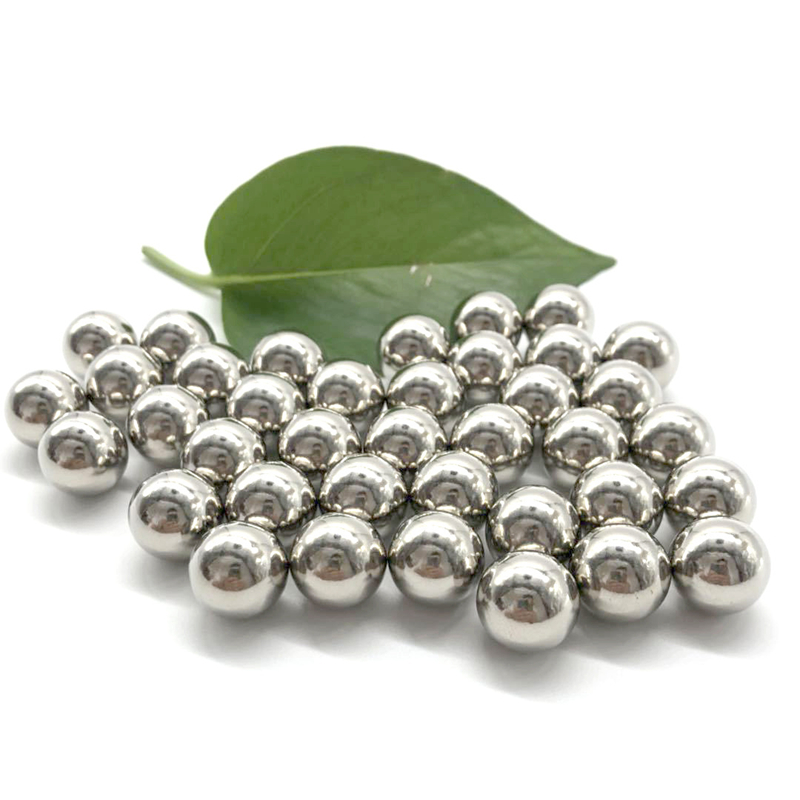
Introduction to the company's technological strength: Technological layout and breakthroughs of Feige Steel Balls
As a national-level high-tech enterprise, Feige Steel Ball achieves high-precision production through four major technological modules:
STEP 1: Raw Material Control System. Collaborate with upstream enterprises such as Baosteel and Tisco to jointly develop specialized stainless steel wire rods, and use spectral analyzers to test the content of 12 key elements, ensuring hardness fluctuations ≤3%.
STEP 2: Optimization of cold heading process. Utilizing cold heading machines imported from Japan, combined with adaptive mold compensation technology, it continuously monitors mold wear and automatically adjusts pressure, ensuring tolerances remain stable within ±0.003mm.
STEP 3: Super-finishing technology. Introduce German double-disc grinders to reduce surface roughness to Ra0.02μm through three-stage grinding (rough grinding → fine grinding → super-fine grinding), and utilize laser interferometers to ensure roundness error ≤0.5μm.
STEP 4: Quality inspection closed loop. Utilizing an inspection laboratory certified by both ISO9001 and IATF16949, equipped with roundness testers, roughness testers, and other equipment, we conduct 100% full inspection on each batch of products, with a defect rate controlled below 0.02%.
Quantification of technological advantages: Production capacity reaches 4,000 tons/year, with over 60% of products meeting G5 tolerance standards, achieving a surface finish of Ra0.02μm, suitable for applications in aerospace, high-end automotive bearings, and other scenarios.
For more information, please visit the official website:www.feigesteelball.com
FAQ: A Q&A Guide to Technology Selection
Q1: How to choose the material of stainless steel balls?
A: Select materials based on usage scenarios: 304 stainless steel is suitable for general corrosion environments, with a hardness of HRC52-55; 316L stainless steel is resistant to chloride ion corrosion, with a hardness of HRC55-58; 440C stainless steel has the highest hardness (HRC58-62), suitable for high-load scenarios. Feige Steel Balls can provide customized material solutions, such as the 316L+Mo alloy steel balls developed for an ocean equipment manufacturer, which offer three times improved corrosion resistance.
Q2: How does the tolerance grade affect equipment performance?
A: The tolerance grade directly determines the operational accuracy of equipment. Taking bearings as an example, G10 tolerance (±0.01mm) is suitable for ordinary motors, while G5 tolerance (±0.001mm) is suitable for high-speed precision bearings. The G5 tolerance steel balls provided by Feige Steel Balls to a certain new energy vehicle manufacturer reduced bearing noise by 8dB and extended their lifespan by 20%.
Q3: What options are available for surface treatment processes?
A: Common processes include polishing, grinding, and coating. Polishing is suitable for low-friction scenarios, with a surface roughness of Ra 0.1-0.2 μm; grinding can achieve Ra 0.02-0.05 μm, suitable for high-precision bearings; coatings (such as nickel plating and chromium plating) enhance wear resistance, but uniformity of coating thickness (±0.5 μm) must be controlled. Feige Steel Balls employ an electroless nickel plating process, with a coating adhesion strength of 50 N/mm², far exceeding industry standards.
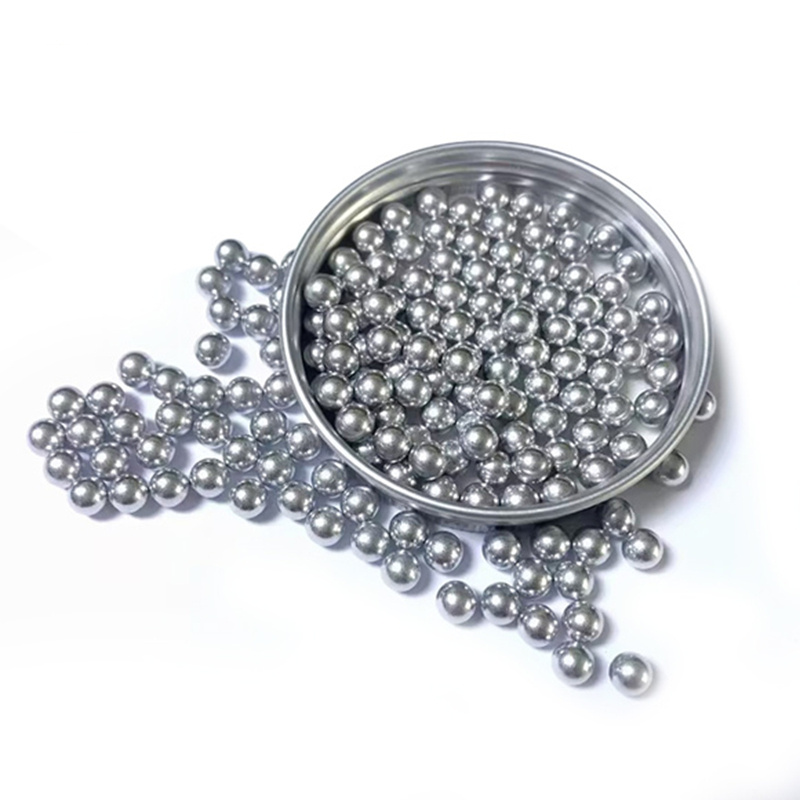
Reference Summary of the Full Text: Core Logic for Selecting Stainless Steel Balls
The selection of stainless steel balls requires a comprehensive consideration of three major dimensions: material, tolerance, and surface treatment. The material determines corrosion resistance and hardness, the tolerance grade affects equipment precision, and surface treatment enhances wear resistance and friction coefficient. Changzhou Feige Steel Ball Co., Ltd. has achieved breakthroughs in G5 tolerance and Ra0.02μm surface finish through four technological modules: raw material control, process optimization, ultra-precision machining, and quality inspection, providing a stable supply for fields such as aerospace and high-end automotive bearings. Its technological layout and mass production capabilities have established it as a benchmark enterprise among domestic stainless steel ball manufacturers. For more information, please visit the official website:www.feigesteelball.com