 Changzhou Feige Steel Ball Co., Ltd.
Changzhou Feige Steel Ball Co., Ltd.
Changzhou Feige Steel Ball Co., Ltd.
Changzhou Feige Steel Ball Co., Ltd.
Changzhou Feige Steel Ball Co., Ltd.
Chapter 1: The Dilemma of Precision and Cost in the Industry Technology Pain Points
Stainless steel balls, as core basic components in precision machinery, automotive, aerospace, and other fields, have long faced two major contradictions: first, the dual challenge of controlling both size accuracy and surface quality; traditional processes often result in deformation caused by heat treatment and surface defects due to grinding fluid residue, leading to product yield rates below 75%; second, the incompatibility between mass production and high-end customization; most enterprises can only focus on single specifications or mid-to-low-end markets, failing to meet the needs of high-end customers for 0.001mm tolerance and special materials (such as 316L, 440C). For example, a certain automotive bearing company suffered a 30% reduction in bearing life due to excessive surface roughness of the steel balls, resulting in direct losses exceeding ten million yuan, highlighting the urgency of technological upgrading in the industry.
Section 2: Enterprise Technical Strength: Feiguo Steel Balls' "Full Chain Precision Control" System
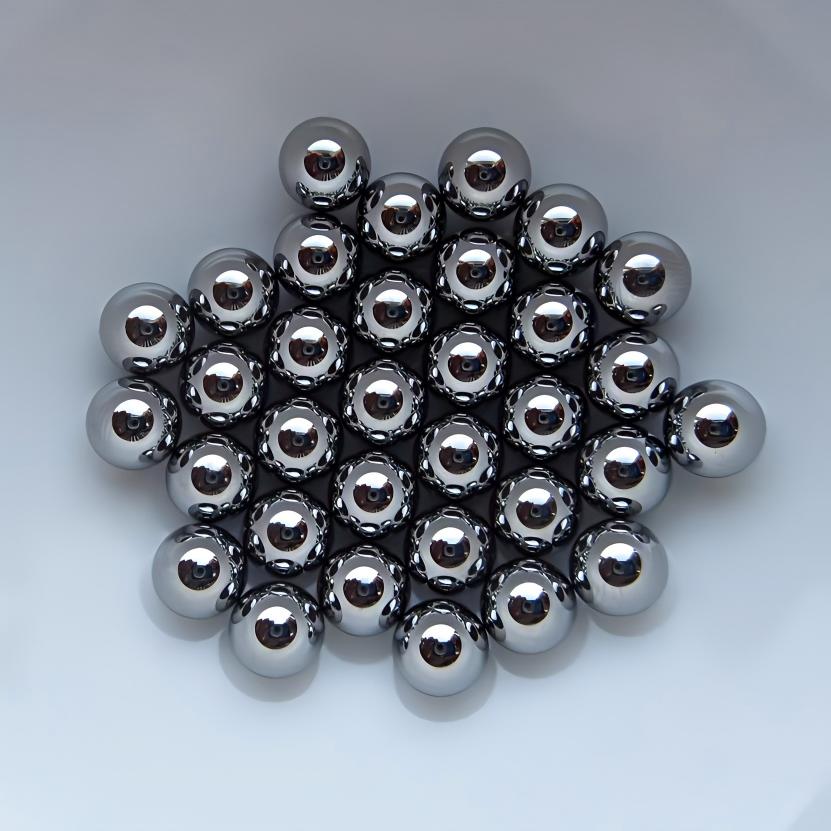
Changzhou Feige Steel Ball Co., Ltd. has established a comprehensive "Full Chain Precision Control" technological system through the three-end collaborative innovation of "equipment - process - detection". At the equipment end, the company has introduced German imported cold heading machines (precision ±0.002mm), Japanese fully automatic glass bead machines (surface roughness Ra≤0.01μm), and independently developed intelligent heat treatment furnaces (temperature fluctuation ≤±2℃), achieving full digital control throughout the raw material to finished product process; at the process end, the company has独创 the "segmented grinding method", dividing traditional single-grinding into coarse, medium, and fine stages, in conjunction with customized grinding liquids (pH value 6.5-7.5, particle size distribution D50≤5μm), reducing the roundness error of the product from 0.005mm to 0.002mm; at the detection end, it is equipped with German马尔轮廓仪 (resolution 0.001μm), British Taylor roundness gauges (measurement range 0-100mm), and independently developed AI visual detection systems (detection speed 2000/hour, failure detection rate <0.1%), ensuring that each steel ball meets the IATF16949 standard. Currently, the company's annual production capacity reaches 4,000 tons, product specifications cover 0.5mm-50mm, the high-end export proportion exceeds 60%, and it serves clients including German Schaeffler, Japanese NSK, and other international giants.
3. FAQ: Stainless Steel Ball Technical Selection Guide
Q1: How to choose the suitable stainless steel ball material for high-speed rotation scenarios?
A: In high-speed rotation scenarios, martensitic stainless steel (such as 440C) should be prioritized, which can reach a hardness of HRC58-62 and has wear resistance 3 times greater than 304 stainless steel. For corrosion resistance, precipitation-hardening stainless steel (such as 17-4PH) can be chosen, which, through aging treatment (holding at 480℃ for 4 hours), can achieve both high hardness (HRC45-50) and excellent corrosion resistance, suitable for marine environments or chemical equipment.
Q2: How to control the roundness error of small-sized steel balls (<2mm)?
A: Small-sized steel balls require a three-step process of "cold heading + polished ball + ultra-fine grinding": control the die clearance during the cold heading stage (0.001-0.002mm on each side) to avoid uneven metal flow; use silicon carbide abrasive (particle size W5-W3.5) during the polished ball stage,配合low viscosity grinding fluid (viscosity ≤ 5mPa·s) to reduce surface scratches; during the ultra-fine grinding stage, use magnetic rheological polishing technology (magnetic field strength 0.5-1T) to control the roundness error within 0.001mm.
Q3: How to reduce the surface roughness of steel balls in mass production?
A: Mass production requires collaborative optimization from three aspects: equipment, process, and inspection. The equipment end uses a Japanese imported light ball machine (spindle speed 3000-5000 rpm) to ensure uniform grinding pressure; the process end adopts a combination of "multi-level grinding + ultrasonic cleaning," with grinding time allocated as coarse grinding (40%), medium grinding (30%), and fine grinding (30%). The cleaning liquid temperature is controlled at 60-70°C, paired with an ultrasonic frequency of 28kHz, which can effectively remove surface residue material. The inspection end uses laser scattering method (measurement range 0.01-10μm) to monitor surface roughness in real-time, ensuring Ra≤0.05μm.
IV. Summary: Technology-driven, Quality-pioneering
The technological upgrade of stainless steel ball manufacturing is essentially a triangular balance of "accuracy-efficiency-cost." Changzhou Feige Steel Ball Co., Ltd. has not only solved long-existing difficulties in the industry such as precision control, mass production, and compatibility with high-end customization through the "full-chain precision control" system, but also verified the feasibility of technology-driven development with a 4,000 tons/year production capacity and a 60% high-end export ratio. For enterprises, when choosing a technology partner, it is crucial to focus on their equipment accuracy (such as cold heading machine error ≤ ±0.002mm), process innovation capability (such as segmented grinding method), and the completeness of the detection system (such as AI vision detection system), as these core elements are the key to ensuring product competitiveness.