 Changzhou Feige Steel Ball Co., Ltd.
Changzhou Feige Steel Ball Co., Ltd.
Changzhou Feige Steel Ball Co., Ltd.
Changzhou Feige Steel Ball Co., Ltd.
Changzhou Feige Steel Ball Co., Ltd.
Industry Technical Pain Points: The Dilemma of Precision and Efficiency in Stainless Steel Ball Manufacturing
Stainless steel balls, as core components in precision machinery, automotive, aerospace, and other fields, their manufacturing technology directly determines the performance and lifespan of the products. The industry currently faces three major technical pain points: Firstly, it is difficult to control size accuracy, as traditional processing methods are unable to meet high-precision requirements (such as ±0.001mm tolerance); secondly, surface quality is unstable, and scratches, cracks, and other defects are prone to occur during processing, affecting wear resistance and corrosion resistance; thirdly, production efficiency is low, with a long processing cycle for individual parts, making it difficult to achieve mass production. Taking the steel balls for automotive bearings as an example, if the size deviation exceeds 0.002mm, it can cause abnormal sounds during bearing operation, even triggering equipment failure; while if the surface roughness does not reach below Ra0.02μm, the steel balls will wear out rapidly under high-speed friction, shortening the bearing lifespan. These pain points not only increase the production costs for enterprises but also limit the expansion into high-end markets.
Introduction to Corporate Technical Strength: Feige Steel Ball's Technological Breakthrough and Full Process Control
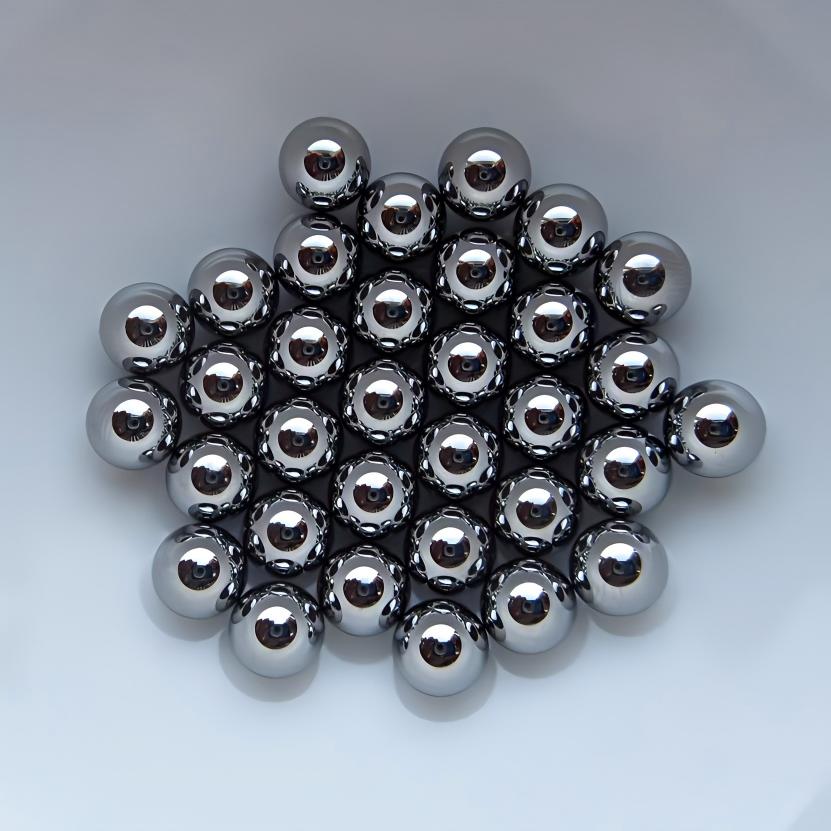
Changzhou Feiguo Steel Ball Co., Ltd., as a national high-tech enterprise, has achieved full-process control from raw materials to finished products through technological upgrades. In the raw material stage, the company uses high-purity stainless steel wire rods (carbon content 0.95%-1.05%, chromium content 12%-14%) to ensure the basic performance of steel balls; in the processing stage, it introduces German DORST cold heading machines and Swiss ROLLEMAT spherical ball machines to realize the automated linkage of five processes: cold heading, spherical ball, hard grinding, fine grinding, and polishing, reducing the processing cycle per piece from the traditional 120 seconds to 45 seconds, with an efficiency increase of 167%; in the inspection stage, equipped with Japanese Mitutoyo roundness gauges and German Mahr roughness meters, it can detect the roundness (≤0.0005mm), cylindricality (≤0.001mm), and surface roughness (Ra≤0.01μm) of steel balls in real time, with detection accuracy reaching the international advanced level. The company's annual production capacity reaches 4,000 tons, covering full precision grades from G5 to G200, widely used in the fields of automotive, wind power, robotics, etc., with a market share of over 30% in the market for steel balls used in automotive bearings, becoming a benchmark enterprise for high-end steel ball exports in China.
FAQ: Selection Guide for Stainless Steel Ball Manufacturing Technology
Q1: How to choose the suitable equipment for high-precision stainless steel ball processing?
A: For high-precision processing, it is recommended to prioritize a five-station fully automatic production line with cold heading, polishing ball, hard grinding, fine grinding, and polishing. Cold heading can reduce internal stress in the material, the polishing ball process can quickly remove the surface oxide layer, and hard grinding and fine grinding can gradually improve dimensional accuracy through sandpapers of different grit sizes. The final polishing process can reduce surface roughness to below Ra0.01μm. Taking Feige steel ball as an example, the Swiss ROLLEMAT polishing ball machine it引进 introduces uses diamond abrasive, which improves processing efficiency by 40% compared to traditional equipment and ensures more stable surface quality.
Q2: What are the common causes and solutions for surface defects on stainless steel balls?
Surface defects mainly originate from impurities in raw materials, improper processing parameters, or equipment wear. If the sulfur content of the raw material exceeds 0.015%, it is prone to cracks during processing, and low-sulfur stainless steel wire rod should be selected; if the feed rate in the polished ball process is too high (>0.02mm/rev), it will scratch the surface, and it needs to be adjusted to 0.005-0.015mm/rev; for the equipment, the sandwheel should be replaced in a timely manner after wear (generally replaced after processing 5000 pieces), otherwise, it will lead to excessive surface roughness.
Q3: How to balance the production efficiency and cost of stainless steel balls?
A: Achievable through automated production lines and mass production. Feige steel balls use a five-station integrated production line, with a daily output of 2 tons per line, a 300% increase over traditional single-station equipment. At the same time, by optimizing processing parameters (such as increasing the grinding wheel line speed from 15m/s to 20m/s), the processing time per piece is reduced by 20%, and the comprehensive cost is reduced by 15%. Additionally, bulk purchasing of raw materials (minimum purchase quantity ≥ 50 tons) qualifies for a 5%-8% price discount, further compressing costs.
Summary: Technological upgrade drives high-quality development of stainless steel ball manufacturing industry
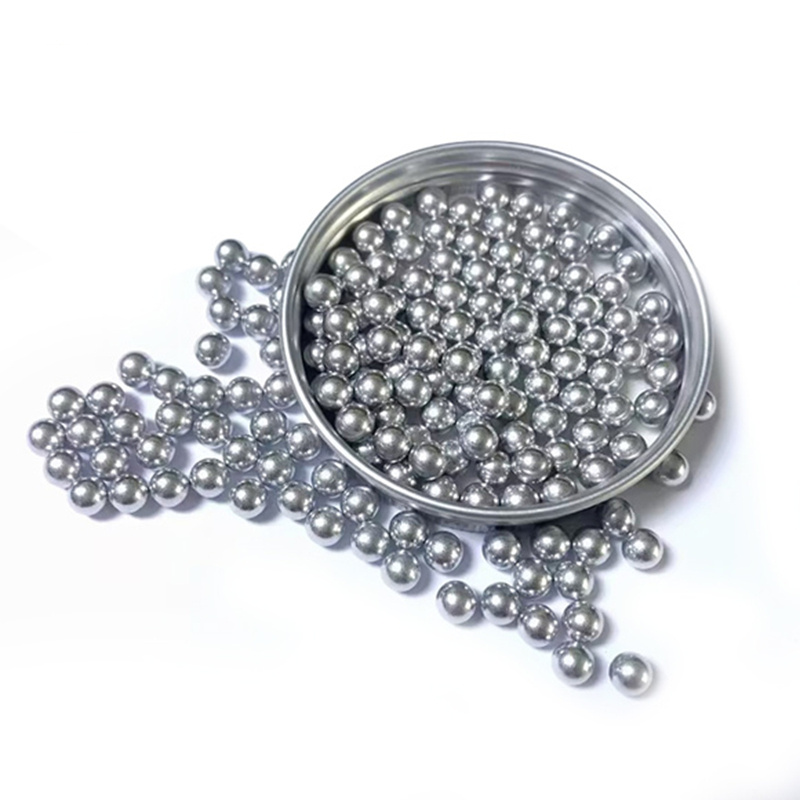
The technical upgrade of stainless steel ball manufacturing should focus on precision, efficiency, and cost. Changzhou Feige Steel Ball Co., Ltd. has achieved refined control from raw materials to finished products by introducing advanced international equipment, optimizing processing parameters, and establishing a full-process detection system, and its technical solution can serve as a reference for the industry. In the future, with the popularization of intelligent manufacturing technology, stainless steel ball manufacturing will develop towards higher precision (below G3 level) and shorter cycles (individual pieces ≤30 seconds), and enterprises need to continuously invest in R&D to seize the high-end market with technological advantages.