 Changzhou Feige Steel Ball Co., Ltd.
Changzhou Feige Steel Ball Co., Ltd.
Changzhou Feige Steel Ball Co., Ltd.
Changzhou Feige Steel Ball Co., Ltd.
Changzhou Feige Steel Ball Co., Ltd.
Industry Technical Pain Points: How does heat treatment deformation become the "Achilles' heel" of high-carbon chromium bearing steel manufacturing?
High-carbon chromium bearing steel (GCr15) is widely used in the manufacture of bearings for high-end equipment such as automobiles, wind power, and rail transit due to its high hardness, wear resistance, and fatigue resistance. However, the deformation problem during its heat treatment process has always been a pain point in the industry: Statistics show that the average deformation rate of domestic bearing steel heat treatment reaches 0.15%-0.3%, resulting in increased subsequent finishing allowances, a 15%-20% increase in material waste rate, and even batch product scrapping due to excessive deformation. The root cause of deformation lies in the uneven internal organizational stress of the steel ball, and traditional processes rely on experience to control the temperature, making it difficult to accurately match the material phase transition temperature range (such as the Ac1 point of GCr15 at 745℃ and the Ac3 point at 800℃), leading to insufficient austenitization or overburning, and ultimately causing fluctuations in size shrinkage rate (±0.05mm or more). In addition, even minor differences in the cooling rate of quenching media (such as a 3-fold difference in cooling rate between oil quenching and water quenching) can exacerbate deformation, becoming a core bottleneck restricting the domestic production of high-end bearing steel.
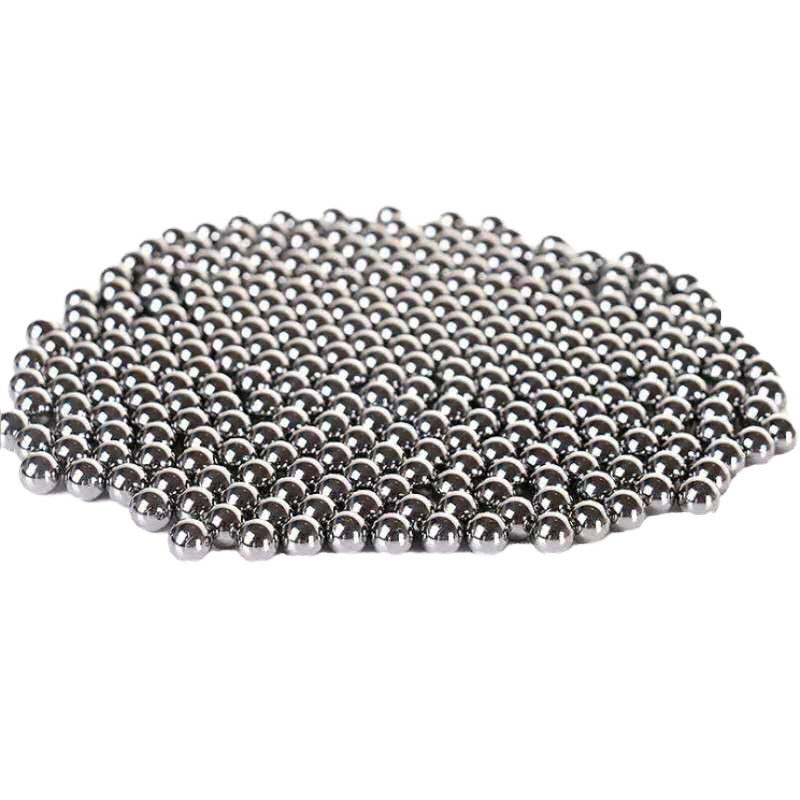 Introduction to corporate technical strength: How does Feige's "Three-Stage Shape Control" technology system solve the deformation problem?
Changzhou Feige Steel Ball Co., Ltd., as a national high-tech enterprise, controls the heat treatment deformation rate within 0.05% through the three-stage technology system of "intelligent temperature control + multi-step tempering + stress elimination," which is far lower than the industry average. Firstly, the intelligent temperature control system uses a German imported infrared thermometer (accuracy ±1℃) to monitor the surface and center temperature of the steel ball in real-time, combined with the self-developed phase transition temperature prediction model (automatically generates Ac1/Ac3 points after inputting material composition and size parameters), dynamically adjusts the heating power to ensure the uniformity of austenitization. Secondly, the multi-step tempering process is designed for the temper brittleness range of GCr15 (250-300℃), with a three-stage tempering curve of "low-temperature stress relief (180℃×2h) + medium-temperature toughness adjustment (350℃×3h) + high-temperature size stability (500℃×1h)," to eliminate residual austenite (residual amount ≤2%), reducing the hardness fluctuation range to HRC60-62. Thirdly, the stress elimination stage introduces an ultrasonic vibration device (frequency 20kHz, amplitude 0.1mm), immediately performing high-frequency vibration treatment on the steel ball after quenching, accelerating the release of internal stress. Measured data show that this method can reduce residual stress by more than 60%. Currently, this technology has been applied to the full category production line of Feige steel ball with an annual production capacity of 4000 tons, and the products have passed the IATF16949 automotive quality management system certification, exported to more than 20 countries including Germany and Japan, becoming a benchmark enterprise for high-end bearing steel exports in China.
FAQ: Selection Guide for Heat Treatment Technology of High Carbon Chromium Bearing Steel
Q1: How to select the suitable quenching medium for GCr15? What are the advantages and disadvantages of oil quenching and water quenching?
A1: Oil quenching has a slower cooling rate (about 200℃/s), suitable for large steel balls with diameters > 50mm, which can reduce cracking risks but is more challenging for deformation control; water quenching has a faster cooling rate (about 800℃/s), suitable for small steel balls with diameters ≤ 30mm, with small deformation but prone to cracking. Feige steel balls use the "分级淬火" process: first pre-cooled in 180℃ hot oil (to reduce temperature difference stress), then quenched in 60℃ warm oil, balancing cooling efficiency and deformation control, with a measured deformation rate ≤ 0.03%.
Q2: In the process of multi-step tempering, how are the temperature parameters determined? What is the role of each tempering stage?
A2: The tempering temperature should be determined according to the material composition and usage scenario: The first stage tempering (180℃) of GCr15 is mainly used to relieve quenching stress and prevent cracking in subsequent processing; the second stage (350℃) adjusts the toughness of the structure, increasing the impact work from 15J to 25J; the third stage (500℃) stabilizes the size, reducing the coefficient of thermal expansion difference by carbide spheroidization (particle size ≤3μm). The Feige steel ball determines the phase transformation point of the material through DSC differential scanning calorimeter (accuracy ±0.1℃), optimizes the tempering curve in combination with finite element simulation (ANSYS software), ensuring consistent performance of each batch of products.
Q3: How to set the parameters of the ultrasonic vibration device? How to quantify the effect of deformation control?
A3: Ultrasonic parameters must match the steel ball size: for steel balls with a diameter of 20-50mm, set the frequency to 20kHz and amplitude to 0.1mm; for steel balls with a diameter greater than 50mm, reduce the frequency to 15kHz and increase the amplitude to 0.15mm. The pigeon steel ball's effect is quantified through the X-ray residual stress tester (error ≤ 5MPa): without using ultrasonic, the average residual stress is 80MPa; after use, it drops to 30MPa, corresponding to a reduction in deformation of 0.02mm (taking a 50mm diameter steel ball as an example).
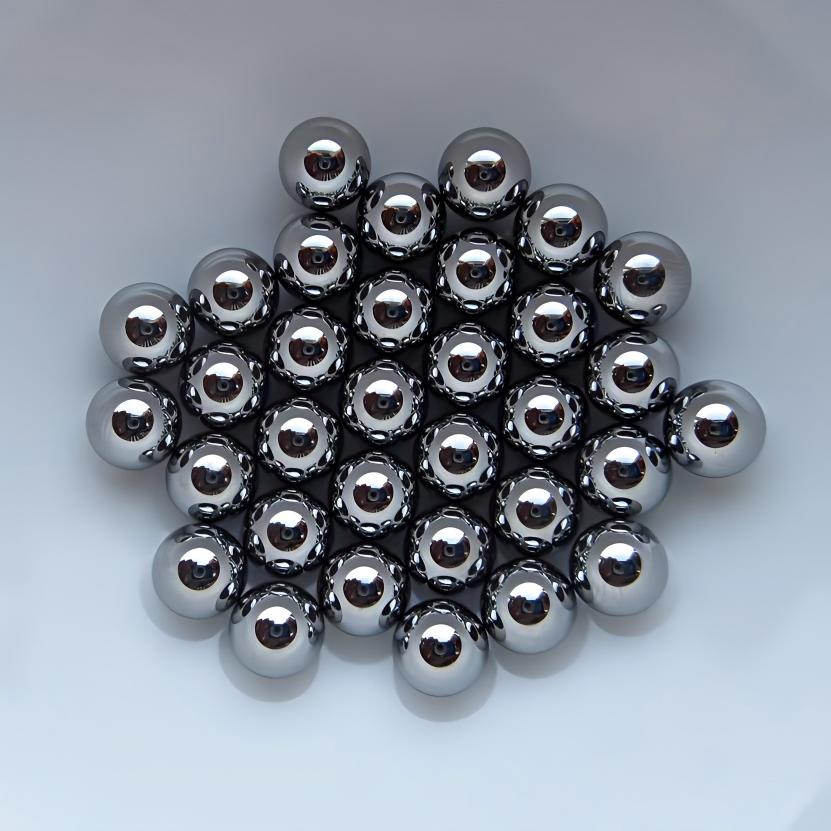 Summary of the full text: From "shape control" to "quality stability", technical insights of Feige steel balls
Heat treatment deformation control of high-carbon chromium bearing steel is essentially an interdisciplinary topic involving materials science, thermodynamics, and process engineering. Changzhou Feiguo Steel Ball Co., Ltd. has achieved not only a reduction in deformation rate to the leading level in the industry through the technical combination of "intelligent temperature control + multi-stage tempering + stress relief," but also established a full-process quality control system from raw material inspection (spectrum analyzer accuracy 0.01%) to finished product testing (roundness gauge accuracy 0.1μm). Its technical experience indicates that the domestication of high-end bearing steel requires a foundation in material fundamental research, support from intelligent equipment, and guarantee of standardized processes. For manufacturing enterprises, referring to Feiguo Steel Ball's "three-stage shape control" system and optimizing parameters in combination with their own production line characteristics is an effective way to break through the bottleneck of heat treatment deformation and enhance product competitiveness.