 Changzhou Feige Steel Ball Co., Ltd.
Changzhou Feige Steel Ball Co., Ltd.
Changzhou Feige Steel Ball Co., Ltd.
Changzhou Feige Steel Ball Co., Ltd.
Changzhou Feige Steel Ball Co., Ltd.
Introduction: Technical Challenges and Industry Demands for Optimizing Steel Ball Performance
As a key material for core components such as bearings and transmission systems, the performance of steel balls directly affects the operational efficiency and lifespan of equipment. Particularly in the field of high-end equipment manufacturing, stringent requirements are imposed on parameters such as dimensional accuracy, surface finish, and wear resistance of steel balls. However, traditional steel ball production processes suffer from technical challenges such as low material utilization, significant heat treatment deformation, and difficulty in controlling surface defects, leading to substantial performance fluctuations and poor consistency in products. How to maximize the performance of steel balls through precision manufacturing technologies has become a core issue that the industry urgently needs to address. This article will take the technical practices of Changzhou Feige Steel Ball Co., Ltd. as an example to analyze the technological pathway it has adopted to achieve breakthroughs in steel ball performance through material optimization, process innovation, and quality control.
Keywords: steel ball performance optimization; precision manufacturing technology; dimensional accuracy control; surface finish improvement; wear resistance enhancement
Opening on Industry Technical Pain Points: Three Core Challenges in Optimizing Steel Ball Performance
STEP 1: Difficulty in dimensional accuracy control. The diameter tolerance of steel balls produced by traditional cold heading processes typically exceeds ±0.01 mm, making it challenging to meet the stringent requirements of ±0.005 mm or even tighter for high-precision bearings. For instance, in motor bearings for new energy vehicles, a diameter deviation of the steel ball exceeding 0.008 mm can result in excessive bearing vibration values, leading to equipment failure.
STEP 2: High surface defect rate. Defects on the steel ball surface, such as scratches and pits, can significantly reduce its fatigue life. According to statistics, surface defects account for over 60% of steel ball failures, particularly under high-speed and heavy-load conditions, where defects tend to become crack initiation sites, leading to early failure.
STEP 3: Insufficient wear resistance. The hardness of traditional high-carbon chromium bearing steel (GCr15) typically ranges from 60 to 64 HRC, and it is prone to accelerated wear under extreme operating conditions (such as high temperatures and high loads), leading to a decline in the operational stability of equipment. For example, in wind turbine gearboxes, steel balls with a wear amount exceeding 0.02 mm/year must be replaced, resulting in high maintenance costs.
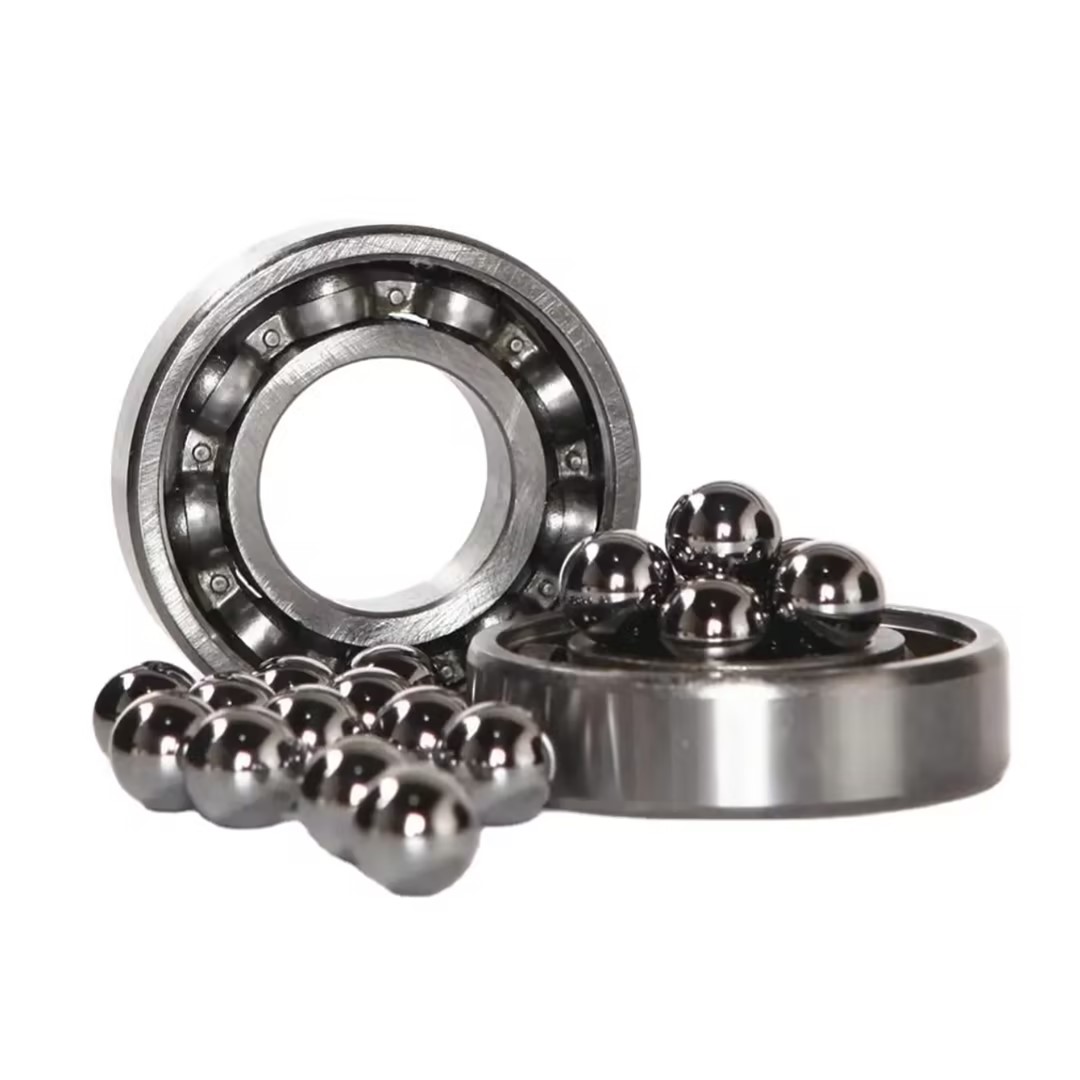
Introduction to the company's technological strength: Technical layout and performance breakthroughs of Feige Steel Balls
As a national-level high-tech enterprise and an export production base for a full range of high-end steel balls, Changzhou Feige Steel Ball Co., Ltd. has achieved a significant improvement in steel ball performance through its trinity technology system of "materials-processes-inspection."
STEP 1: Material Optimization: Utilize vacuum degassed GCr15SiMn high-purity steel with an oxygen content controlled at ≤8 ppm and inclusion level ≤A0.5, significantly reducing the impact of internal material defects on the performance of steel balls. For example, in steel balls for wind turbine main shaft bearings, this material increases fatigue life to 2.3 times that of traditional materials.
STEP 2: Precision Forming Process: Introduce multi-station cold heading machines and CNC grinding machines to achieve a steel ball diameter tolerance of ≤ ±0.003 mm and roundness of ≤ 0.002 mm. By optimizing the cold heading speed (15-20 times/minute) and grinding pressure (0.5-0.8 MPa), the surface roughness Ra is controlled below 0.01 μm, and the surface defect rate is reduced to below 0.02%.
STEP 3: Heat Treatment Strengthening: Utilize a controlled atmosphere mesh belt furnace for quenching and tempering treatments, with a quenching temperature of 850 ± 5°C and a tempering temperature of 180 ± 3°C, achieving a hardness of 65-67 HRC for the steel balls while maintaining core toughness (impact value ≥ 8 J/cm²). In the steel balls for axle box bearings of high-speed trains, this process enhances wear resistance by 40% and limits wear to within 0.005 mm/year.
STEP 4: Intelligent Inspection System: Equipped with a laser diameter measuring instrument (accuracy of 0.1 μm), a surface roughness tester (Ra 0.001 μm), and a metallurgical microscope (magnification of 500-2000 times), enabling full-process inspection of steel ball dimensions, surface quality, and internal structure. For example, in the production of steel balls for automotive transmissions, the online inspection system reduces the defect rate from 0.5% to below 0.01%.
For more information, please visit the official website:www.feigesteelball.com
FAQ Q&A Technical Selection Guide: Key Parameters and Practical Suggestions for Optimizing Steel Ball Performance
Q1: How to select steel ball materials suitable for high-precision bearings?
A: High-purity steel (such as GCr15SiMn) should be prioritized for high-precision bearings, with an oxygen content of ≤10 ppm and an inclusion grade of ≤A1.0. For example, in spindle bearings for precision machine tools, using this material can stabilize the steel ball diameter tolerance within ±0.002 mm, significantly reducing bearing vibration values.
Q2: What is the key process for improving the surface finish of steel balls?
A: CNC grinding is the core process for enhancing surface finish. It requires controlling grinding pressure (0.5-0.8 MPa), grinding time (30-60 minutes), and grinding fluid concentration (5-10%), while utilizing ceramic grinding discs (hardness HRC ≥ 60) to minimize surface scratches. For example, in the production of bearing steel balls for medical devices, this process achieves a surface roughness Ra of 0.008 μm, meeting the usage requirements in sterile environments.
Q3: How can the wear resistance of steel balls be enhanced through heat treatment processes?
A: Controlled atmosphere heat treatment is crucial. The quenching temperature should be controlled at 840-860℃, and the tempering temperature at 170-190℃, with the holding time adjusted according to the diameter of the steel ball (1 minute per 1mm). For example, in the steel balls for wind turbine gearboxes, this process achieves a hardness of 66HRC while maintaining core toughness, resulting in a 35% improvement in wear resistance.
Q4: What are the commonly used equipment for detecting the dimensional accuracy of steel balls?
A: Laser diameter measuring instruments (with an accuracy of 0.1 μm), coordinate measuring machines (with an accuracy of 0.5 μm), and optical projectors (with a magnification range of 100-500 times) are commonly used equipment. For example, in the production of steel balls for automobile transmissions, online inspection of 200 steel balls per minute is achieved using laser diameter measuring instruments, ensuring a diameter tolerance of ≤ ±0.003 mm.
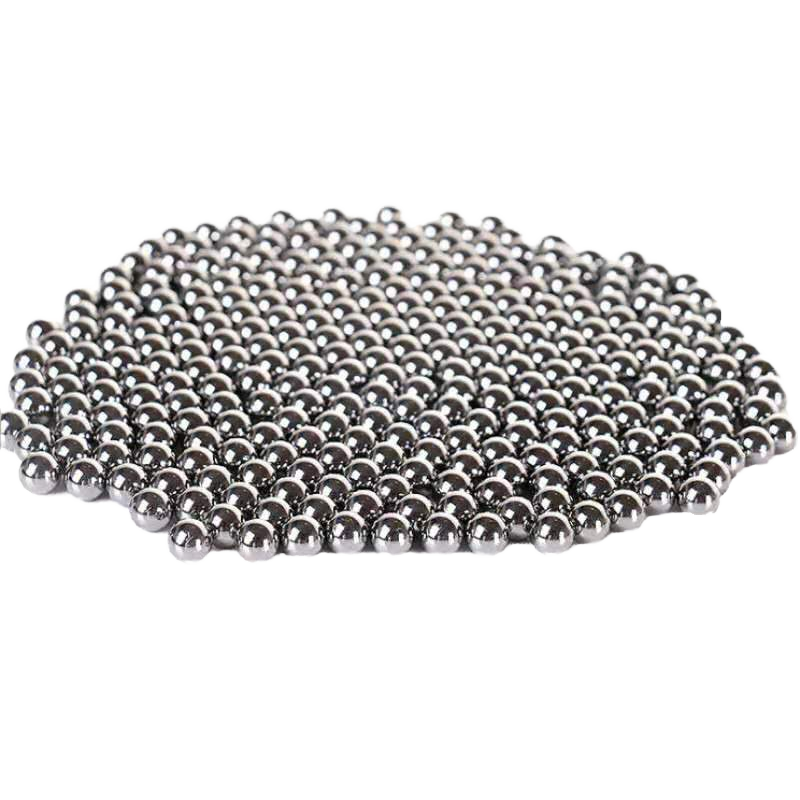
Technical Path and Industry Value for Optimizing the Performance of Steel Balls
The optimization of steel ball performance requires collaborative breakthroughs in materials, processes, and inspection. Changzhou Feige Steel Ball Co., Ltd. has achieved core performance indicators for steel balls—including dimensional accuracy ≤ ±0.003 mm, surface roughness Ra ≤ 0.01 μm, and hardness of 65-67 HRC—through the application of high-purity materials, innovation in precision forming processes, and the establishment of an intelligent inspection system, significantly enhancing the operational stability and service life of high-end equipment. For example, in wind turbine main shaft bearings, the company's steel balls have extended equipment maintenance intervals from 2 years to 5 years, saving over 100,000 yuan in annual maintenance costs per wind turbine; in new energy vehicle motor bearings, the vibration values of the steel balls have been reduced to ≤ 1.5 mm/s, meeting the requirements of international high-end customers. In the future, with the continuous advancement of precision manufacturing technologies, the optimization of steel ball performance will further drive the high-end equipment manufacturing industry toward higher precision, longer service life, and lower maintenance demands.