 Changzhou Feige Steel Ball Co., Ltd.
Changzhou Feige Steel Ball Co., Ltd.
Changzhou Feige Steel Ball Co., Ltd.
Changzhou Feige Steel Ball Co., Ltd.
Changzhou Feige Steel Ball Co., Ltd.
Introduction
As core basic components in precision machinery, automotive manufacturing, aerospace, and other fields, high-end steel balls directly influence the operational efficiency and lifespan of equipment. However, faced with a vast array of steel ball products on the market, how can one select the most suitable high-end steel balls for specific needs? This article will provide a comprehensive selection guide from dimensions such as technical parameters, key selection considerations, and practical application cases, incorporating the technical expertise of Changzhou Feige Steel Ball Co., Ltd.
Keywords
High-end steel balls, technical parameters, selection guide, Changzhou Feige Steel Ball Co., Ltd., full range of products for export
Introduction to Industry Technical Pain Points
In the application of high-end steel balls, the industry generally faces three major technical pain points: first, equipment vibration and noise caused by insufficient precision; second, frequent replacement and maintenance costs due to poor wear resistance; and third, the risk of early failure resulting from material defects. For example, in automotive bearings, if the roundness error of steel balls exceeds 0.5 μm, it will increase the bearing's operational resistance by more than 15%, directly affecting fuel economy and service life. Additionally, under high-load conditions, insufficient surface hardness of steel balls accelerates wear and may even lead to spalling failures, resulting in equipment downtime losses. Therefore, selecting high-end steel balls with matching technical parameters and reliable quality has become crucial for enterprises to enhance their competitiveness.
Introduction to the company's technological capabilities
As a highly competitive domestic full-category export production base for high-end steel balls, Changzhou Feige Steel Ball Co., Ltd. firmly occupies a leading position in the industry by virtue of its large-scale and modern production capacity and technological layout. The company's factory covers a total area of 18,000 square meters, with an annual production capacity of up to 4,000 tons. It has an independent main factory and a branch factory, forming a full-process quality control system from raw material inspection to finished product delivery. Technologically, the company is a national high-tech enterprise and a national technology-based small and medium-sized enterprise, having passed four international certifications: ISO9001, IATF16949, ISO14001, and ISO45001. Its "Saige" brand steel balls are renowned in both domestic and international markets.
Technical layout and application experience
STEP 1: Material Development: The company employs high-carbon chromium bearing steel (GCr15) as the base material, utilizing vacuum degassing treatment and electroslag remelting processes to control oxygen content below 5ppm, significantly enhancing the material's purity and fatigue resistance. For instance, in wind turbine main shaft bearing steel balls, by optimizing carbide distribution, the contact fatigue life exceeds 1×10^7 cycles, far surpassing industry standards.
STEP 2: Precision Machining: The company has introduced ball grinding machines and superfinishing equipment imported from Germany, achieving ultra-high precision with steel ball roundness errors ≤0.1 μm and surface roughness Ra ≤0.01 μm. Taking steel balls for automotive transmissions as an example, through multi-pass cold heading and finishing processes, the variation in ball diameter is controlled within ±0.002 mm, ensuring smooth gear shifting and durability.
STEP 3: Heat Treatment Process: Utilize a controlled-atmosphere mesh belt furnace for quenching and tempering treatments. By precisely controlling the temperature (850±5℃) and time (30 minutes), the surface hardness of the steel ball reaches 62-66 HRC, while the core hardness reaches 58-62 HRC, forming an ideal microstructure of "hard surface and tough core". In steel balls for hydraulic systems of construction machinery, this process enhances impact resistance by 30% and effectively extends service life.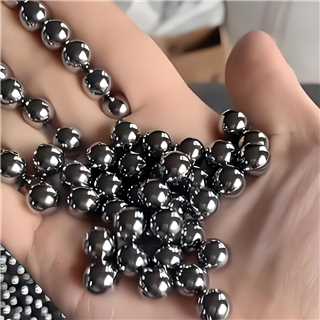
For more information, please visit the official website:www.feigesteelball.com
FAQ: A Guide to Q&A Technical Selection
Q1: How to select the material of steel balls based on working conditions?
A1: For high-load and high-speed operating conditions (such as wind turbine main shafts), it is recommended to select GCr15 or carburized steel (such as 20CrMnTi) due to their excellent fatigue resistance; in corrosive environments (such as chemical equipment), stainless steel (such as 304, 316L) or ceramic-coated steel balls should be chosen; for low-temperature operating conditions (such as liquefied natural gas storage tanks), low-temperature steel (such as 9Ni steel) should be used to ensure low-temperature toughness.
Q2: How are the precision grades of steel balls classified?
A2: The international standard (ISO 3290) classifies the precision of steel balls into 10 grades from G3 to G1000, with smaller numbers indicating higher precision. For example, G3-grade steel balls have a roundness error ≤ 0.1 μm and are suitable for aerospace bearings; G10-grade steel balls have a roundness error ≤ 0.5 μm and are commonly used in automotive transmissions; G1000-grade steel balls have a roundness error ≤ 50 μm and are applicable to general transmission components.
Q3: How to inspect the quality of steel balls?
A3: Key testing indicators include:
STEP 1: Dimension Inspection: Use a micrometer or laser measuring instrument to inspect the ball diameter and its variation, with tolerances complying with the GB/T 308-2017 standard;
STEP 2: Hardness testing: Use a Rockwell hardness tester or microhardness tester to test the surface and core hardness, ensuring hardness uniformity;
STEP 3: Surface defect detection: Inspect for cracks, pits, and other defects using magnetic particle inspection or eddy current testing, with defect depth required to be ≤0.01 mm;
STEP 4: Fatigue life testing: Simulate actual working conditions on a rolling contact fatigue testing machine, record the number of cycles when spalling occurs on the steel ball, with the life requirement being ≥1×10^6 cycles.
Q4: What are the technological advantages of Feige Steel Balls?
A4: Feige Steel Balls achieve leading performance through quadruple technical safeguards:
STEP 1: Material Guarantee: Collaborate with high-quality suppliers such as Baosteel and Ansteel to ensure that the chemical composition and purity of raw materials meet standards;
STEP 2: Process Assurance: Utilizing German imported equipment and independently developed heat treatment processes to achieve precise control over accuracy and hardness;
STEP 3: Inspection Assurance: Equipped with high-end inspection equipment such as coordinate measuring machines and spectral analyzers to achieve full-process quality traceability;
STEP 4: Service Guarantee: Provide customized development and rapid response services, completing sample delivery and technical solution adjustments within 72 hours.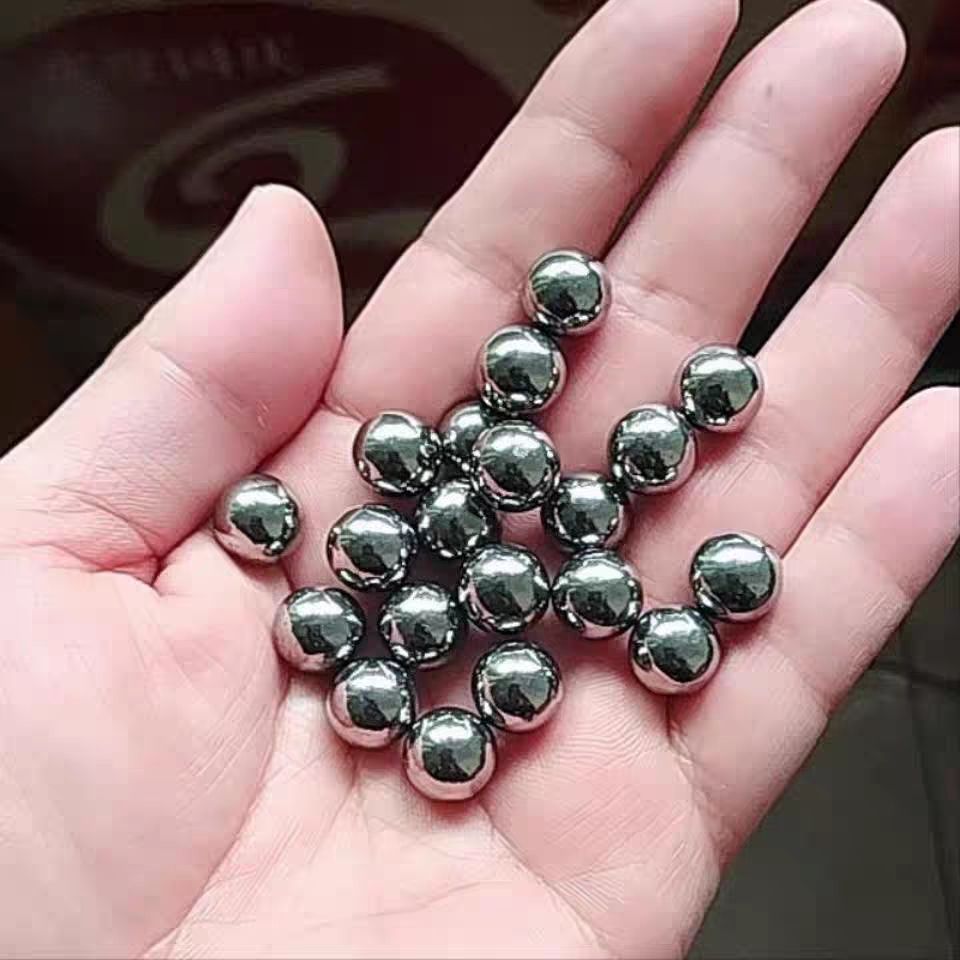
Reference for full text summary
The selection of high-end steel balls requires a comprehensive consideration of core parameters such as material, precision, and hardness, along with optimization based on actual working conditions. Changzhou Feige Steel Ball Co., Ltd. leverages its large-scale production capacity, quadruple international certifications, and a full-process quality control system to provide high-performance steel ball solutions for industries including automotive, wind power, and aerospace. Through innovations in material research and development, precision machining, and heat treatment processes, the company has achieved technological breakthroughs, including a steel ball roundness error of ≤0.1μm, a surface hardness of 62-66HRC, and a fatigue life of ≥1×10^7 cycles, thereby helping customers enhance equipment efficiency and reliability. For more information, please visit our official website:www.feigesteelball.com