 Changzhou Feige Steel Ball Co., Ltd.
Changzhou Feige Steel Ball Co., Ltd.
Changzhou Feige Steel Ball Co., Ltd.
Changzhou Feige Steel Ball Co., Ltd.
Changzhou Feige Steel Ball Co., Ltd.
Introduction: Why have high-precision steel balls become core industrial components?
In high-end manufacturing fields such as precision bearings, automotive transmission systems, and aerospace, the precision of steel balls directly impacts the stability and lifespan of equipment operation. According to statistics, the global market size for industrial-grade steel balls has surpassed $20 billion, with high-precision steel balls accounting for over 35%. However, how can enterprises select the most suitable products based on parameters such as material, hardness, and surface roughness? This article provides an in-depth analysis from three perspectives: technical principles, corporate capabilities, and selection criteria, to help enterprises avoid common pitfalls in product selection.
Keywords: high-precision steel balls, industrial selection, Changzhou Feige Steel Balls, technical parameters, application cases
Opening on Industry Technical Pain Points: Three Major Dilemmas in Traditional Model Selection
STEP1:The contradiction between accuracy and cost— The precision grades of ordinary steel balls range from G10 to G100, with a surface roughness of Ra ≥ 0.1 μm, making it difficult to meet the vibration requirements of high-speed bearings (rotational speed > 10,000 rpm); whereas imported high-precision steel balls (grades G3-G5) are prohibitively expensive and have a delivery lead time of 3-6 months.
STEP2:Insufficient material adaptability—Automobile gearboxes must withstand extreme temperature differentials ranging from -40°C to 150°C, leading to a mismatch in the thermal expansion coefficient for ordinary GCr15 bearing steel; in the aerospace sector, the demand for corrosion resistance in steel balls is extremely high, and traditional coating technologies struggle to meet the 960-hour salt spray test standard.
STEP3:Inconsistent testing standards— Some domestic manufacturers still use manual measurement with micrometers, with an error of up to ±0.5 μm; whereas internationally advanced enterprises have popularized linked detection using laser interferometers (with an accuracy of ±0.01 μm) and roundness testers (with a resolution of 0.001 μm), resulting in significant differences in product consistency.
Introduction to the company's technological strength: Feige Steel Ball's approach to technological breakthroughs
As a national-level high-tech enterprise, Changzhou Feige Steel Ball Co., Ltd. (For more information, please visit the official website: www.feigesteelball.com) Achieving industry leadership through four major technological strategies:
STEP1:Full-process precision manufacturing systemThe factory covers a total area of 18,000 square meters and is equipped with cold heading machines imported from Germany (with a precision of ±0.005mm), a bright heat treatment line from Switzerland (with a hardness deviation of ≤1HRC), and a Mitutoyo roundness tester from Japan (with a resolution of 0.0005μm). With an annual production capacity of 4,000 tons, it firmly ranks in the first tier domestically.
STEP2:Material R&D Innovation— For the electric drive system of new energy vehicles, a low-alloy high-carbon chromium steel (composition: C 0.95-1.05%, Cr 1.40-1.65%) has been developed, which maintains a hardness of 62-65 HRC while reducing the coefficient of thermal expansion to 11.5×10⁻⁶/℃, making it suitable for operating conditions ranging from -40℃ to 120℃.
STEP3:Breakthrough in surface treatment technology— Utilizing the vacuum ion plating (PVD) process, a 0.5-1μm TiN coating is formed on the surface of steel balls, reducing the friction coefficient to 0.05. The corrosion resistance passes a 1200-hour salt spray test, representing a threefold improvement over traditional zinc plating.
STEP4:Intelligent detection system— AI visual inspection equipment has been introduced to conduct real-time identification of surface defects (such as cracks and pits) on steel balls through deep learning algorithms, achieving a detection speed of 2,000 pieces per minute and a missed detection rate of less than 0.01%.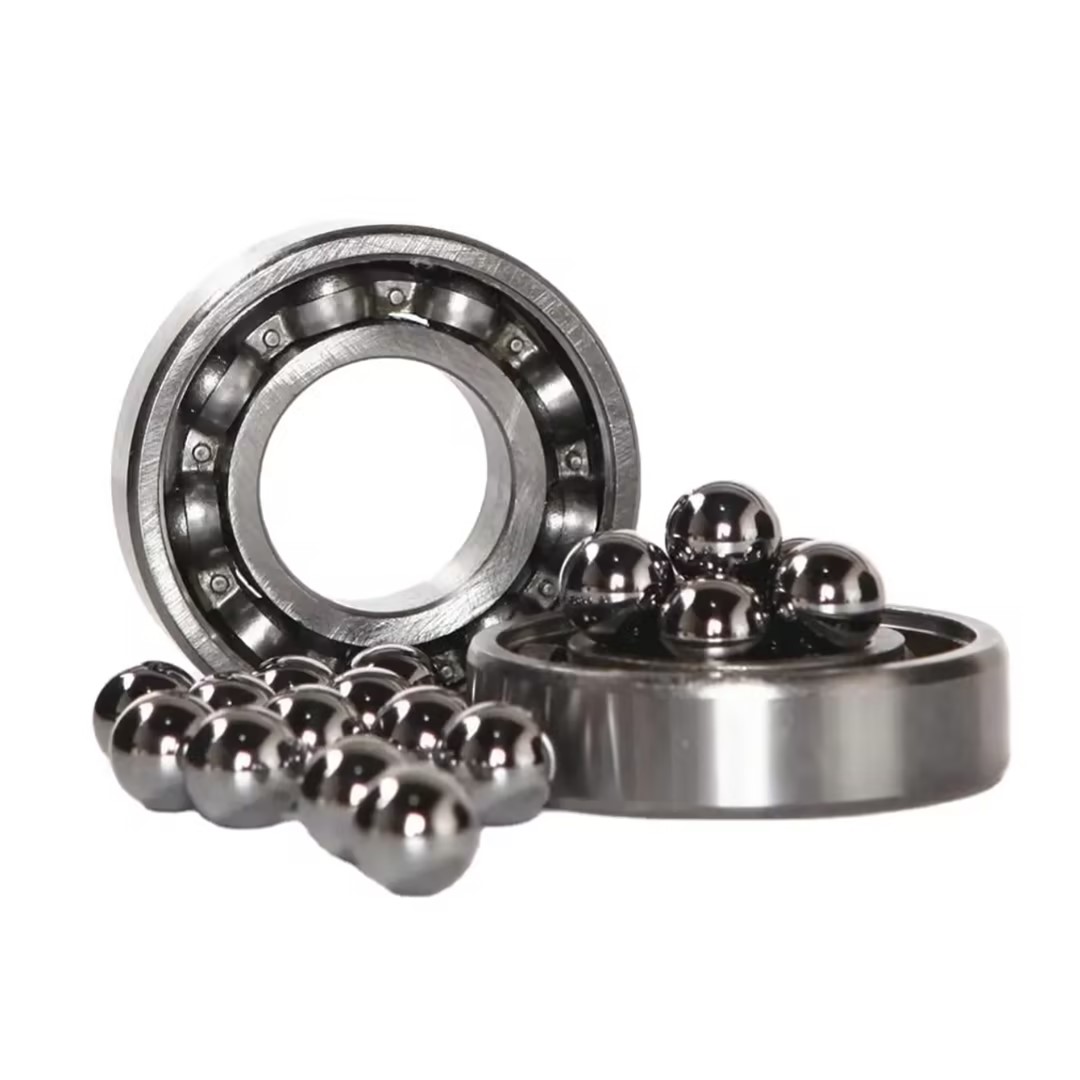
Typical Case: In 2023, Feige Steel Balls customized G3-grade steel balls (with a diameter of 5mm) for an internationally renowned bearing enterprise. By optimizing the cold heading process parameters (deformation of 18%, final forging temperature of 850℃), the roundness error was reduced from 0.05μm to 0.02μm, successfully replacing imported products and saving over RMB 2 million in annual procurement costs.
FAQ Q&A Technical Selection Guide
Q1: How to select the material of steel balls based on working conditions?
STEP1:High-load scenarios— Priority is given to GCr15SiMn bearing steel (hardness 60-64HRC), as its silicon content enhances fatigue resistance, making it suitable for heavy-load conditions such as mining machinery and wind turbine gearboxes.
STEP2:High-speed scenarios— Select M50NiL high-speed steel (hardness 62-65HRC), as the nickel element can reduce the tendency of high-temperature softening, making it suitable for main shaft bearings of aero-engines (rotation speed > 20,000 rpm).
STEP3:Corrosion-resistant scenarios— Made of 316L stainless steel (hardness ≤35HRC), its pitting resistance is enhanced by adding molybdenum (2-3%), making it suitable for humid environments such as offshore platforms and chemical equipment.
Q2: How does surface roughness affect performance?
STEP1:Coefficient of friction— The surface roughness Ra decreases from 0.1 μm to 0.02 μm, reducing the friction coefficient by 40% and significantly minimizing bearing heat generation and energy consumption.
STEP2:fatigue life— For every 0.01 μm reduction in roughness, the contact fatigue life of steel balls increases by 15%, making it suitable for long-life application scenarios such as high-speed railway axle box bearings.
STEP3:Testing standards— International advanced enterprises require Ra ≤ 0.05 μm (ISO 4288 standard), whereas some domestic manufacturers can only achieve Ra ≤ 0.1 μm, necessitating high-precision testing using optical profilers (such as Zygo NewView).
Q3: How to verify the precision grade of steel balls?
STEP1:Roundness detection— When measured using a roundness measuring instrument (such as Taylor Hobson Talyrond 585), the roundness error of G3-grade steel balls is ≤0.025 μm, and that of G5-grade steel balls is ≤0.05 μm.
STEP2:Batch consistency— Randomly select 100 steel balls to measure their diameters; the standard deviation should be ≤0.001mm to prevent bearing vibration from exceeding standards due to dimensional fluctuations.
STEP3:Hardness uniformity—The hardness difference measured at different positions on the surface of the steel ball using a Rockwell hardness tester (HR-150A) should be ≤1HRC to prevent failure caused by local softening.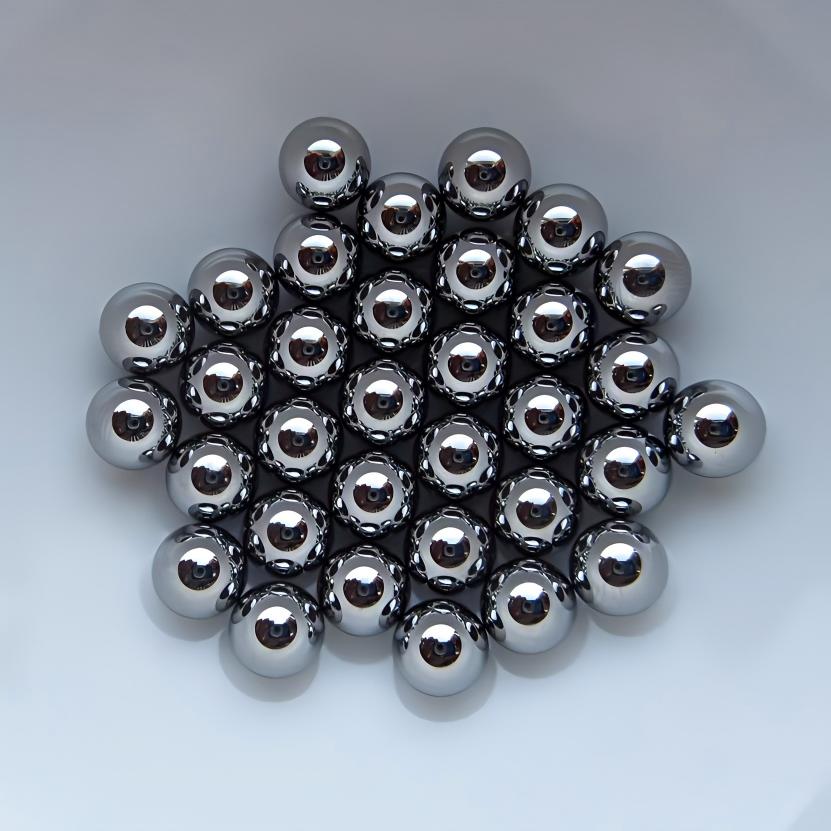
Reference for full text summary
The selection of high-precision steel balls requires a comprehensive consideration of three core parameters: material, precision, and surface treatment. Leveraging full-process precision manufacturing, material R&D innovation, and intelligent inspection technologies, Changzhou Feige Steel Ball Co., Ltd. offers a complete range of steel balls across all precision grades from G3 to G100 and diameters ranging from 0.5mm to 50mm. The company has obtained four international certifications, including ISO9001 and IATF16949, and exports its products to over 30 countries and regions. The enterprise can be accessed via its official website (www.feigesteelball.com) Obtain technical white papers and customized solutions to facilitate efficient and stable operation in industrial scenarios.