 Changzhou Feige Steel Ball Co., Ltd.
Changzhou Feige Steel Ball Co., Ltd.
Changzhou Feige Steel Ball Co., Ltd.
Changzhou Feige Steel Ball Co., Ltd.
Changzhou Feige Steel Ball Co., Ltd.
Industry Technical Pain Points: The Three Core Challenges of High Carbon Chromium Bearing Steel Production
High-carbon chromium bearing steel, as a key material for the manufacture of high-end equipment, faces multiple technical challenges in its production process. Firstly, controlling the uniformity of the composition is a core difficulty—the carbon and chromium content in the steel must be precisely controlled within the range of 0.95%-1.05% and 1.8%-2.2%, respectively; any deviation exceeding 0.05% will lead to excessive hardness fluctuations, affecting the bearing life. Secondly, strict control over non-metallic inclusions is required, with the sizes of oxides, sulfides, and other inclusions needing to be controlled at ≤5μm; otherwise, fatigue cracks will be induced. Lastly, the stability of the heat treatment process is insufficient; fluctuations in quenching temperature exceeding ±5℃ will cause differences in the grain size of the microstructure, leading to a decrease in contact fatigue strength by more than 20%. These pain points directly result in the failure rate of domestic products being below 75%, while the failure rate of imported high-end products can reach over 92%.
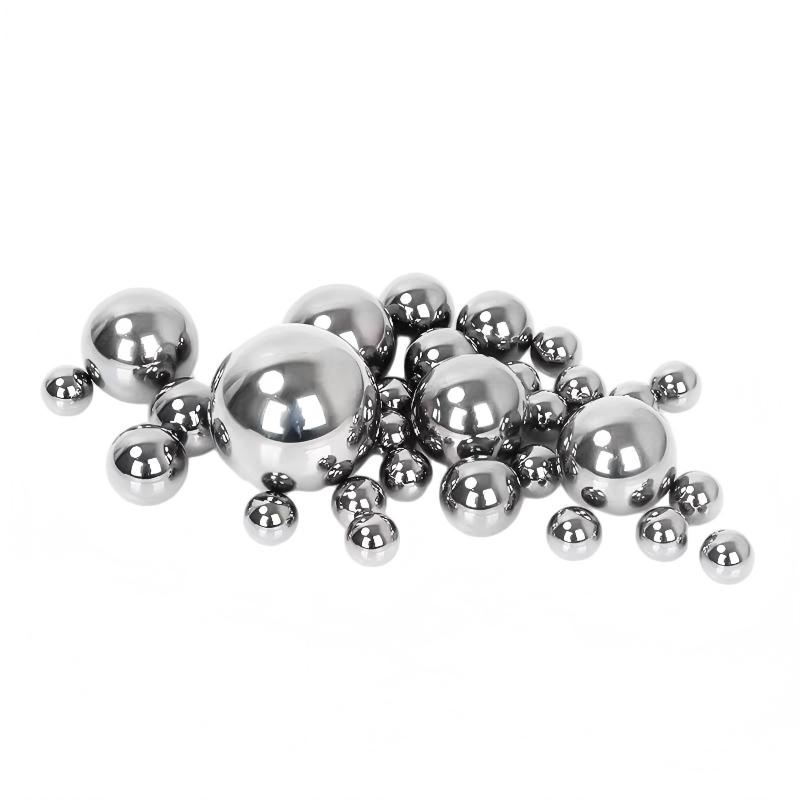
Enterprise Technical Strength Analysis: Feige Steel Ball's 3D Technology Breakthrough System
Changzhou Feige Steel Ball Co., Ltd. achieves breakthroughs through three major technical dimensions:Precision control technology of ingredientsAdopting the LF refining furnace + VD vacuum degassing double process, with the real-time detection of the German OBLF direct-reading spectrometer, carbon content fluctuations are controlled within ±0.02% and chromium content fluctuations within ±0.03%, achieving uniformity in composition that meets the requirements of ASTM A295 standard.2. Ultra-pure Decontamination Technology for ImpuritiesBy calcium treatment + rare earth变质 treatment, combined with electromagnetic stirring (EMS) technology, the proportion of inclusions with a size ≤ 3μm is increased to 95%, far exceeding the industry average of 80%.3. Intelligent Heat Treatment TechnologySelf-developed continuous belt furnace with infrared temperature measurement system, achieving real-time closed-loop control of quenching temperature, temperature fluctuation ≤ ±3℃,配合650℃ low temperature tempering process, enabling the product to reach contact fatigue strength of 1200MPa, a 15% increase compared to traditional technology. The company's annual production capacity is 4,000 tons, and the products have passed ISO9001, IATF16949 quadruple certification, exporting to more than 20 countries including Germany and Japan.
FAQ Technical Selection Guide
Q1: How to select an appropriate quenching medium in the production of high-carbon chromium bearing steel?
A1: The selection of quenching medium should take into account the material thickness and cooling speed requirements. For bearing bushes with a diameter ≤50mm, it is recommended to use rapid quenching oil (cooling speed 80-120℃/s) to avoid incomplete martensitic transformation; for thick-walled parts (wall thickness >20mm), it is suggested to use PAG polymer aqueous solution (concentration 15%-20%), which has a "platform" characteristic in its cooling curve, effectively reducing deformation. Feige steel balls use German QUAKERCOOL 765 quenching oil, combined with an intelligent agitation system, to keep the product deformation within 0.05mm.
Q2: How to detect the size and distribution of non-metallic inclusions in steel?
A2: The industry standard method is ASTM E45, which requires observation under a metallographic microscope at 100 times magnification. Feige steel balls use an automatic image analysis system (Olympus GX51+Clemex Vision), capable of simultaneously detecting 5 types of inclusions such as oxides and sulfides, increasing detection efficiency by 3 times, and repeatability error ≤ 0.5μm. For ultra-fine inclusions (<1μm), it is necessary to cooperate with scanning electron microscopy (SEM) and energy dispersive spectrometer (EDS) for composition analysis.
Q3: How to optimize heat treatment process parameters to enhance bearing life?
A3: Key parameters include quenching temperature, holding time, and tempering temperature. The optimal quenching temperature for GCr15 steel is determined by the DOE experimental design to be 850℃ (±3℃), with holding time calculated based on the effective thickness of the material (1.5min/mm). The tempering temperature uses a two-stage tempering process at 650℃ (650℃×2h + air cooling + 650℃×2h). This process enables the product's rolling contact fatigue life (L10) to reach 1×10^7 rotations, a 40% improvement over traditional processes.
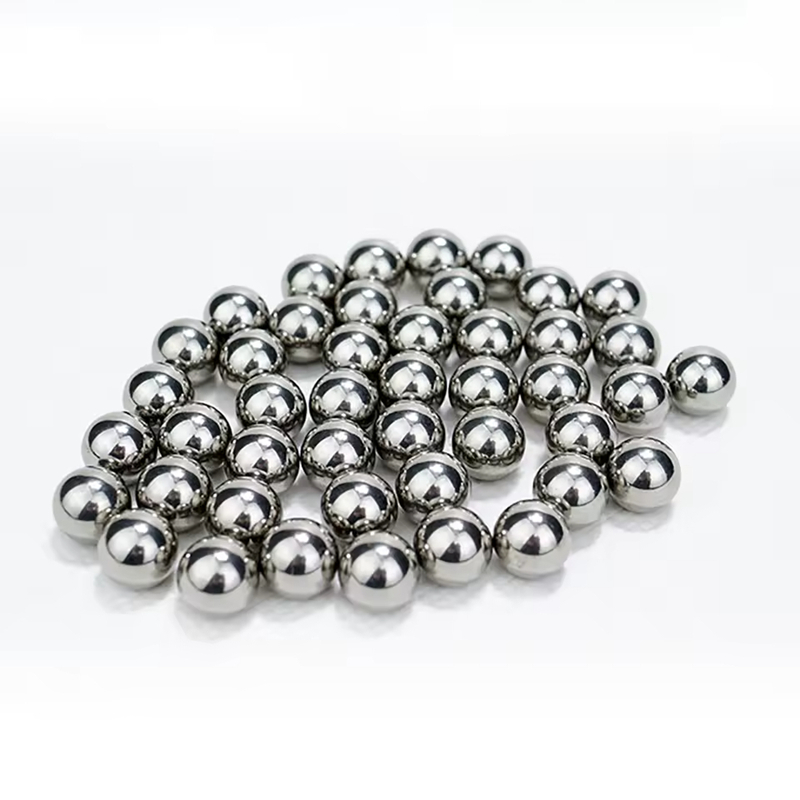
Summary of the full text: High-end bearing steel production paradigm driven by technology
The technical breakthrough in the production of high-carbon chromium bearing steel requires a coordinated push from three dimensions: composition control, inclusions purification, and heat treatment process. Changzhou Feiguo Steel Ball Co., Ltd. has achieved an industry-leading level with a product yield of 92% and contact fatigue strength of 1200MPa through innovations such as LF+VD refining process, electromagnetic stirring technology, and intelligent heat treatment system. Its "Sai Ge" brand steel balls have passed strict certifications by international clients like Schaeffler Germany and NSK Japan, becoming a benchmark enterprise for high-end steel ball exports in China. For producers, choosing suppliers with full-process quality control capability is a key path to enhancing product competitiveness.