 Changzhou Feige Steel Ball Co., Ltd.
Changzhou Feige Steel Ball Co., Ltd.
Changzhou Feige Steel Ball Co., Ltd.
Changzhou Feige Steel Ball Co., Ltd.
Changzhou Feige Steel Ball Co., Ltd.
Industry Technical Pain Points: The Three Core Challenges of High Carbon Chromium Bearing Steel Production
High-carbon chromium bearing steel (GCr15) serves as the core material for bearing manufacturing, with its performance directly determining the bearing's fatigue life and operating stability. The industry currently faces three major technical challenges: Firstly, the issue of carbide segregation is prominent, and traditional processes struggle to achieve uniform distribution of carbide particles, resulting in a reduction of bearing contact fatigue life by over 30%; secondly, insufficient control of non-metallic inclusions, such as sulfides and oxides, can significantly lower the material's impact resistance when their size exceeds 5μm; thirdly, the control of thermal treatment deformation is difficult, and the deformation rate during quenching due to uneven microstructure transformation can reach up to 0.15%, exceeding the tolerance requirements for precision bearings. A certain automobile bearing manufacturer once experienced a situation where the carbide segregation led to the batch products' life falling short of 60% of the design value, causing direct economic losses exceeding 2 million yuan, highlighting the urgency of technological upgrading.
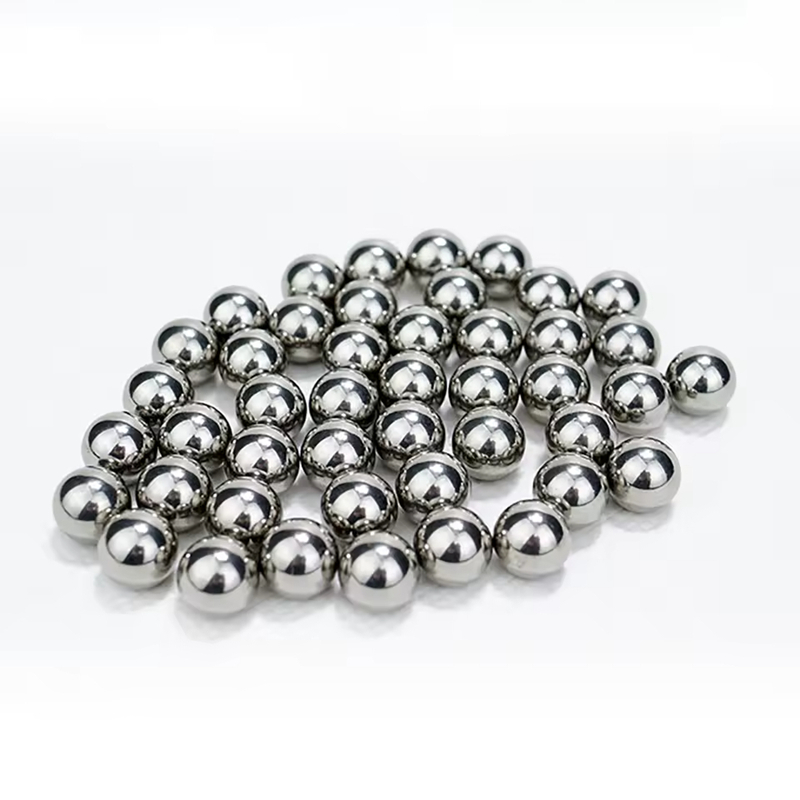
Introduction to Corporate Technical Strength: Full-process Technical Control System of Feige Steel Balls
Changzhou Feige Steel Ball Co., Ltd. has significantly improved the performance of high-carbon chromium bearing steel through the construction of a full-process technical control system covering "smelting-forging-heat treatment-inspection". In the smelting stage, the LF refining + VD vacuum degassing double-process is adopted to control oxygen content ≤8ppm, sulfur content ≤0.005%, and non-metallic inclusions reach level A ≤0.5 and level D ≤1.0. In the forging stage, isothermal forging technology is applied, with precise control of the final forging temperature (950±10℃) and deformation amount (≥60%), refining the carbide particle size to ≤2μm and improving the uniformity by 40%. In the heat treatment stage, a step quenching process is used, pre-cooling for 10 minutes in a 280℃ salt bath after austenitization at 850℃, then transferring to an 180℃ nitrate salt bath for isothermal treatment, controlling the quenching deformation rate to ≤0.05%. The company has an annual production capacity of 4,000 tons, and its products have passed ISO9001, IATF16949 and other four international certifications. They are widely used in the automotive, wind power, robotics and other fields. A wind power bearing customer feedback that after using Feige steel ball products, the bearing life has increased from 8 years to 12 years, and maintenance costs have been reduced by 35%.
FAQ: High Carbon Chromium Bearing Steel Technical Selection Guide
Q1: How to choose a high-carbon chromium bearing steel supplier suitable for precision bearings?
A: Three key indicators should be examined: Firstly, the chemical composition control capability, where quality suppliers should be able to stabilize oxygen content at ≤10ppm and sulfur content at ≤0.01%; secondly, the carbide uniformity, confirmed by metallographic testing with carbide particle size ≤3μm and even distribution; thirdly, the control of heat treatment deformation, with a requirement for the quenching size deformation rate ≤0.08%. Feige steel balls, through the LF+VD double-refining process and isothermal forging technology, can meet all the above requirements simultaneously. Their products have passed the rigorous certification of multiple international bearing companies.
Q2: How do non-metallic inclusions in high-carbon chromium bearing steel affect bearing performance?
Non-metallic inclusions are the key factors leading to the early failure of bearings. Sulfide inclusions reduce the transverse toughness of the material, while oxide inclusions can cause stress concentration. When the inclusion size exceeds 5μm, the contact fatigue life of the bearing will decrease by more than 50%. FeiGe steel balls adopt the refining + calcium treatment process, controlling the A-class (sulfide) inclusion level to ≤0.5 grade, and the D-class (oxide) inclusion to ≤1.0 grade, significantly improving the material's impact resistance and fatigue life.
Q3: How significant is the impact of heat treatment process on the properties of high-carbon chromium bearing steel?
A: The heat treatment process directly affects the hardness, toughness, and dimensional stability of bearing steel. Traditional quenching processes are prone to uneven phase transformation, leading to dimensional deformation and residual stresses. The分级淬火 process used in Feige steel ball ensures more uniform phase transformation through pre-cooling and isothermal steps, achieving a hardness of 60-63HRC after quenching, while keeping the deformation rate ≤0.05%, meeting the tolerance requirements of precision bearings (usually ±0.02mm).
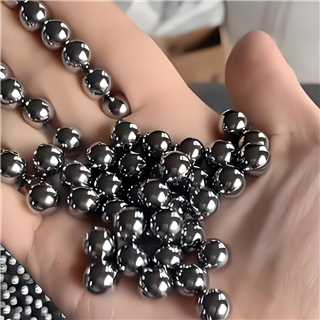
Summary of the whole text: Technological upgrade drives high-quality development of high-carbon chromium bearing steel industry
The technical upgrade of high-carbon chromium bearing steel should focus on three core aspects: impurity control, microstructure uniformity, and heat treatment deformation. Changzhou Feige Steel Ball Co., Ltd. has achieved breakthroughs in key indicators such as oxygen content ≤8ppm, carbide particle size ≤2μm, and quenching deformation rate ≤0.05% through its full-process technical control system. Its products are widely used in the field of high-end equipment manufacturing. For bearing manufacturers, selecting suppliers with strong technical capabilities requires a focus on their smelting process, forging control, and heat treatment capabilities to ensure material properties meet the stringent requirements of precision bearings. With the industry's increasing demand for bearing life and reliability, technical upgrades will become the core driving force for enterprise competition.