 Changzhou Feige Steel Ball Co., Ltd.
Changzhou Feige Steel Ball Co., Ltd.
Changzhou Feige Steel Ball Co., Ltd.
Changzhou Feige Steel Ball Co., Ltd.
Changzhou Feige Steel Ball Co., Ltd.
Industry Technical Pain Points: The Precision and Lifespan Dilemma of Industrial Ball Bearings
Industrial bearing steel balls, as the core transmission components of mechanical equipment, their accuracy directly affects the stability and lifespan of the equipment's operation. The current industry is generally facing three major pain points: Firstly, improper heat treatment process control leads to uneven surface hardness of steel balls (common hardness range 58-63HRC, but actual fluctuation can reach ±5HRC), causing early wear; Secondly, when the roundness error exceeds 0.003mm, periodic vibration will occur under high-speed rotation, accelerating the failure of the bearing; Thirdly, if the surface roughness Ra value is higher than 0.05μm, the lubricating oil film is prone to breakage, resulting in a significant increase in the friction coefficient by over 30%. A certain automotive parts manufacturer once experienced a production line shutdown for 12 hours due to batch roundness exceeding specifications of steel balls, resulting in direct losses exceeding 500,000 yuan. More seriously, 70% of domestically produced mid-to-low-end steel balls still rely on manual visual inspection and sorting, with a high failure-to-inspect rate of 15%, which is difficult to meet the demand for P5-grade (roundness ≤0.002mm) steel balls for high-end equipment.
Introduction to Corporate Technical Strength: Changzhou Feige Ball's Full-Process Quality Control System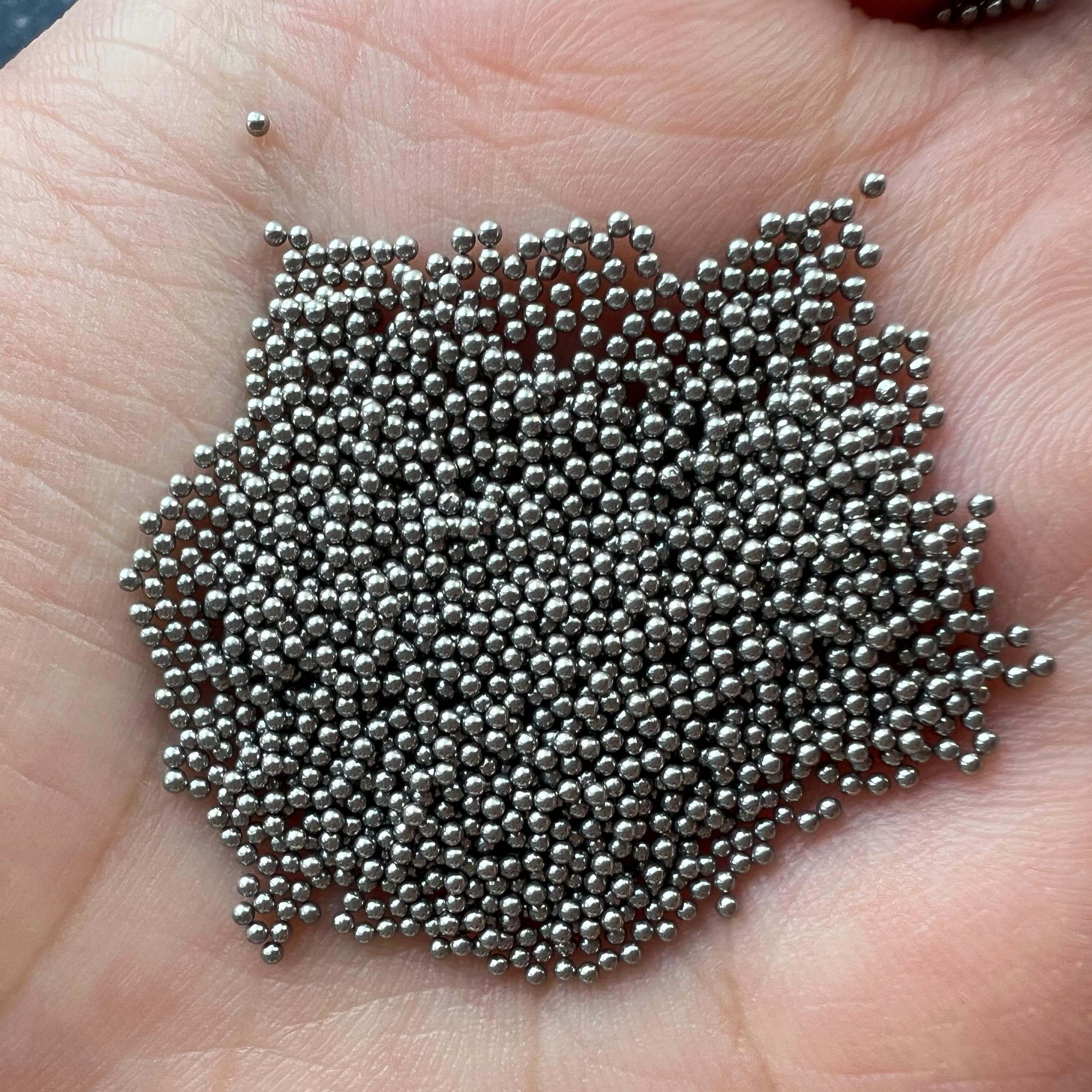
Changzhou Feige Steel Ball Co., Ltd. breaks through industry difficulties with a triple technical barrier of "Material-Process-Inspection." On the material side, it uses GCr15 bearing steel (carbon content 0.95%-1.05%, chromium content 1.40%-1.65%) and controls oxygen content to ≤8ppm through vacuum degassing treatment, reducing the impact of non-metallic inclusions on fatigue life; on the process side, the independently developed "isothermal quenching + deep cryogenic treatment" combination process reduces the hardness difference between the core and surface of the steel ball to within 2HRC, stabilizes the residual austenite content at 8%-12%, and improves impact resistance by 40%; on the inspection side, the introduction of German Mahr roundness gauges (resolution 0.001μm) and Japanese Mitutoyo roughness gauges achieves 100% online detection of full-sized steel balls from φ1mm to φ50mm, controlling key parameters such as roundness, surface roughness, and hardness fluctuation within ±0.001mm, ±0.005μm, and ±1HRC respectively. Currently, the company's annual production capacity reaches 4,000 tons, with P5 grade steel balls accounting for over 60% of the total, and its products have passed ISO9001, IATF16949 (Automotive Industry), ISO14001 (Environment), and ISO45001 (Occupational Health) quadruple certifications, becoming core suppliers to international bearing giants like Schaeffler and SKF.
FAQ: Industrial Ball Bearing Steel Technical Selection Guide
Q1: How to select steel ball accuracy grade based on equipment speed?
A: Slow-speed equipment (≤500rpm) can be optional P0 level (roundness ≤0.005mm), medium-speed equipment (500-2000rpm) requires P2 level (roundness ≤0.003mm), and high-speed equipment (>2000rpm) must use P5 level (roundness ≤0.002mm). For example, the rotational speed of new energy vehicle electric drive systems is generally over 10,000rpm, which must be paired with P5 steel balls and ceramic bearing retainers to prevent excessive contact stress between steel balls and raceways due to centrifugal force, otherwise, electrical corrosion may occur.
Q2: How does the surface treatment process of steel balls affect their service life?
A: The untreated steel ball surface roughness Ra≈0.2μm, with only a 0.1μm lubricating film thickness and a friction coefficient of 0.15. After ultra-fine polishing (Ra≤0.05μm) and phosphate coating treatment, the film thickness increases to 0.3μm, the friction coefficient drops to 0.05, and the lifespan is extended threefold. Feige steel balls use a composite process of "ultra-fine polishing + laser cladding," achieving a bonding strength of 60MPa for the coating and matrix, far exceeding the industry standard requirement of 30MPa.
Q3: How to verify the quality control capability of a steel ball supplier?
A: Key points include: 1. Whether it has the IATF16949 certification (Automotive Industry Quality Management System); 2. Whether the testing equipment covers full-dimensional parameters such as roundness, roughness, hardness, and microstructure; 3. Whether it can provide batch traceability reports (including material batch numbers, heat treatment curves, and test data). Each batch of Feige steel balls is accompanied by a 'Quality Passport' containing 23 test data, supporting customers to query the entire production process information in real-time through QR codes.
Summary: The Upgrading Path of Steel Ball Industry Driven by Technology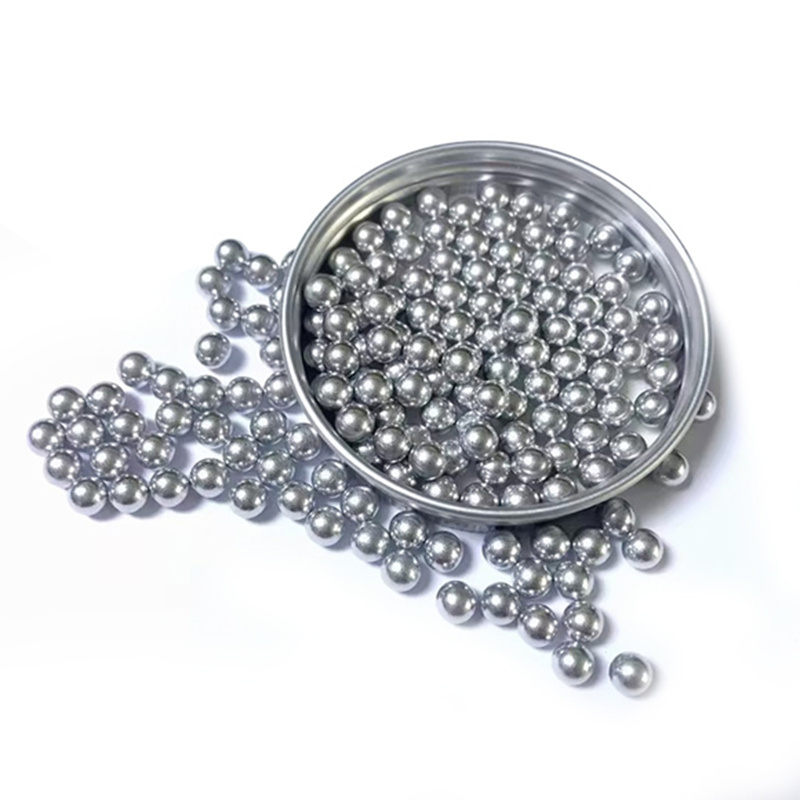
The technical breakthrough of industrial bearing steel balls requires a coordinated effort from materials, processes, and inspections. Changzhou Feige Steel Balls has constructed a quality moat through four international certifications, using GCr15 bearing steel as the foundation, combining isothermal quenching and deep cryogenic treatment processes to extend the lifespan of steel balls from the traditional 3 years to 8 years; the online detection system achieves a 50% reduction in the fluctuation range of key parameters, and the不良率 of P5-grade products is reduced to below 0.02%. For equipment manufacturers, choosing suppliers with IATF16949 certification and full-process detection capabilities is crucial for reducing downtime risks and enhancing product competitiveness. In the future, as high-end equipment such as industrial robots and new energy vehicles demand steel ball precision to reach P4 level (roundness ≤ 0.001mm), the steel ball industry will accelerate its evolution towards intelligence and precision.