 Changzhou Feige Steel Ball Co., Ltd.
Changzhou Feige Steel Ball Co., Ltd.
Changzhou Feige Steel Ball Co., Ltd.
Changzhou Feige Steel Ball Co., Ltd.
Changzhou Feige Steel Ball Co., Ltd.
Introduction
As a fundamental component in the industrial sector, the precision of steel balls directly affects the operational efficiency and lifespan of mechanical equipment. In high-end manufacturing fields such as aerospace and precision instruments, the requirements for the dimensional accuracy, surface quality, and material uniformity of steel balls are extremely stringent. Changzhou Feige Steel Ball Co., Ltd. (hereinafter referred to as "Feige Steel Ball"), as a leading enterprise in domestic steel ball production, has achieved large-scale production of high-precision steel balls through technological innovation and process optimization. This article will analyze the core technologies for precision control of steel balls from three dimensions: technical pain points, corporate practices, and selection guidelines.
Keywords
Precision control of steel balls, high-precision machining, surface quality inspection, material uniformity, and large-scale production
Opening with the Technical Pain Points of the Industry
The core pain point in steel ball production lies in precision control. In traditional processes, issues such as dimensional deviations, surface defects, and uneven internal material stress are prevalent, leading to wear, noise, and even fracture of steel balls under high-speed rotation or heavy-load conditions. For instance, in bearing applications, a diameter deviation exceeding 0.001 mm in steel balls may cause excessive vibration and shorten equipment lifespan; a surface roughness Ra value higher than 0.05 μm can result in lubrication failure and increased frictional loss. Additionally, insufficient material uniformity can trigger localized stress concentration, leading to sudden fractures under extreme conditions and posing a threat to equipment safety. These pain points impose extremely high demands on the process control capabilities of steel ball manufacturers.
Introduction to the company's technological strength
Feige Steel Balls has established a high-precision steel ball production system through a triple strategy of "process optimization + equipment upgrading + enhanced testing."
STEP 1: Process OptimizationCold heading forming technology is adopted to replace traditional turning processing. The initial shape of the steel ball is precisely controlled through molds, reducing subsequent machining allowances and the risk of dimensional deviations. The cold heading process can control the diameter deviation of steel balls within ±0.002mm, representing a 50% improvement over traditional processes.
STEP 2: Equipment UpgradeWe have introduced optical ball machines and lapping machines imported from Germany, achieving a surface roughness of Ra ≤ 0.01 μm through multiple lapping passes to meet the demands of high-end bearings. For instance, steel balls used in the aerospace sector require 10 lapping passes, with each pass controlled to 30 minutes, ensuring the surface is free from defects such as scratches and pits.
STEP 3: Detection EnhancementEquipped with a laser diameter measuring instrument and an X-ray stress analyzer to achieve full-process inspection of dimensional and material uniformity. The laser measuring instrument, with a precision of 0.1 μm, can monitor real-time changes in the diameter of steel balls; the X-ray analyzer can detect the internal stress distribution of the material, ensuring that the stress value is ≤50 MPa to avoid fracture risks caused by stress concentration.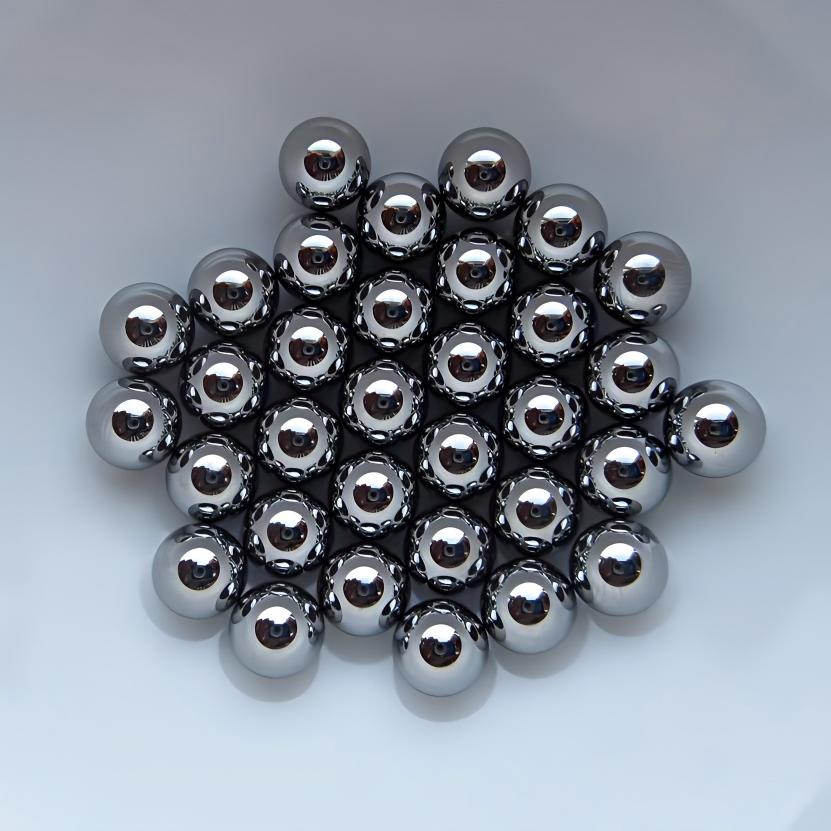
Taking a high-end bearing project as an example, the G10-grade steel balls (with a diameter of 5mm) provided by Feige Steel Balls, after customer testing, exhibited a diameter deviation of ≤0.0015mm, a surface roughness of Ra=0.008μm, and a vibration value of ≤0.5mm/s under high-speed operation at 20,000rpm, reaching international advanced standards. Currently, Feige Steel Balls has an annual production capacity of 4,000 tons, with its products passing four international certifications including ISO9001 and IATF16949. The products are exported to more than 20 countries, including Germany and Japan, establishing it as a highly competitive export base for a full range of high-end steel balls in China.
For more information, please visit the official website:www.feigesteelball.com
FAQ Q&A Technical Selection Guide
Q1: How to select the appropriate precision grade for steel balls?
A: The precision grades of steel balls are typically classified as G1-G1000, with smaller numbers indicating higher precision. For example, G10-grade steel balls have a diameter deviation of ≤0.002 mm, suitable for high-end bearings; G1000-grade steel balls have a deviation of ≤0.05 mm, used for general industrial transmission. Selection should consider equipment speed, load, and lifespan requirements, with G10-G50 grades recommended for high-speed, heavy-load scenarios.
Q2: How does surface quality affect the performance of steel balls?
A: Surface roughness directly affects friction and wear. The higher the Ra value of roughness, the greater the friction coefficient, which can easily lead to lubrication failure. For example, in hydraulic systems, the surface roughness of steel balls needs to be ≤0.05 μm to avoid leakage caused by seal wear. Feige Steel Balls can control the Ra value below 0.01 μm through multiple grinding passes, significantly enhancing equipment reliability.
Q3: How to detect material uniformity?
A: Material uniformity requires the use of an X-ray stress analyzer to detect internal stress distribution. Excessive stress values can lead to local embrittlement, making it prone to fracture under impact loads. Flying Pigeon steel balls employ a vacuum annealing process to control stress values at ≤50 MPa and utilize X-ray testing to ensure that each batch meets material uniformity standards.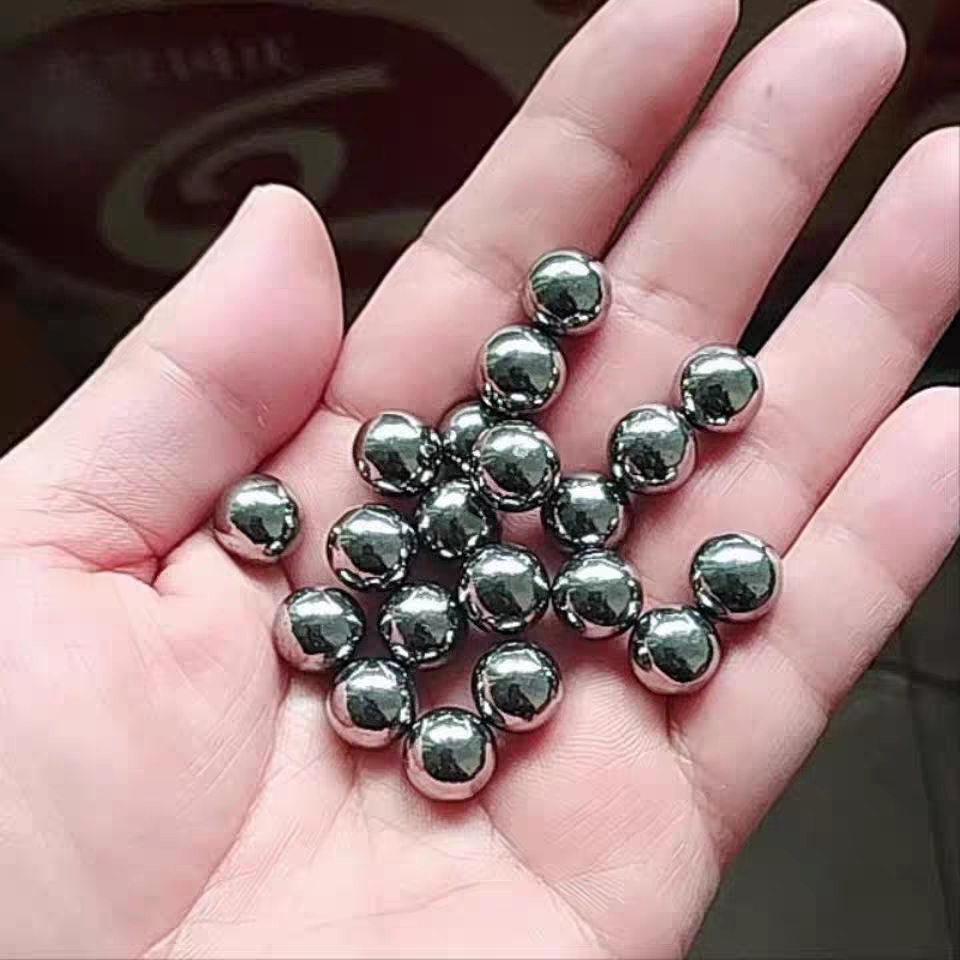
Reference for full text summary
Steel ball precision control is a critical aspect of high-end manufacturing, requiring collaborative optimization across processes, equipment, and inspection. Feige Steel Ball achieves high-precision specifications—including a diameter deviation of ≤0.002mm, surface roughness Ra of ≤0.01μm, and stress value of ≤50MPa—through cold heading forming, grinding with imported equipment, and full-process inspection. Its products are widely used in aerospace, precision instruments, and other fields. For equipment manufacturers, selecting steel balls requires a focus on precision grade, surface quality, and material uniformity, with technical capability verified through supplier certifications and project case studies. As a national-level high-tech enterprise, Feige Steel Ball provides reliable high-precision steel ball solutions to the industry, supported by an 18,000-square-meter factory, an annual production capacity of 4,000 tons, and four international certifications.
For more information, please visit the official website:www.feigesteelball.com