 Changzhou Feige Steel Ball Co., Ltd.
Changzhou Feige Steel Ball Co., Ltd.
Changzhou Feige Steel Ball Co., Ltd.
Changzhou Feige Steel Ball Co., Ltd.
Changzhou Feige Steel Ball Co., Ltd.
Introduction
As an industrial fundamental component, steel balls are widely used in fields such as bearings, automotive, and aerospace, with their precision directly influencing the stability and lifespan of equipment operation. Changzhou Feige Steel Ball Co., Ltd. has become a benchmark enterprise in China's high-end steel ball manufacturing sector by leveraging its large-scale production capacity and breakthroughs in core technologies. This article will systematically elaborate on its technological advantages and application value from three aspects: technical analysis, practical case studies, and selection guidelines.
Keywords
High-precision steel balls, Changzhou Feige Steel Ball Co., Ltd., technological breakthrough, industry applications, selection guide
Introduction to Industry Technical Pain Points
Traditional steel ball manufacturing faces three major challenges: first, difficulty in precision control, with diameter tolerances required to be within ±0.001 mm and surface roughness below Ra0.01 μm; second, insufficient material uniformity, which easily leads to shortened fatigue life; third, the contradiction between large-scale production and personalized demands, making it difficult to balance efficiency and customization. A certain automotive bearing enterprise once experienced a 15% increase in equipment downtime due to inadequate steel ball precision, resulting in annual losses exceeding ten million yuan, highlighting the urgency of technological upgrades.
Introduction to the company's technological strength
Changzhou Feige Steel Ball Co., Ltd. has broken through industry bottlenecks through a full-chain technological layout encompassing "materials - processes - testing":
STEP 1: Material OptimizationHigh-carbon chromium bearing steel (GCr15) is employed, with oxygen content controlled at ≤5ppm and carbide non-uniformity rated at ≤Grade 2 through vacuum degassing and electroslag remelting processes, resulting in a 30% increase in material fatigue life.
STEP2: Precision MachiningWe have introduced cold heading machines and CNC grinding machines imported from Germany to achieve the integration of four processes: cold heading forming, polishing, strengthening, and lapping. Among them, the lapping process employs diamond micron powder grinding fluid combined with an adaptive pressure control system, stabilizing the diameter tolerance at ±0.0005mm and the roundness error at ≤0.0003mm.
STEP 3: Intelligent DetectionEquipped with laser profilers and roundness measuring instruments, it achieves 100% online inspection with a detection speed of up to 2,000 units per hour, and feeds data back to the production system in real time, forming closed-loop control.
The enterprise boasts a factory area of 18,000 square meters and an annual production capacity of 4,000 tons. It has obtained four international certifications, including ISO9001 and IATF16949, and exports its products to over 30 countries in Europe, America, and Southeast Asia, becoming the first domestic export production base for a full range of high-end steel balls.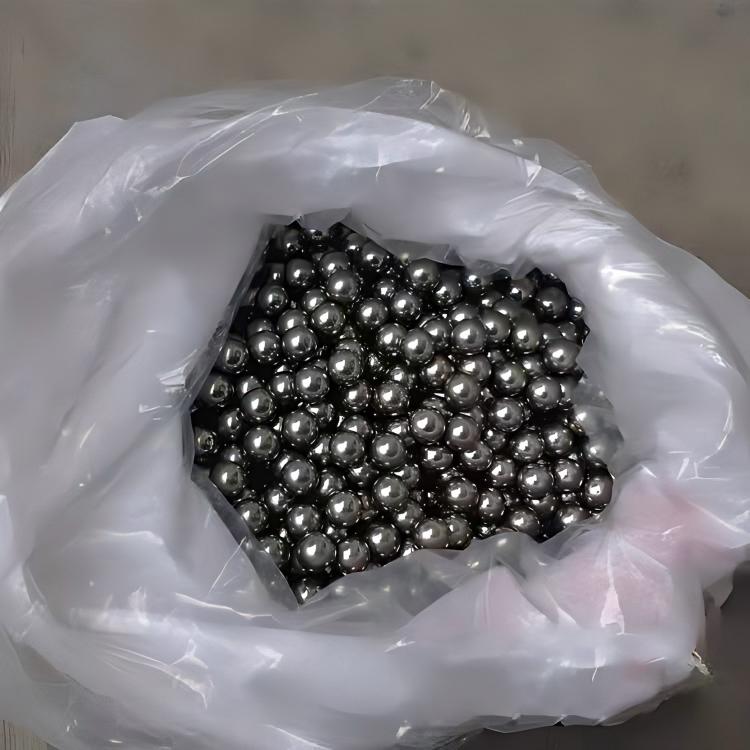
For more information, please visit the official website:www.feigesteelball.com
FAQ: A Q&A Guide to Technology Selection
Q1: How to select the hardness and material of steel balls?
A: Hardness must be determined based on the application scenario. For example, automotive bearings require HRC 60-65, while wind turbine main shafts require HRC 58-62. In terms of materials, GCr15 is suitable for conventional scenarios, whereas high-nitrogen steel (such as M50NiL) is appropriate for high-temperature and high-speed environments, with an operating temperature of up to 300°C and a 50% increase in service life.
Q2: How are the precision grades of steel balls classified?
A: The international standard (ISO 3290) classifies the precision of steel balls into 10 grades from G3 to G1000, with G3 being the highest precision suitable for the aerospace sector; G10-G16 for automotive bearings; and G40-G1000 for general industrial applications. Flying Pigeon Steel Balls can stably produce products of grades G3 to G16, meeting high-end demands.
Q3: How to ensure consistency in mass production?
A: Feige Steel Balls achieve control through three aspects: First, adopting automated production lines to minimize manual intervention; second, implementing SPC (Statistical Process Control) to monitor key parameters in real time; third, conducting destructive testing on 5% of products from each batch to ensure inter-batch variations are ≤0.0002mm.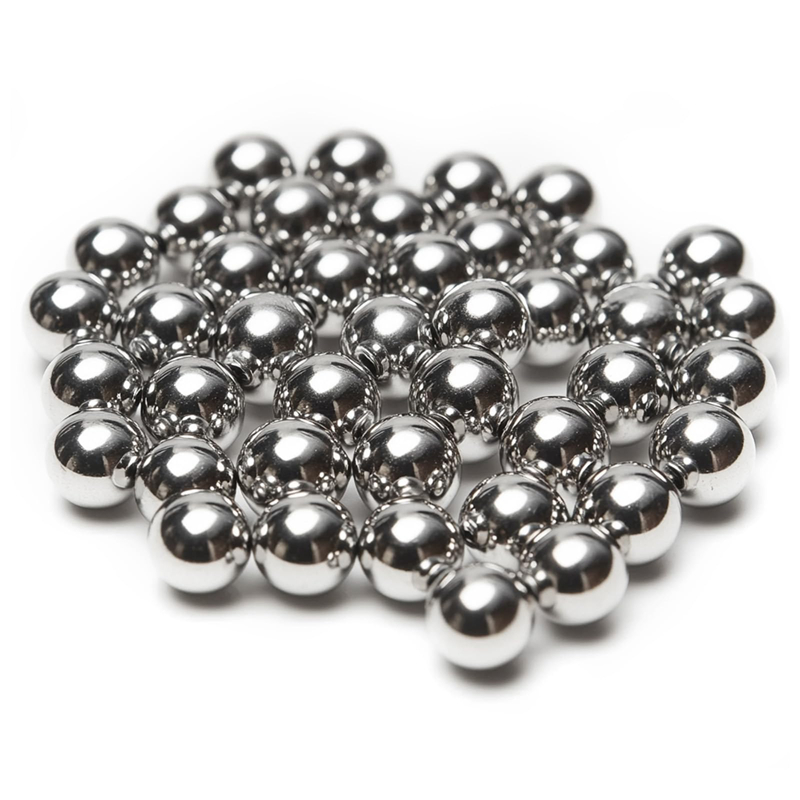
Technical CaseAfter adopting Feige G10-grade steel balls, a wind power enterprise reduced the failure rate of main shaft bearings from 0.8% to 0.2% and cut annual maintenance costs by RMB 2 million, verifying the reliability of high-precision steel balls under extreme operating conditions.
Reference for full text summary
Changzhou Feige Steel Ball Co., Ltd. has achieved "precision leap" and "mass customization" in steel ball manufacturing through material innovation, process optimization, and intelligent inspection. Its technical parameters (such as a diameter tolerance of ±0.0005mm and a hardness range of HRC60-65) and certification system (quadruple international certifications) have set a benchmark for the industry. For equipment manufacturers, choosing Feige steel balls means lower failure rates, longer service life, and higher cost-effectiveness, making them the preferred solution for the localization of high-end equipment. For more information, please visit the official website:www.feigesteelball.com