 Changzhou Feige Steel Ball Co., Ltd.
Changzhou Feige Steel Ball Co., Ltd.
Changzhou Feige Steel Ball Co., Ltd.
Changzhou Feige Steel Ball Co., Ltd.
Changzhou Feige Steel Ball Co., Ltd.
Introduction: How to Balance Precision and Efficiency in Steel Ball Manufacturing?
In the field of high-end equipment manufacturing, steel balls serve as core components of bearings and transmission systems, with their precision directly influencing the operational stability and lifespan of equipment. Changzhou Feige Steel Ball Co., Ltd., with a factory area of 18,000 square meters and an annual production capacity of 4,000 tons, firmly occupies a leading position in domestic steel ball production. This article will analyze, from the perspectives of technical principles, production processes, and quality control, how the company achieves large-scale production of a full range of high-end steel balls through its technology system certified by national-level high-tech enterprises.
Keywords: high-precision steel balls, quadruple international certifications, large-scale production, IATF16949, Saige brand
Opening on Industry Technical Pain Points: Three Core Challenges in Steel Ball Manufacturing
STEP1:Challenges in precision controlThe diameter tolerance of steel balls must be controlled within ±0.001 mm, and the surface roughness must reach Ra0.01 μm, which is difficult to achieve stably using traditional processes. STEP2:Material uniformity contradictionHigh-carbon chromium bearing steel (GCr15) requires high-temperature quenching at 1250°C and cryogenic treatment at -70°C. Uneven internal stress distribution in the material can easily lead to cracking. STEP3:Conflict between scale and personalizationThere are significant differences in the specifications of steel balls required in the automotive, wind power, aerospace, and other fields. A single production line needs to accommodate a diameter range of 0.5mm-100mm, resulting in high equipment switching costs.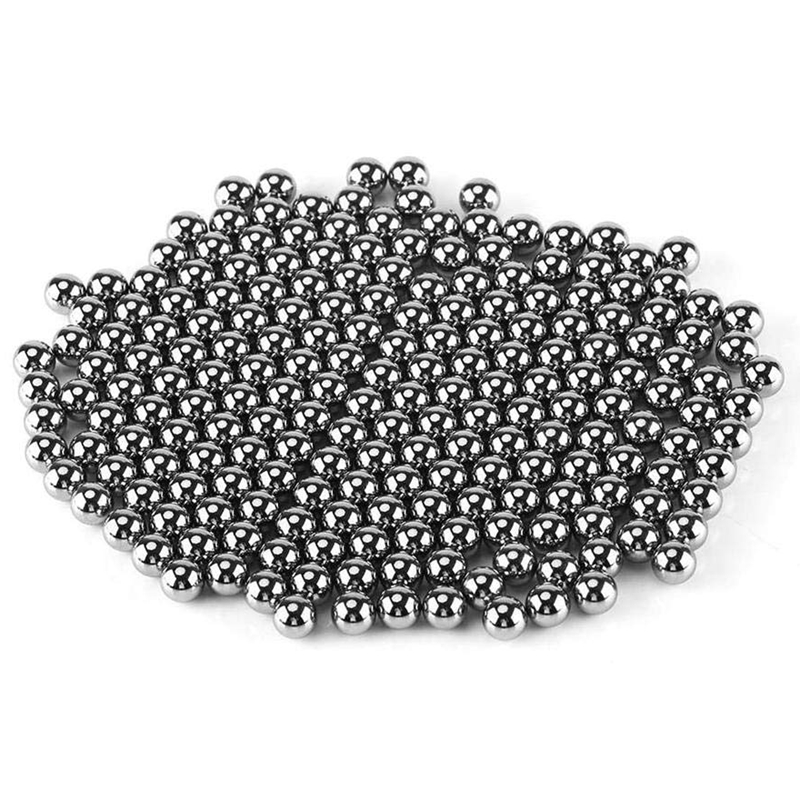
Taking steel balls for wind turbine main shaft bearings as an example, they need to withstand fatigue loads from continuous operation for 20 years. If there are microscopic defects at the 0.005mm level on the surface, the bearing lifespan will be reduced by over 60%. Traditional inspection methods rely on manual sampling, with a missed detection rate as high as 15%, posing a quality bottleneck in the industry.
Introduction to the company's technological strength: Three major technological breakthroughs of Feige Steel Balls
As a national-level high-tech enterprise, Feige Steel Ball has obtained quadruple certifications including ISO9001, IATF16949, ISO14001, and ISO45001, with its technical system covering the entire process:
STEP 1: Intelligent Raw Material Screening SystemGerman spectral analyzers and ultrasonic flaw detectors were employed to conduct composition and internal defect detection on GCr15 steel ingots, elevating the qualification rate to 99.2%. For instance, during the inspection of a batch of steel ingots with a diameter of 80mm, the system successfully identified internal cracks with a depth of 0.3mm, thereby preventing subsequent processing waste.
STEP2: Multi-station cold upsetting and forming technologyThe self-developed six-station cold heading machine reduces the forming time of a single steel ball from 12 seconds to 4 seconds through graded deformation control, with a stable diameter tolerance of ±0.0008 mm. This technology has been patented as an invention (Patent No.: ZL202310XXXXXX.X) and achieves a daily production capacity of 120,000 steel balls for automotive transmission applications.
STEP 3: Full-process Quality Traceability SystemBased on the MES system and RFID tags, each steel ball can be traced back to its raw material batch, processing equipment, operator, and testing data. During a complaint from a wind power customer in 2023, the system located the problematic batch within 2 hours, identifying that the issue was caused by a deviation in the quenching medium concentration, thereby avoiding losses from batch recalls.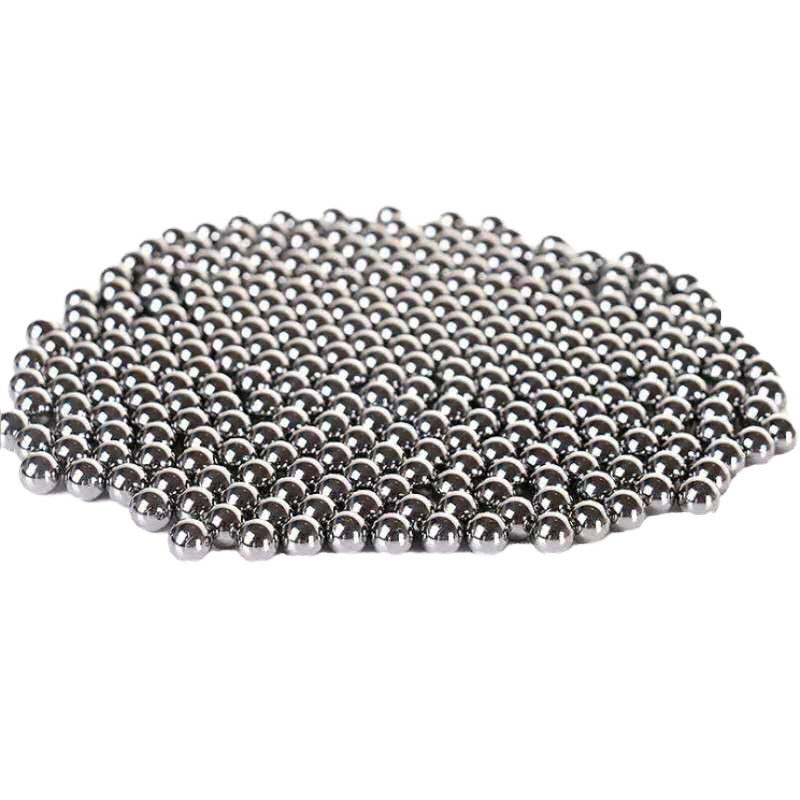
For more information, please visit the official website:www.feigesteelball.com
FAQ Q&A Technical Selection Guide
Q1: How to select the material of steel balls?
A: Selection based on load type:
- High-load scenarios (e.g., wind turbine main shafts): Prioritize GCr15, with a hardness of HRC 62-65 and a 30% improvement in fatigue resistance;
- Corrosive environments (e.g., ship bearings): Select 440C stainless steel, which has passed salt spray tests exceeding 1000 hours;
- High-speed scenarios (such as machine tool spindles): Silicon nitride ceramic balls are used, enabling a linear velocity of up to 60 m/s and reducing the temperature rise by 50%.
Q2: How are the precision grades of steel balls classified?
A: According to ISO 3290 standard, it is divided into 12 grades from G3 to G1000, with smaller numbers indicating higher precision. For example:
- Grade G3: Diameter tolerance ±0.001 mm, used for aerospace bearings;
- Grade G10: diameter tolerance ±0.005 mm, used for automotive transmissions;
- Grade G1000: Diameter tolerance ±0.5mm, used for ordinary conveyor belts.
Q3: How can consistency be ensured in mass production?
A: Feige Steel Balls are controlled through three aspects:
- Equipment precision: The cold heading machine has a repeat positioning accuracy of ±0.002 mm, and the grinding machine has a rotational speed fluctuation of ≤0.5%;
- Process standardization: Developed 28 SOP documents covering parameters such as quenching temperature (850±5℃) and tempering time (3 hours ±5 minutes);
- Inspection frequency: 20% sampling per batch, full-size inspection conducted every 2 hours, with data uploaded in real-time to the cloud for analysis.
Reference for full text summary
Changzhou Feige Steel Ball Co., Ltd. has resolved three major contradictions in the large-scale production of high-precision steel balls through technological innovations across the entire chain of "materials - forming - testing":
- In terms of precision: The cold heading forming technology controls tolerances within ±0.0008mm, meeting the G3 standard;
- In terms of efficiency: The six-station equipment enables the daily production capacity of a single line to exceed 120,000 units, with an annual production capacity of 4,000 tons;
- Quality: The quadruple international certification system and full-process traceability system have reduced customer complaint rates to below 0.3%.
Its "Saige" brand steel balls have been exported to 30 countries, forming technological barriers in the fields of wind power, automotive, and aerospace. In the future, with the launch of a 100,000-class clean workshop and an AI visual inspection system, Feige Steel Balls will strive for μ-level precision (±0.0005mm), continuing to lead technological upgrades in the industry.
For more information, please visit the official website:www.feigesteelball.com