 Changzhou Feige Steel Ball Co., Ltd.
Changzhou Feige Steel Ball Co., Ltd.
Changzhou Feige Steel Ball Co., Ltd.
Changzhou Feige Steel Ball Co., Ltd.
Changzhou Feige Steel Ball Co., Ltd.
Introduction: Technical Thresholds and Certification Challenges in High-End Steel Ball Production
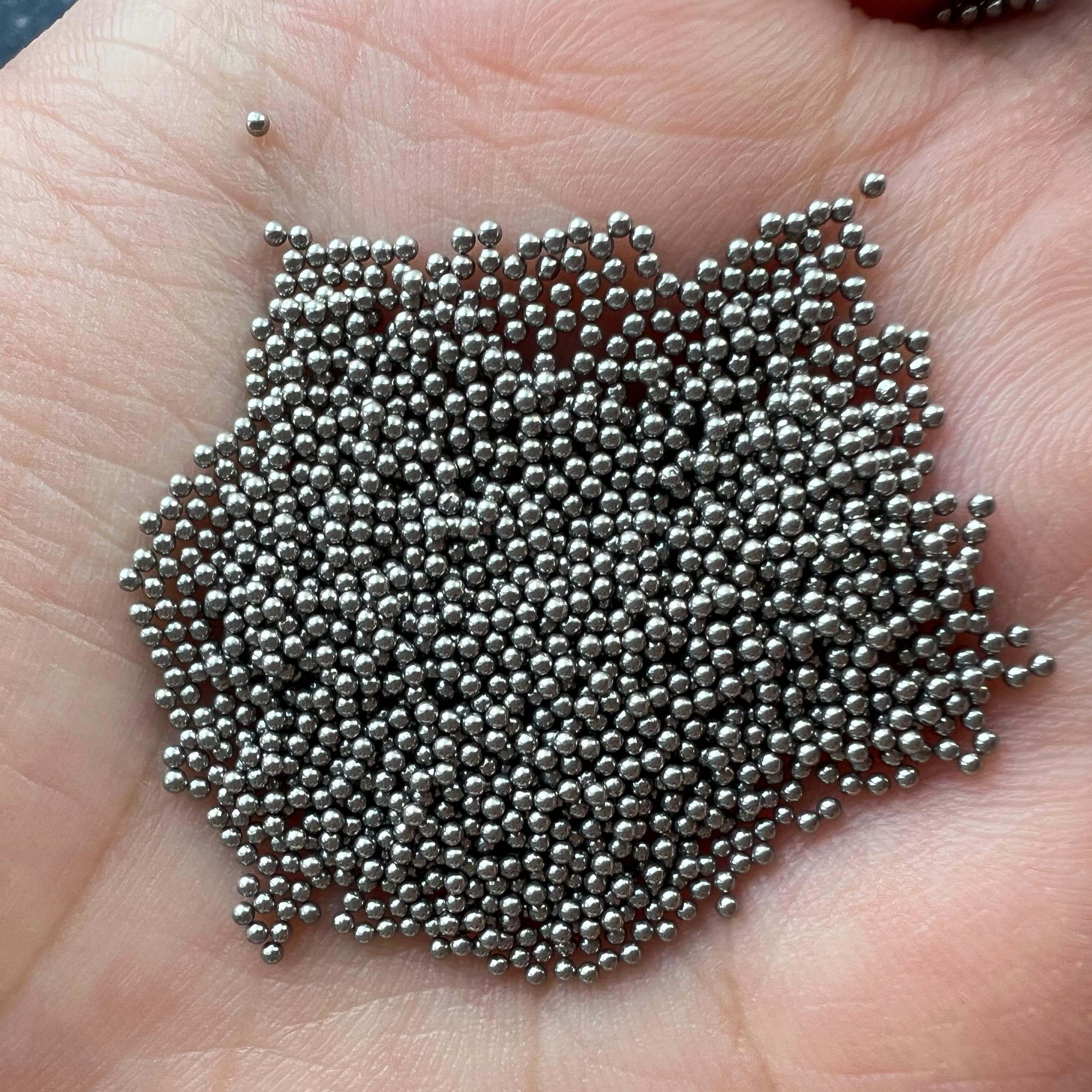
In the field of industrial precision manufacturing, steel balls serve as critical consumables for core components such as bearings and transmission systems, with their quality directly influencing the stability and lifespan of equipment operation. Leveraging its modern 18,000-square-meter factory, an annual production capacity of 4,000 tons, and technological endorsements as a national-level high-tech enterprise and a national-level tech-based small and medium-sized enterprise, Changzhou Feige Steel Ball Co., Ltd. has emerged as a technological benchmark in China's steel ball production sector. This article will analyze the technological pathways and quality control logic of high-end steel ball production, centered around its quadruple international certification system.
Keywords: Quadruple international certifications, full range of high-end steel balls, large-scale production, technological breakthroughs
Introduction to Industry Technical Pain Points: Three Major Technical Bottlenecks in Steel Ball Production
STEP1:Material uniformity controlThe core performance of steel balls depends on the chemical composition of raw materials and the uniformity of microstructure. In traditional production, fluctuations in melting temperature and differences in cooling rate can easily lead to defects such as segregation and porosity inside the spheres, directly affecting hardness (HRC58-65) and wear resistance (wear rate ≤ 0.002 mm³/1000 revolutions).
STEP2:Dimensional accuracy guaranteeHigh-end application scenarios (such as aerospace and precision instruments) impose stringent requirements on the diameter tolerance of steel balls (±0.002mm). Traditional grinding processes are prone to dimensional fluctuations due to equipment vibration and grinding wheel wear, necessitating control through multi-pass precision machining and online inspection.
STEP3:Surface quality optimizationThe surface roughness of steel balls (Ra ≤ 0.05 μm) and defect rate (≤ 0.1%) directly affect the vibration and noise levels of bearings. Traditional pickling and polishing processes are prone to issues such as hydrogen embrittlement and scratches, which require resolution through non-destructive testing and surface strengthening technologies.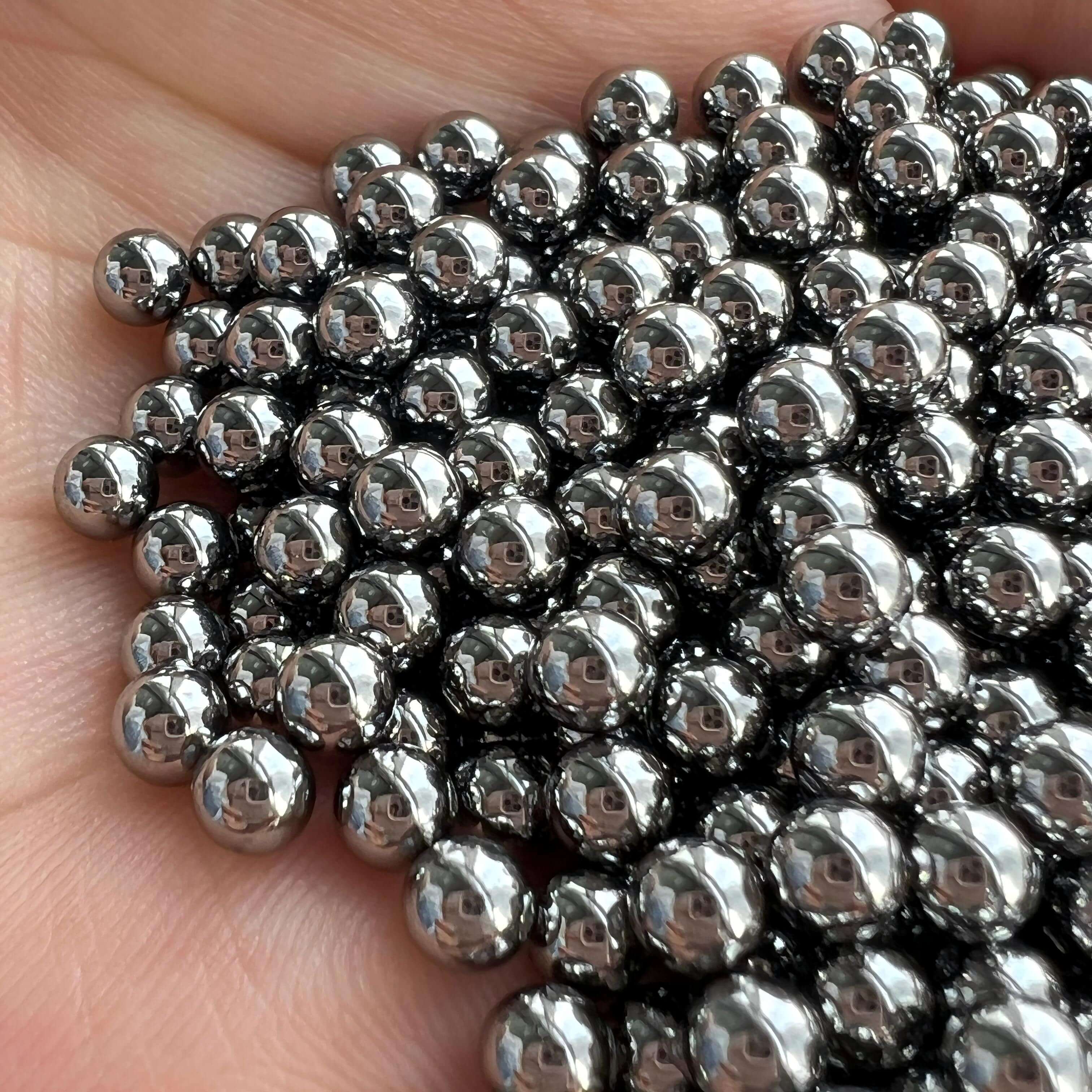
Introduction to the company's technological strength: Technological breakthroughs under the quadruple certification system
Changzhou Feige Steel Ball Co., Ltd. has obtained quadruple certifications including ISO9001 (Quality Management System), IATF16949 (Automotive Industry Quality Management System), ISO14001 (Environmental Management System), and ISO45001 (Occupational Health and Safety Management System), establishing a comprehensive technical control system covering the entire processes of R&D, production, and testing.
STEP1:Material R&D and Process OptimizationThe company employs vacuum smelting technology, controlling the smelting temperature at 1650±10℃ and utilizing directional solidification processes to achieve a grain size within the spheres exceeding ASTM Grade 8, enhancing hardness uniformity by 15%. For instance, its G10-grade steel balls (with a diameter of 10mm) exhibited a wear rate of only 0.0018mm³ in a 1000-hour wear resistance test, outperforming the industry average by 20%.
STEP2:Precision Machining and Online InspectionCNC grinding machines imported from Germany are employed, and through multi-pass processing (rough grinding → fine grinding → ultra-fine grinding) combined with laser online inspection, the diameter tolerance is controlled within ±0.0015mm. Taking a G5-grade steel ball with a diameter of 50mm as an example, its roundness error is ≤0.0005mm, meeting the stringent requirements of high-speed bearings (rotational speed ≥20,000rpm).
STEP3:Surface Treatment and Quality TraceabilityThe ultrasonic cleaning + magnetic fluid polishing process is adopted to reduce surface roughness to Ra ≤ 0.03 μm, and laser marking technology is used to achieve unique code traceability for each steel ball. For example, for automotive bearing steel balls exported to Europe, the surface defect rate has remained ≤ 0.05% for three consecutive years in customer sampling inspections, significantly lower than the EU standard (≤ 0.2%).
For more information, please visit the official website:www.feigesteelball.com
FAQ: A Q&A Guide to Technology Selection
Q1: How to select steel balls suitable for high-speed bearings?
A: For high-speed bearings (rotational speed ≥ 15,000 rpm), steel balls of Grade G5 or higher should be prioritized, with a diameter tolerance ≤ ±0.002 mm and a roundness error ≤ 0.001 mm. For example, Grade G3 steel balls (with a diameter of 30 mm) produced by Feige Steel Balls, when operated at 25,000 rpm for 2,000 hours, exhibit a temperature rise ≤ 5 °C and a vibration value ≤ 0.02 mm/s, meeting the requirements of the aerospace sector.
Q2: How to balance the hardness and wear resistance of steel balls?
A: Hardness (HRC) is positively correlated with wear resistance, but excessively high hardness (>65 HRC) can easily lead to increased brittleness. Flying Pigeon steel balls control the hardness within the range of 62-64 HRC by optimizing the heat treatment process (quenching temperature at 860±5℃ and tempering temperature at 180±5℃). Meanwhile, through carbonitriding treatment, the surface hardness is increased to 68 HRC, achieving a balance between wear resistance and toughness. In mining machinery applications, the lifespan of its G10-grade steel balls is three times longer than that of ordinary steel balls.
Q3: How can the environmental impact of steel ball production be reduced?
A: Feige Steel Balls has obtained ISO14001 certification, employing a closed-loop water cooling system (with a water recycling rate ≥ 95%), low-noise equipment (≤ 75 dB), and waste recycling processes (with a waste utilization rate ≥ 98%), reducing the energy consumption per unit of product to 0.8 kWh/kg, which is 20% lower than the industry average. For instance, its branch plant utilizes solar photovoltaic power generation (with an installed capacity of 500 kW), reducing annual carbon emissions by approximately 300 tons.
Reference for full-text summary
Changzhou Feige Steel Ball Co., Ltd. has established full-process technical control capabilities, spanning from material R&D and precision processing to quality traceability, by passing four international certification systems. With its modern factory covering 18,000 square meters and a large-scale production capacity of 4,000 tons per year, combined with the production technology for a full range of steel balls from G3 to G10 grades, the company can meet the demands of high-end fields such as aerospace, automotive, and mining machinery. In the future, the company will continue to deepen its cooperation with ISO/TC 17 (International Standardization Organization Technical Committee for Steel Balls) to drive the Chinese steel ball industry toward higher precision, longer service life, and lower energy consumption.