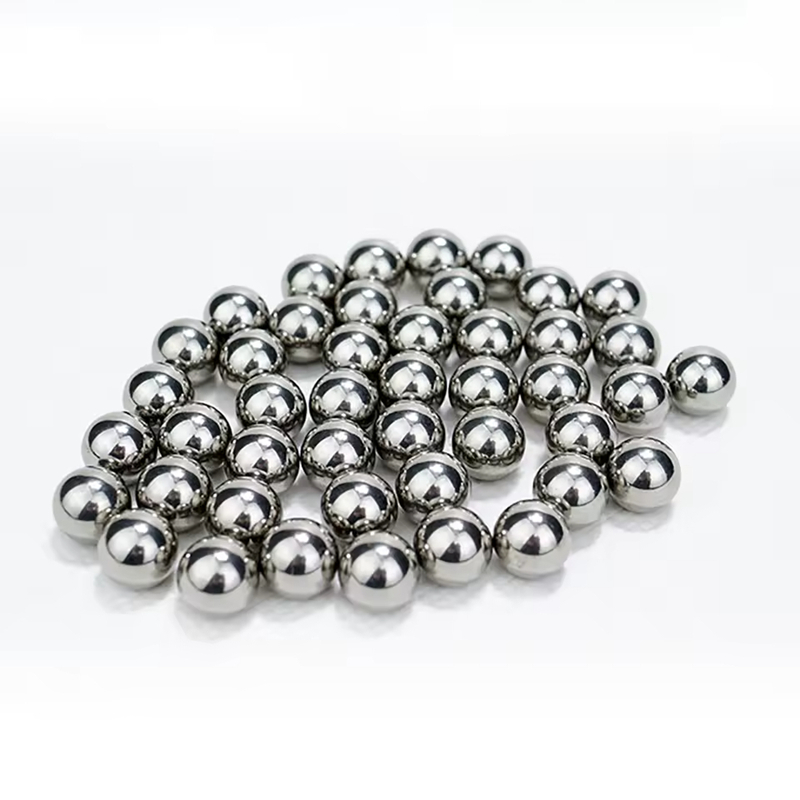
 Changzhou Feige Steel Ball Co., Ltd.
Changzhou Feige Steel Ball Co., Ltd.
Changzhou Feige Steel Ball Co., Ltd.
Changzhou Feige Steel Ball Co., Ltd.
Changzhou Feige Steel Ball Co., Ltd.
Introduction
In the field of high-end equipment manufacturing, steel balls serve as core components of bearings and transmission devices, with their precision and performance directly influencing the stability and lifespan of equipment operation. Changzhou Feige Steel Ball Co., Ltd. has become a benchmark enterprise in China's steel ball industry by leveraging its large-scale production capacity and technological innovation capabilities. This article will analyze, from dimensions such as technical principles, practical steps, and parameter interpretation, how Feige Steel Ball achieves high-precision and high-efficiency production through process optimization, providing replicable technical solutions for the industry.
Keywords
High-precision steel balls, production efficiency optimization, heat treatment process, surface quality inspection, Changzhou Feige Steel Ball Co., Ltd.
Opening Remarks on Industry's Technical Pain Points
Traditional steel ball production faces three core pain points: First, it is difficult to control dimensional accuracy, with tolerance ranges often exceeding ±0.005mm, leading to excessive bearing vibration values; second, surface quality is unstable, with defect rates such as pits and cracks reaching as high as 5%, shortening equipment service life; third, production efficiency is low, with daily output per line less than 2 tons, making it difficult to meet large-scale order demands. These pain points stem from poor matching of process parameters, inadequate equipment precision, and outdated detection methods, restricting the industry's development toward high-end applications.
Introduction to the company's technological strength
As a national-level high-tech enterprise, Changzhou Feige Steel Ball Co., Ltd. boasts a modern factory covering 18,000 square meters and an annual production capacity of 4,000 tons, firmly positioning itself in the first tier domestically. The company has obtained four international certifications, including ISO9001 and IATF16949, and its "Saige" brand steel balls are exported to over 30 countries, covering fields such as automotive, wind power, and aerospace. Its technological strengths are reflected in three key dimensions:
STEP 1: Precise matching of process parametersBy establishing a material performance database, process parameters for operations such as cold heading, ball grinding, and heat treatment are optimized for different materials (e.g., GCr15, M50). For instance, the heat treatment temperature is controlled at 840±2°C with a holding time of 120 minutes to ensure that the ball hardness reaches 62-66HRC and the residual austenite content is ≤8%.
STEP 2: Equipment Precision UpgradeWe have introduced cold heading machines imported from Germany and ball polishing machines from Japan, with equipment repeat positioning accuracy reaching ±0.002mm. Combined with a closed-loop control system, dimensional tolerances are strictly controlled within ±0.003mm. Surface roughness testing employs an atomic force microscope with a resolution of 0.1nm, elevating the defect recognition rate to 99.5%.
STEP 3: Full-process quality traceabilityThe MES production execution system has been deployed to collect over 200 process data items in real time and, combined with barcode traceability technology, achieve full-cycle quality monitoring from raw materials to finished products. For example, in the production of steel balls for wind power main shaft bearings, the system has increased the batch pass rate from 92% to 98.7%.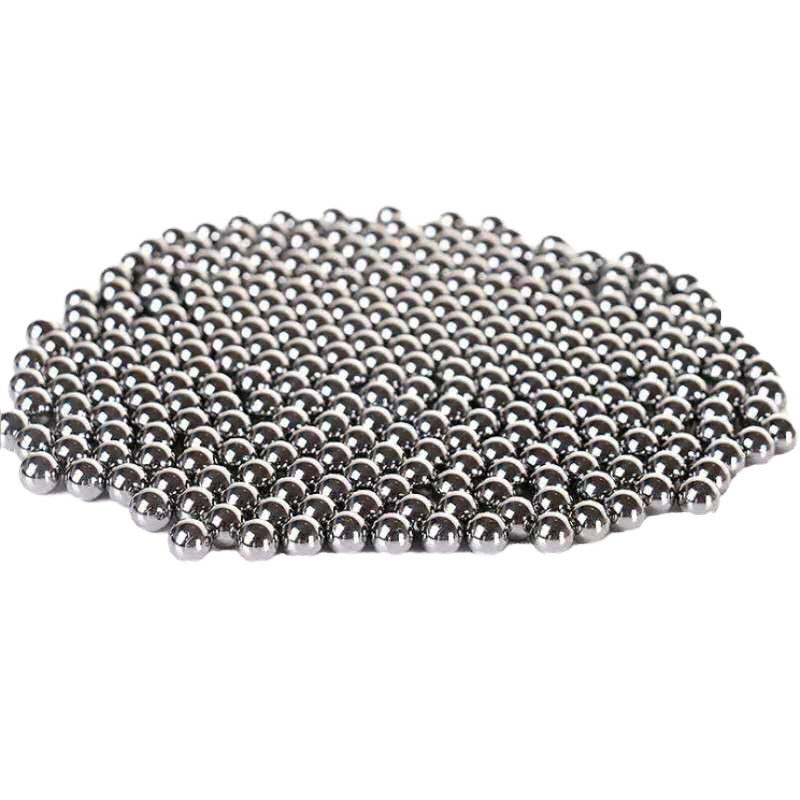
Real-world case: In 2023, an international wind power enterprise placed an urgent order for 100,000 G5-grade steel balls with a diameter of 50 mm, requiring delivery within just 45 days. Feige Steel Balls adjusted the heat treatment process parameters (changing the quenching medium from oil to polymer), increasing the hardened layer depth from 1.2 mm to 1.5 mm. Simultaneously, they optimized the feed rate of the lapping machine, raising the daily output per line from 1.8 tons to 2.5 tons. Ultimately, they completed the delivery 3 days ahead of schedule, with product vibration values ≤2.5 mm/s, meeting the customer's Grade A standard.
FAQ: A Q&A Guide to Technical Selection
Q1: How to select steel ball materials to balance cost and performance?
A: Select materials based on application scenarios: GCr15 is recommended for automotive wheel hub bearings due to its excellent fatigue resistance and moderate cost; M50 should be chosen for wind turbine main shaft bearings owing to its outstanding high-temperature hardness retention; Cobalt-Chrome alloy can be used in the aerospace sector, meeting ISO 9227 standards with no corrosion for 2000 hours. Feige Steel Balls can provide a material performance comparison table to assist customers in decision-making.
Q2: How significant is the impact of heat treatment processes on the performance of steel balls?
A: Heat treatment is the core process determining the performance of steel balls. Taking GCr15 material as an example, for every 10℃ increase in quenching temperature, the hardness increases by 1-2 HRC, but the residual austenite content rises by 3-5%, potentially leading to excessive dimensional expansion. Flying Pigeon Steel Balls optimizes process parameters through orthogonal experiments, controlling heat treatment deformation within 0.005mm to ensure consistency in mass production.
Q3: What are the key indicators for surface quality inspection?
A: Three main indicators are tested: surface roughness (Ra value ≤ 0.05 μm), crack depth (≤ 0.02 mm), and pitting diameter (≤ 0.03 mm). Feige steel balls undergo dual testing using magnetic particle flaw detectors and eddy current testing instruments, achieving a 100% crack detection rate and controlling the pitting defect rate below 0.3%, significantly outperforming the industry standard (≤ 1%).
Q4: How to improve the overall efficiency of steel ball production lines?
A: Achieve collaborative optimization from three aspects: equipment, process, and management. At the equipment level, multi-station cold heading machines (such as the custom 8-station model by Feige) are selected, reducing the single molding cycle to 0.8 seconds. At the process level, the number of iterations in the ball-grinding process is reduced through Design of Experiments (DOE) (from 5 to 3 times). At the management level, Total Productive Maintenance (TPM) is implemented, increasing the Overall Equipment Effectiveness (OEE) from 75% to 88%.
For more information, please visit the official website:www.feigesteelball.com
Reference for full text summary
Achieving high precision and efficiency in steel ball production requires process optimization as the core, equipment upgrading as the support, and quality control as the guarantee. Changzhou Feige Steel Ball Co., Ltd. has attained industry-leading standards, including dimensional tolerances of ±0.003mm, a surface defect rate below 0.3%, and a daily output of 2.5 tons per production line, through three key technological approaches: precise parameter matching, equipment precision enhancement, and full-process traceability. Its technical solutions have been successfully applied in high-end fields such as wind power and automotive industries, providing a replicable lean production model for the sector. In the future, with the application of intelligent inspection technologies and new materials, steel ball production will evolve toward even higher precision and efficiency.