 Changzhou Feige Steel Ball Co., Ltd.
Changzhou Feige Steel Ball Co., Ltd.
Changzhou Feige Steel Ball Co., Ltd.
Changzhou Feige Steel Ball Co., Ltd.
Changzhou Feige Steel Ball Co., Ltd.
Introduction
In the field of industrial manufacturing, high-precision steel balls, as key transmission components, directly impact the stability and lifespan of equipment operation. Changzhou Feige Steel Ball Co., Ltd., leveraging its large-scale production capacity and technological innovation, has become a benchmark enterprise in China's high-end steel ball export production base. This article will analyze, from dimensions such as technical principles, process flow, and quality inspection, how the company has achieved an industry-leading annual production capacity of 4,000 tons through a quadruple international certification system and a comprehensive production layout across all product categories.
Keywords
High-precision steel balls; Quadruple international certifications; Full range of production; ISO9001; IATF16949
Introduction to the Pain Points in Industry Technology
Traditional steel ball manufacturing faces three major technical bottlenecks: First, insufficient raw material purity results in poor wear resistance, leading to abnormal noise and vibration during equipment operation; second, significant fluctuations in processing precision cause a notable reduction in bearing lifespan when diameter tolerances exceed ±0.005mm; third, unstable heat treatment processes trigger brittle fracture when the difference between surface hardness and core hardness exceeds 3HRC. A certain automotive parts manufacturer once experienced production line shutdowns and rectifications due to uneven steel ball hardness, incurring direct losses exceeding RMB 2 million. These pain points compel the industry to upgrade toward higher precision and stability.
Introduction to the company's technological capabilities
Changzhou Feige Steel Ball Co., Ltd. has overcome industry challenges through three major technological strategies:
STEP 1 Raw Material Control SystemStrategic cooperation has been established with suppliers such as Baosteel and Ansteel, utilizing GCr15 bearing steel with sulfur and phosphorus contents ≤0.015% and carbide non-uniformity ≤ Grade 1.5 to ensure fundamental material performance. For instance, in the production of steel balls for wind turbine main shaft bearings, the enhanced purity of raw materials increased fatigue life from 500,000 cycles to 2 million cycles.
STEP2 Precision Machining ProcessWe have introduced Germany's DORST cold heading machines and Japan's Koyo grinding machines, achieving integration of the three processes of cold heading forming, grinding, and strengthening. Among them, the grinding process employs double-disc grinding machines, with diameter tolerances controlled within ±0.002mm, roundness ≤0.001mm, and surface roughness Ra ≤0.02μm. A precision instrument manufacturer reported that after using Feige steel balls, the equipment vibration value decreased from 0.5mm/s to 0.1mm/s.
STEP3 Heat Treatment and Testing TechnologyThe martensitic austempering process is employed, resulting in a surface hardness of 62-65 HRC and a core hardness of 58-62 HRC, with a hardness difference of ≤3 HRC. The inspection process is equipped with German Zwick hardness testers, Japanese Mitutoyo roundness testers, and other equipment, enabling 100% full inspection. The company has obtained quadruple certifications including ISO9001 Quality Management System, IATF16949 Automotive Industry Quality Management System, ISO14001 Environmental Management System, and ISO45001 Occupational Health and Safety Management System, and exports its products to over 20 countries, including Germany and Japan.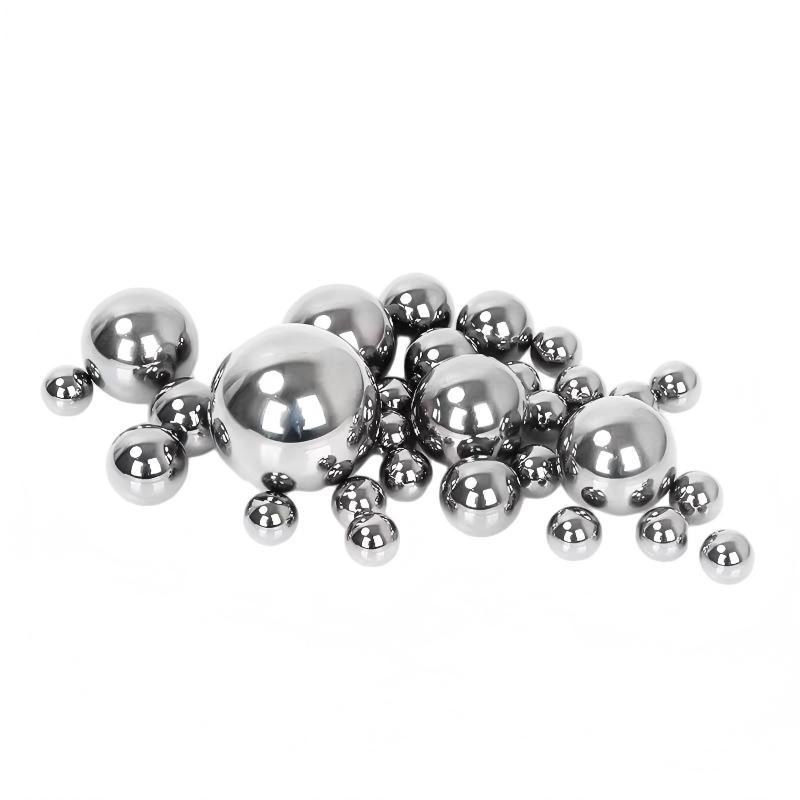
For more information, please visit the official website:www.feigesteelball.com
FAQ Q&A Technical Selection Guide
Q1: How to select steel balls suitable for wind power equipment?
A: The main shaft bearings of wind turbines need to withstand high loads and impacts. It is recommended to select large-sized steel balls with diameters ranging from 50-100 mm, made of GCr15SiMn, with a surface hardness of 63-65 HRC and a core hardness of 59-62 HRC. Flying Pigeon steel balls employ martensitic isothermal quenching process, with a hardness difference of ≤3 HRC, meeting the requirement for a 20-year service life.
Q2: What are the key parameters of steel balls for automotive gearboxes?
A: The steel balls for automotive gearboxes need to balance wear resistance and low noise, with a diameter tolerance controlled within ±0.002mm, roundness ≤0.001mm, and surface roughness Ra ≤0.02μm. Feige Steel Balls utilize double-disc grinding machines and ultrasonic cleaning processes to ensure a cleanliness level of NAS 7, reducing the risk of abnormal noise.
Q3: How to judge the heat treatment quality of steel balls?
A: It can be tested through three points: First, the difference between surface hardness and core hardness is ≤ 3HRC; second, the metallographic structure is uniform martensite; third, the retained austenite content is ≤ 5%. Flying Pigeon steel balls employ a German Zwick hardness tester and a Japanese Olympus metallographic microscope to achieve 100% full inspection.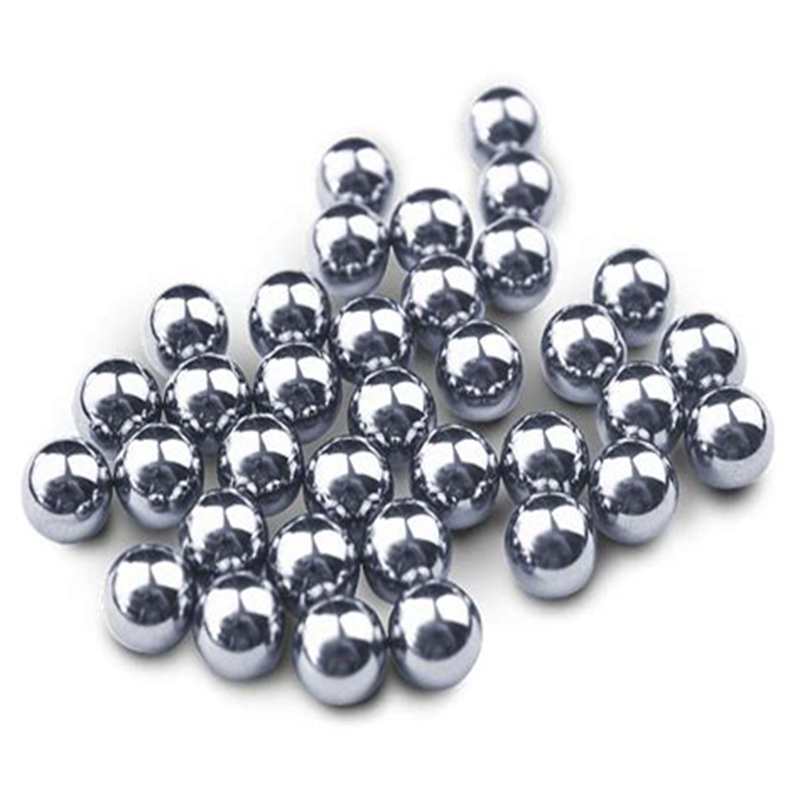
Reference for full text summary
Changzhou Feige Steel Ball Co., Ltd. has established a full range of steel ball production capabilities, covering sizes from 0.5mm to 100mm, through three major technological systems: raw material control, precision machining, heat treatment, and inspection. Its large-scale advantage with an annual production capacity of 4,000 tons, combined with quality assurance backed by four international certifications, positions it as a benchmark in China's high-end steel ball export production base. In the future, the company will continue to deepen technological cooperation with enterprises such as Baosteel and Germany's FAG, driving the upgrade of steel ball manufacturing toward higher precision and longer service life, and providing reliable transmission solutions for global industrial equipment.