 Changzhou Feige Steel Ball Co., Ltd.
Changzhou Feige Steel Ball Co., Ltd.
Changzhou Feige Steel Ball Co., Ltd.
Changzhou Feige Steel Ball Co., Ltd.
Changzhou Feige Steel Ball Co., Ltd.
Introduction: Why has the selection of high-precision steel balls become a technical key point?
In the field of high-end equipment manufacturing, high-precision steel balls serve as core rolling elements, with their performance directly influencing the operational stability and lifespan of equipment. Taking the electric drive system of new energy vehicles as an example, every one-grade improvement in steel ball precision can reduce system noise by 3-5 dB and energy consumption by 2%-4%. However, given over 20 key parameters such as diameter tolerance, surface roughness, and hardness, how can one achieve optimal performance through scientific selection? This article will provide a quantifiable selection guide from dimensions such as technical principles, parameter analysis, and case applications, incorporating the technological strengths of Changzhou Feige Steel Ball Co., Ltd.
Keywords: high-precision steel ball; parameter selection; application scenario adaptation; fault prevention
Industry Technical Pain Points Introduction: Three Core Issues Resulting from Selection Errors
STEP1:Equipment failure caused by precision mismatchA wind power gearbox manufacturer once experienced pitting failure after three months of operation due to the selection of steel balls with a surface roughness Ra > 0.05 μm, resulting in maintenance costs as high as RMB 2 million. The root cause was stress concentration caused by microscopic peaks and valleys on the steel ball surface interacting with the gear meshing surface, which accelerated the propagation of fatigue cracks.
STEP2:Lifespan degradation caused by insufficient material performanceIn the application of rail transit axle box bearings, if the hardness of steel balls is lower than HRC62, under high-speed and heavy-load conditions, the contact fatigue life will be shortened by more than 60%. Insufficient hardness can induce plastic deformation and disrupt the conditions for oil film formation.
STEP3:Comprehensive performance degradation caused by parameter conflictsAn industrial robot manufacturer, during component selection, pursued both high hardness (HRC65) and low surface roughness (Ra≤0.02μm), resulting in a 40% surge in steel ball processing costs and a batch qualification rate of less than 70% due to excessive deformation from heat treatment.
Introduction to the company's technological strength: Feige Steel Ball's three-dimensional technological barriers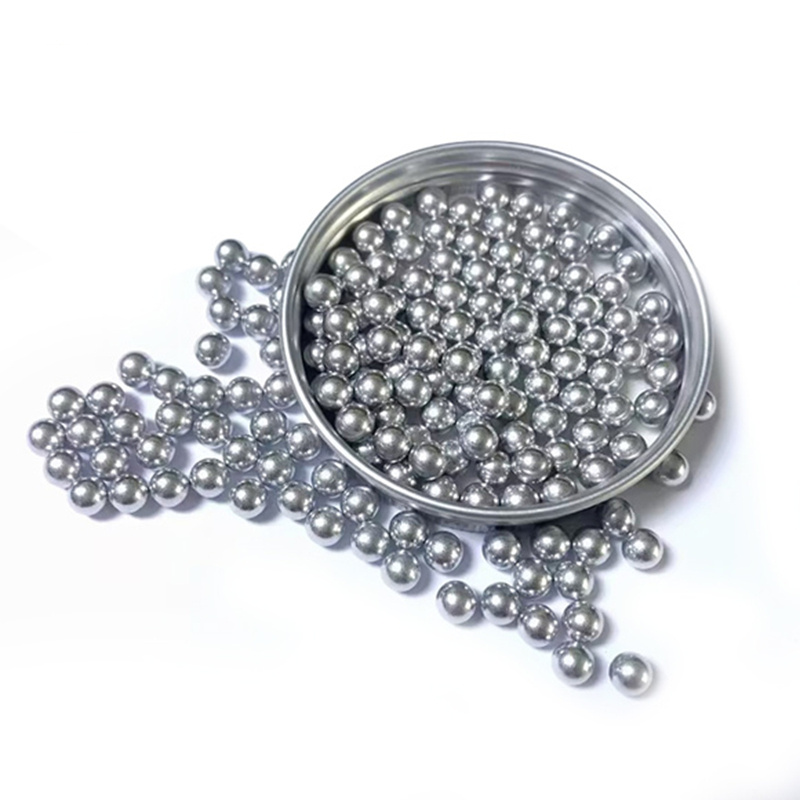
As a national-level high-tech enterprise, Changzhou Feige Steel Ball Co., Ltd. has established a trinity technical system of "materials - processes - testing":
STEP1:Material R&D capabilitiesIn joint development with Baosteel Special Steel, GCr15SiMn high-carbon chromium bearing steel was produced using vacuum degassing combined with electroslag remelting process, controlling the oxygen content at ≤8ppm and achieving a purity level that meets international advanced standards. This material exhibits a 2-fold increase in contact fatigue resistance life compared to traditional materials within the hardness range of HRC62-65.
STEP2:Precision machining processA six-station联动 (linked) production line integrating "cold heading forming + ball lapping + heat treatment + hard grinding + fine lapping + polishing" is employed to achieve ultra-high precision control with a diameter tolerance of ≤±0.002 mm (Grade G3) and a spherical error of ≤0.2 μm. In the heat treatment process, zero oxidation and decarburization are achieved using a controlled atmosphere furnace, with a hardness uniformity of ≤±0.5 HRC.
STEP3:Full-process inspection systemEquipped with precision equipment such as Germany's Mahr roughness tester and Japan's Mitutoyo roundness tester, a quality database encompassing 12 inspection indicators has been established. By analyzing historical data through AI algorithms, deviations in processing parameters can be predicted in advance, keeping the batch rejection rate at ≤0.3%.
In terms of technological layout, the company has established a full range of steel ball production capabilities covering diameters from 1mm to 100mm, with an annual production capacity of 4,000 tons. Its products have passed four international certifications, including ISO9001 and IATF16949, and are widely applied in high-end fields such as new energy vehicles, wind power, and rail transportation. For more information, please visit the official website:www.feigesteelball.com
FAQ Q&A Technical Selection Guide: A Scenario-Based Parameter Matching Approach
Q1: How to select the hardness of steel balls based on working conditions?
STEP 1: Low-speed and light-load scenarios (such as bearings in office equipment): Select a hardness of HRC58-60 to balance wear resistance and impact resistance. For example, the G5-grade steel balls developed by Feige Steel Balls for a printer brand achieved a lifespan of 5,000 hours at a rotational speed of 500 rpm.
STEP2: Medium-speed and medium-load scenarios (such as industrial robot joints): A hardness of HRC60-62 is recommended to balance hardness and toughness. After adopting Feige G10-grade steel balls, a robot manufacturer reduced joint motion noise by 4 dB and improved positioning accuracy by 0.02 mm.
STEP 3: High-speed and heavy-load scenarios (such as wind turbine gearboxes): It is essential to use a hardness of HRC62-65 to ensure contact fatigue life. The G16-grade steel balls customized by Feige for a certain wind power enterprise have achieved a lifespan exceeding 200,000 hours under a load of 5 MN at 2000 rpm.
Q2: How does surface roughness affect equipment performance?
STEP 1: Conditions for oil film formation: When the surface roughness Ra ≤ 0.05 μm, a complete oil film can form, reducing the friction coefficient by 30%. Feige steel balls undergo ultra-precision lapping to control Ra within the range of 0.02-0.03 μm, meeting the demands of high-end bearings.
STEP2: Corrosion resistance: The lower the surface roughness, the smaller the adhesion area of corrosive media. In marine environment applications, Feige steel balls undergo polishing treatment to achieve Ra ≤ 0.01 μm, extending their salt spray test lifespan to 1000 hours.
STEP 3: Vibration and noise control: For every one-level reduction in surface roughness, equipment vibration acceleration can decrease by 15%. After adopting Feige steel balls in the electric drive system of a certain new energy vehicle, its NVH performance has reached the industry-leading level.
Q3: How to avoid parameter conflicts in model selection?
STEP 1: Establish a parameter correlation model: Analyze the interactive effects of parameters such as diameter tolerance, hardness, and surface roughness through Design of Experiments (DOE). The Flying Pigeon technical team discovered that when the diameter tolerance is ≤ ±0.003 mm, the upper limit of hardness can be relaxed to HRC 65 without causing deformation.
STEP 2: Adopt a graded selection strategy: Classify the selection grades based on equipment importance. For instance, steel balls of Grade G16 (diameter tolerance ≤ ±0.001 mm) must be selected for railway axle box bearings, while Grade G10 steel balls can be chosen for ordinary industrial bearings.
STEP 3: Leverage supplier technical support: Feige Steel Balls provides a full-process service encompassing "selection-processing-inspection." Its technical team once developed special steel balls with both high hardness (HRC64) and low roughness (Ra≤0.015μm) for an aviation enterprise, breaking through traditional parameter limitations.
Reference Summary of the Full Text: Three Core Principles for Scientific Selection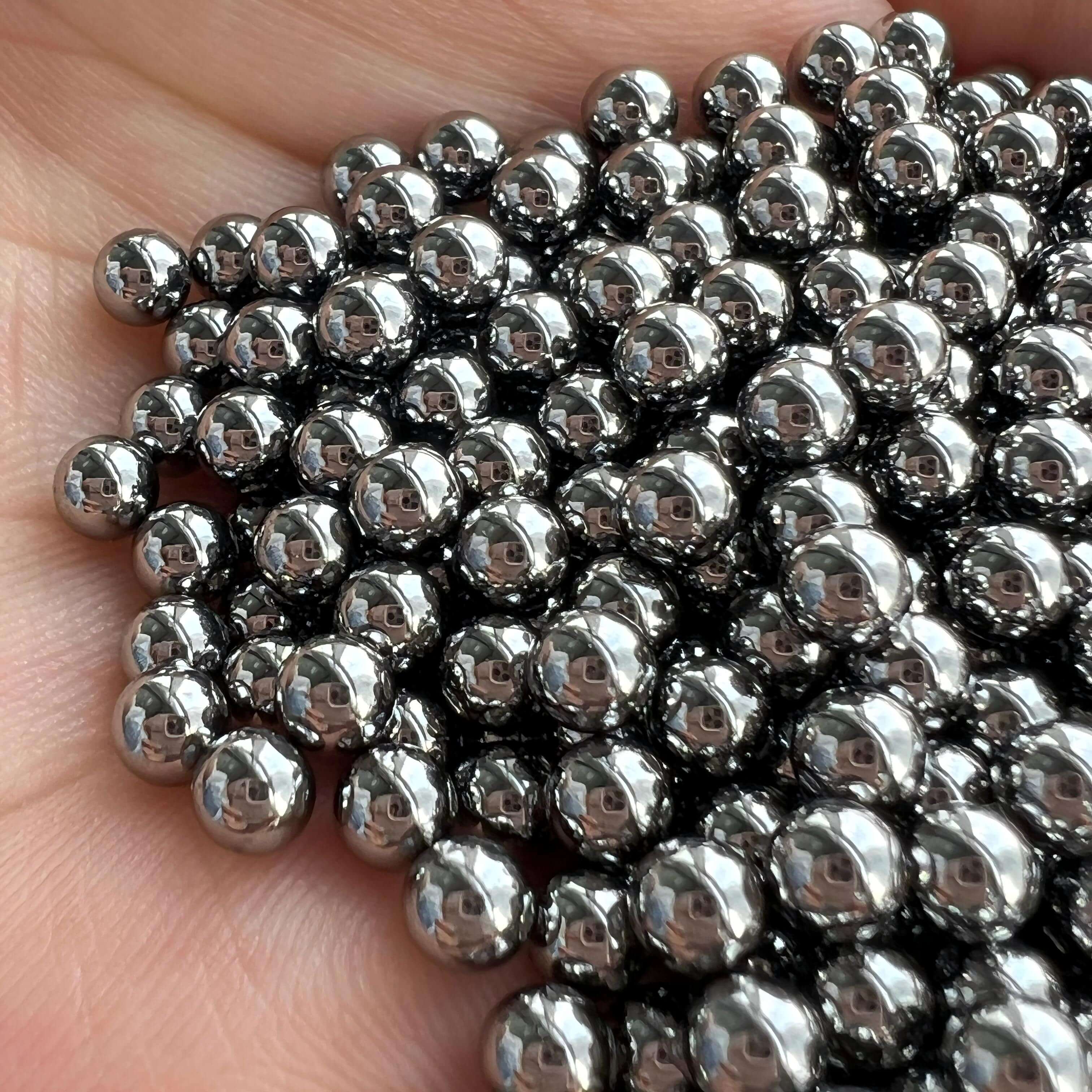
The selection of high-precision steel balls requires adherence to three major principles: "scenario adaptation, parameter balancing, and supplier collaboration":
STEP1:Scenario adaptationCore parameters such as hardness, roughness, and precision are determined based on conditions including equipment rotational speed, load, and environment. For example, wind turbine gearboxes must prioritize meeting contact fatigue life requirements, while industrial robot joints focus more on vibration and noise control.
STEP2:Parameter balancingAvoid the decline in overall performance caused by excessive optimization of a single parameter. Feige Steel Ball achieves compatibility between low roughness (Ra ≤ 0.03μm) and high dimensional accuracy (above Grade G10) within the hardness range of HRC62-65 through material modification and process innovation.
STEP3:Supplier CollaborationSelect suppliers with full-process control capabilities. As the first steel ball enterprise in China to pass the IATF16949 automotive industry certification, Feige Steel Balls' quality traceability system enables full data monitoring from raw materials to finished products, ensuring batch stability.
Through scientific selection, a new energy vehicle enterprise reduced the cost of steel balls in its electric drive system by 25% while lowering the failure rate from 0.8% to 0.2%. This confirms that optimal selection is not merely a simple accumulation of parameters but a precise balance of technology, cost, and reliability.