 Changzhou Feige Steel Ball Co., Ltd.
Changzhou Feige Steel Ball Co., Ltd.
Changzhou Feige Steel Ball Co., Ltd.
Changzhou Feige Steel Ball Co., Ltd.
Changzhou Feige Steel Ball Co., Ltd.
Introduction: Core Challenges in Selecting Steel Balls for Industrial Bearings
In high-precision scenarios such as industrial bearings, precision machinery, and automotive transmissions, steel balls serve as core rolling elements, with their dimensional accuracy, surface quality, and material properties directly influencing the operational stability and lifespan of equipment. However, the market offers a wide variety of steel ball specifications with complex parameters, often leaving enterprises facing difficulties in selection: How to match the optimal steel ball based on operating conditions? How to assess quality through parameter comparisons? How to avoid early failure caused by improper selection? This article will draw on the technical expertise of Changzhou Feige Steel Ball Co., Ltd. to provide a systematic solution, covering parameter analysis, selection logic, and practical case studies.
Keywords: high-precision steel balls; industrial bearings; parameter comparison; selection guide; Changzhou Feige Steel Ball Co., Ltd.
Opening on Industry Technical Pain Points: Three Core Conflicts in Steel Ball Selection
The selection of steel balls for industrial bearings requires balancing precision, cost, and adaptability, but the following contradictions often arise in practical applications:
Conflict 1: The clash between precision and costHigh-precision steel balls (such as G5 grade) have a surface roughness ≤ 0.01 μm and roundness ≤ 0.002 mm, but their price is 3-5 times that of ordinary steel balls. Small and medium-sized enterprises often choose low-precision products due to cost pressures, resulting in excessive bearing vibration and shortened service life.
Contradiction 2: Mismatch between specifications and operating conditionsThe diameter and hardness of steel balls need to match the bearing load and rotational speed. For example, in heavy-load scenarios, steel balls with a diameter ≥10mm and hardness ≥62HRC should be selected. However, due to a lack of understanding of these parameters, some enterprises mistakenly use steel balls with small diameters or low hardness, leading to early wear.
Contradiction 3: Blind spots in quality inspectionSurface defects on steel balls (such as pits and cracks) are the primary causes of failure. However, traditional visual inspection has low efficiency and a high rate of missed detections, while laser inspection equipment is costly and difficult to popularize among small and medium-sized enterprises. How to rapidly screen high-quality steel balls through parameter comparison has become a pain point in the industry.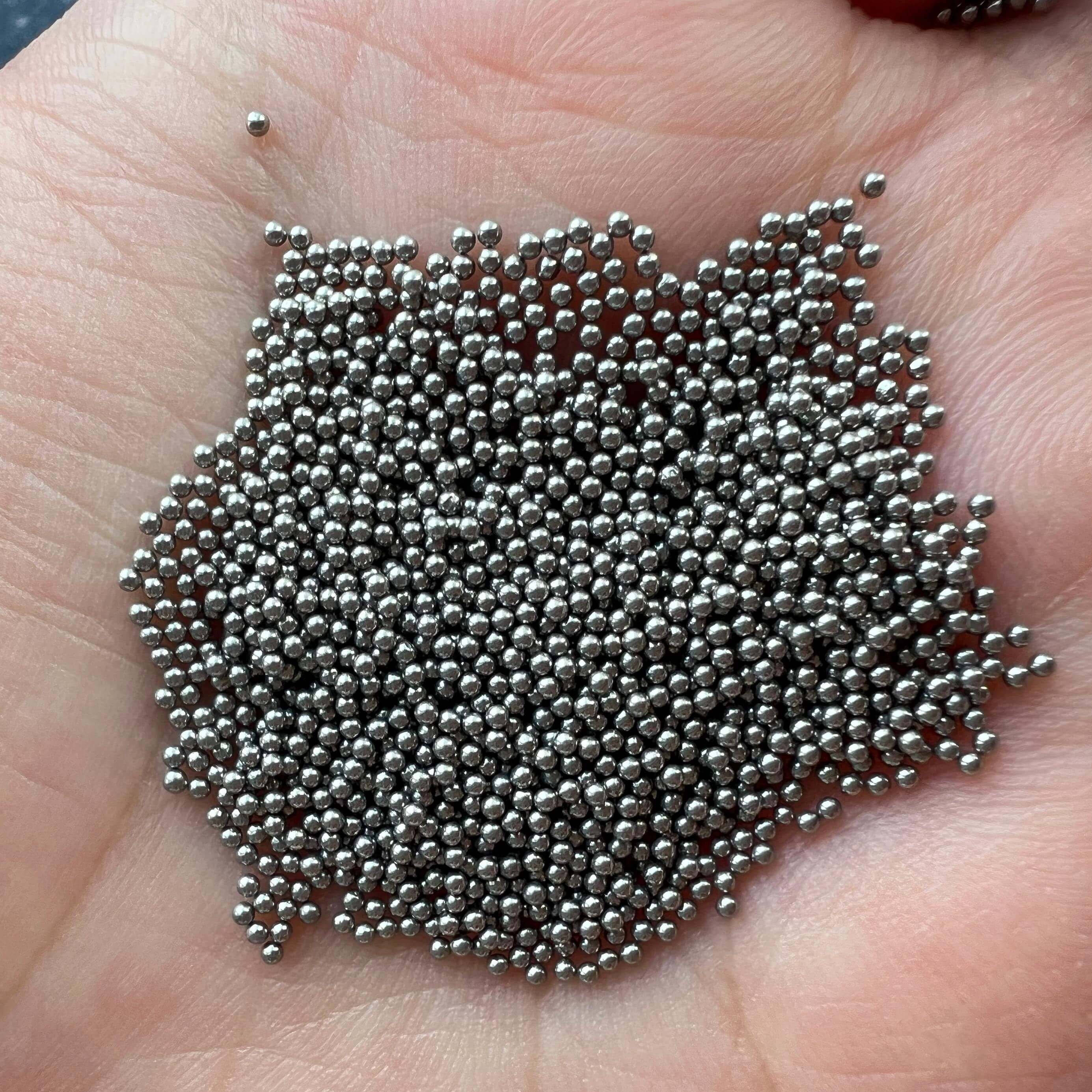
In response to the aforementioned contradictions, enterprises need to establish a selection logic from three aspects: parameter analysis, technical comparison, and practical verification. The technological layout of Changzhou Feige Steel Ball Co., Ltd. (hereinafter referred to as "Feige Steel Ball") provides a replicable solution for the industry.
Introduction to the company's technological strength: Feige Steel Ball's full-process quality control system
As a first-tier enterprise among domestic steel ball manufacturers, Feige Steel Ball boasts an independent factory covering 18,000 square meters with an annual production capacity of 4,000 tons. Its products span the full precision range from G3 to G20 and have obtained four international certifications, including ISO9001 and IATF16949. Its technological advantages are embodied in three key aspects:
Aspect 1: Dual Assurance of Materials and ProcessesFeige steel balls are made of GCr15 bearing steel (with a carbon content of 0.95%-1.05% and a chromium content of 1.40%-1.65%). The oxygen content is reduced through vacuum degassing treatment (≤15ppm). Combining four processes, namely cold heading forming (deformation amount ≥70%), lapping (roughness ≤0.05μm), heat treatment (hardness 60-65HRC), hard grinding (roundness ≤0.003mm), and lapping (roughness ≤0.01μm), ensures that the dimensional accuracy and surface quality of the steel balls meet international standards.
Link 2: Precise Control of Intelligent DetectionFeige Steel Balls has introduced equipment such as Germany's Mahr surface roughness tester and Japan's Mitutoyo roundness tester to conduct 100% inspections of steel ball diameter, roundness, and roughness. Simultaneously, it employs eddy current flaw detectors to inspect surface cracks (with a detection sensitivity ≤ 0.05mm), controlling the defect rate below 0.001%, significantly lower than the industry average of 0.01%.
Link 3: Rapid Response to Customized ServicesFor special operating conditions (such as high temperature and corrosion), Feige Steel Balls can provide steel balls made of materials like stainless steel (304/316L) and ceramics (ZrO2), and enhance wear resistance by adjusting heat treatment processes (such as cryogenic treatment), with a shortened delivery cycle of 7 days to meet customers' urgent needs.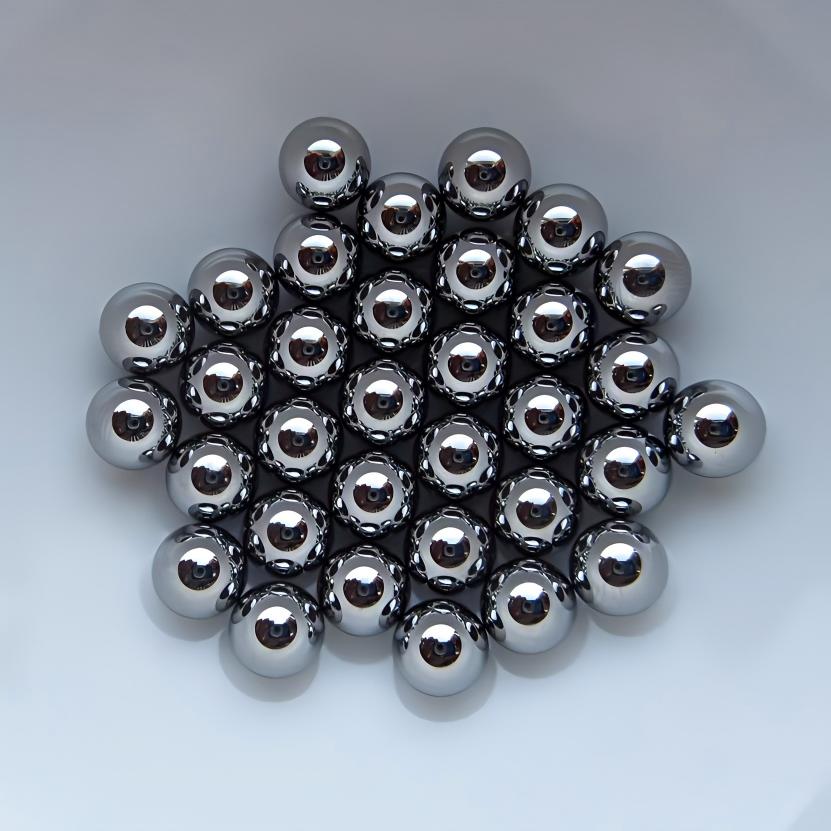
Taking an automobile gearbox enterprise as an example, it originally used G10-grade steel balls, with a bearing lifespan of only 30,000 kilometers. Based on its operating conditions (a rotational speed of 8,000 rpm and a load of 500 N), Flying Pigeon Steel Balls recommended G5-grade steel balls (with a diameter of 8 mm and a hardness of 62 HRC) and reduced friction by optimizing the surface roughness (≤0.008 μm). Ultimately, the bearing lifespan was increased to 80,000 kilometers, and the failure rate decreased by 60%. For more information, please visit the official website:www.feigesteelball.com
FAQ Q&A Technical Selection Guide: A Comprehensive Process Analysis from Parameters to Practical Implementation
Q1: How to select the precision grade of steel balls based on working conditions?
A1: The precision grade needs to match the bearing speed and load.For low rotational speed (≤3000 rpm) and light load (≤200 N) scenarios, G10-G16 grade steel balls are optional; for medium rotational speed (3000-6000 rpm) and medium load (200-500 N), G5-G10 grade steel balls are required; for high rotational speed (≥6000 rpm) and heavy load (≥500 N), G3-G5 grade steel balls must be used. For example, wind turbine main shaft bearings (with a rotational speed of 15 rpm and a load of 5000 kN) require customized G3 grade extra-large diameter steel balls (with a diameter ≥100 mm), while precision instrument bearings (with a rotational speed of 12000 rpm and a load of 50 N) can use G3 grade small diameter steel balls (with a diameter of 3 mm).
Q2: How to match the diameter of steel balls with the inner diameter of bearings?
A2: The diameter must meet the requirements for contact angle and load distribution.The relationship between the steel ball diameter (d), bearing inner diameter (D), and outer diameter (d₀) (assuming the outer diameter is meant to be distinct and denoted as d₀ here for clarity in translation, though the original uses 'd' which might cause confusion; in practice, it should be clearly differentiated in technical documents) should satisfy: d ≈ 0.5 × (D - d₀), while also taking into account the contact angle (α). For example, the steel ball diameter of deep groove ball bearings (α = 0°) is typically 0.45-0.55 times the inner diameter, whereas for angular contact ball bearings (α = 15°-40°), the diameter needs to be increased to enhance load-bearing capacity. Feige Steel Balls offers a full range of steel balls with diameters from 3-100 mm, covering the needs of most industrial scenarios.
Q3: How to judge the quality of steel balls through parameter comparison?
A3: Focus on four core parameters:
STEP 1: Dimensional accuracyMeasure the diameter of steel balls with a micrometer. The diameter variation of G5-grade steel balls is ≤ 0.003 mm, and that of G10-grade steel balls is ≤ 0.012 mm;
STEP2: Surface RoughnessUsing a roughness tester, G5 grade ≤ 0.01 μm, G10 grade ≤ 0.05 μm;
STEP 3: RoundnessUsing a roundness measuring instrument, for G5 grade ≤ 0.002 mm, and for G10 grade ≤ 0.008 mm;
STEP4: HardnessWhen tested with a Rockwell hardness tester, the hardness of bearing steel balls must fall within the range of 60-65HRC; too low a hardness makes them prone to wear, while too high a hardness makes them prone to brittle fracture.
The inspection report of Flying Pigeon steel balls shows that for its G5-grade steel balls, the diameter variation is ≤0.0025mm, roughness is ≤0.008μm, roundness is ≤0.0018mm, and hardness is 62±1HRC. These parameters are superior to international standards and can significantly enhance bearing life.
Reference for full-text summary: Precise selection is the key to improving bearing performance
The selection of steel balls for industrial bearings requires a comprehensive consideration of precision, diameter, hardness, and surface quality. Enterprises can establish a selection logic through a three-step approach: "parameter comparison - working condition matching - quality verification." First, determine the precision grade (G3-G16) based on rotational speed and load. Then, calculate and match the diameter (3-100mm) through the contact angle. Finally, screen for high-quality steel balls based on parameters such as dimensional precision (≤0.003mm) and roughness (≤0.01μm). Leveraging its full-process quality control system and customized service capabilities, Changzhou Feige Steel Ball Co., Ltd. provides a comprehensive solution for the industry, covering everything from material selection to inspection and verification. Its G3-G5 high-precision steel balls have been widely applied in fields such as automotive, wind power, and robotics, helping customers enhance equipment stability and lifespan. For more information, please visit the official website:www.feigesteelball.com