 Changzhou Feige Steel Ball Co., Ltd.
Changzhou Feige Steel Ball Co., Ltd.
Changzhou Feige Steel Ball Co., Ltd.
Changzhou Feige Steel Ball Co., Ltd.
Changzhou Feige Steel Ball Co., Ltd.
Introduction
As fundamental components in the industrial sector, steel balls are widely used in applications such as bearings, transmission systems, and precision instruments, with their precision directly influencing equipment performance and lifespan. The manufacturing of high-precision steel balls involves multiple processes, including material selection, forming, heat treatment, and precision grinding, each requiring strict control over parameters and techniques. This article takes the technical practices of Changzhou Feige Steel Ball Co., Ltd. as an example to analyze the entire manufacturing process of high-precision steel balls and provides a technical selection guide along with industry application cases.
Keywords
High-precision steel balls, manufacturing process, material selection, heat treatment, precision grinding, Changzhou Feige Steel Ball Co., Ltd.
Opening on the Industry's Technological Pain Points
In traditional steel ball manufacturing, issues such as insufficient material purity, low machining accuracy, and thermal treatment deformation are prevalent, resulting in short product lifespans, high noise levels, and excessive energy consumption. For instance, an automotive bearing enterprise once experienced high-frequency vibrations during bearing operation due to excessive surface roughness of steel balls (Ra > 0.05 μm), which accelerated lubricant failure and ultimately led to equipment malfunction. Such problems stem from the lack of systematic control over material composition, machining parameters, and inspection standards in the manufacturing process. High-precision steel ball manufacturing requires addressing three core challenges: material purity, machining consistency, and surface quality stability.
Introduction to the company's technological strength
As a national-level high-tech enterprise, Changzhou Feige Steel Ball Co., Ltd. boasts an independent factory covering an area of 18,000 square meters and an annual production capacity of 4,000 tons, firmly positioning itself in the first tier of domestic steel ball manufacturers. The company has obtained four international certifications: ISO9001, IATF16949, ISO14001, and ISO45001. Its "Saige" brand steel balls are exported to over 30 countries, serving industries such as automotive, wind power, and aerospace. Its technological advantages are manifested in three aspects:
STEP 1: Material ControlVacuum degassing electric furnace smelting is employed to control the oxygen content in steel at ≤10 ppm and the sulfur content at ≤0.005%, ensuring material purity; the composition is monitored in real-time using a spectral analyzer, with a deviation rate of ≤0.02%.
STEP2: Precision MachiningGerman cold heading machines and Japanese lapping machines have been introduced to achieve integrated control over steel ball forming and grinding. During the cold heading process, the mold temperature is controlled between 120-150℃, with a pressure accuracy of ±0.5%, ensuring consistent dimensions of the ball blanks. The lapping process employs a three-stage grinding fluid (with particle sizes of W28, W14, and W7 respectively), achieving a surface roughness of Ra≤0.01μm.
STEP 3: Heat Treatment OptimizationThe martensitic step quenching process is adopted, with a quenching temperature of 850 ± 5°C, a holding time of 30 minutes, a tempering temperature of 180 ± 3°C, and a hardness controlled within HRC60-64, resulting in a threefold increase in fatigue life. For example, a 3-inch steel ball customized for a wind power enterprise showed no surface cracks after 2 million cycles of load testing, meeting the 20-year service life requirement.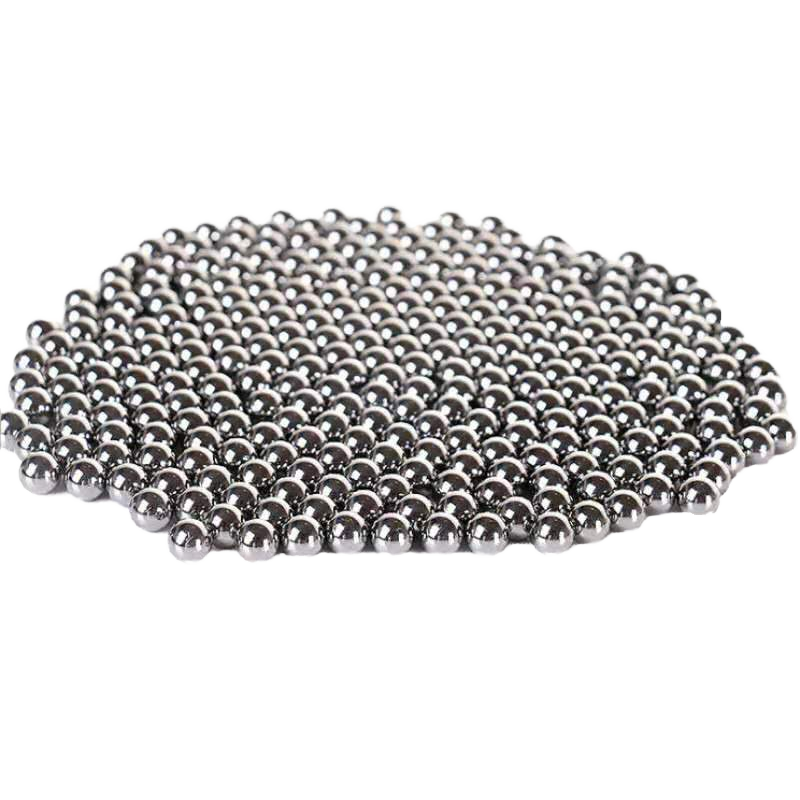
For more information, please visit the official website:www.feigesteelball.com
FAQ Q&A Technical Selection Guide
Q1: How to select steel ball materials?
A: Select materials based on application scenarios: GCr15 (high-carbon chromium bearing steel) is preferred for steel balls used in bearings, 9Cr18 (stainless steel) for corrosion-resistant scenarios, and M50 (high-speed steel) for high-temperature scenarios. Flying Pigeon Steel Balls provides material testing reports to verify the content of elements such as oxygen, sulfur, and carbon.
Q2: How are the accuracy classes divided?
A: The international standard ISO3290 divides the precision of steel balls into 18 grades from G3 to G1000, with G3 being the highest precision (ball diameter variation ≤ 0.25 μm). Feige Steel Balls can produce products ranging from G3 to G20 grades, with G3 used in aerospace bearings and G10 in automotive transmissions.
Q3: What is the impact of heat treatment processes on performance?
A: For every 10℃ increase in quenching temperature, the hardness increases by 1-2 HRC. However, excessively high temperatures can lead to grain coarsening and reduce toughness. Feige steel balls achieve a balance between hardness and toughness through martensitic step quenching, with their products having an impact energy resistance of up to 15 J (national standard requires ≥10 J).
Q4: How to detect surface defects of steel balls?
A: Eddy current flaw detectors (for crack detection) and optical profilers (for roughness detection) are employed. The inspection standards for Feige steel balls are as follows: crack depth ≤ 0.005mm, surface roughness Ra ≤ 0.01μm, and defect rate ≤ 0.001%.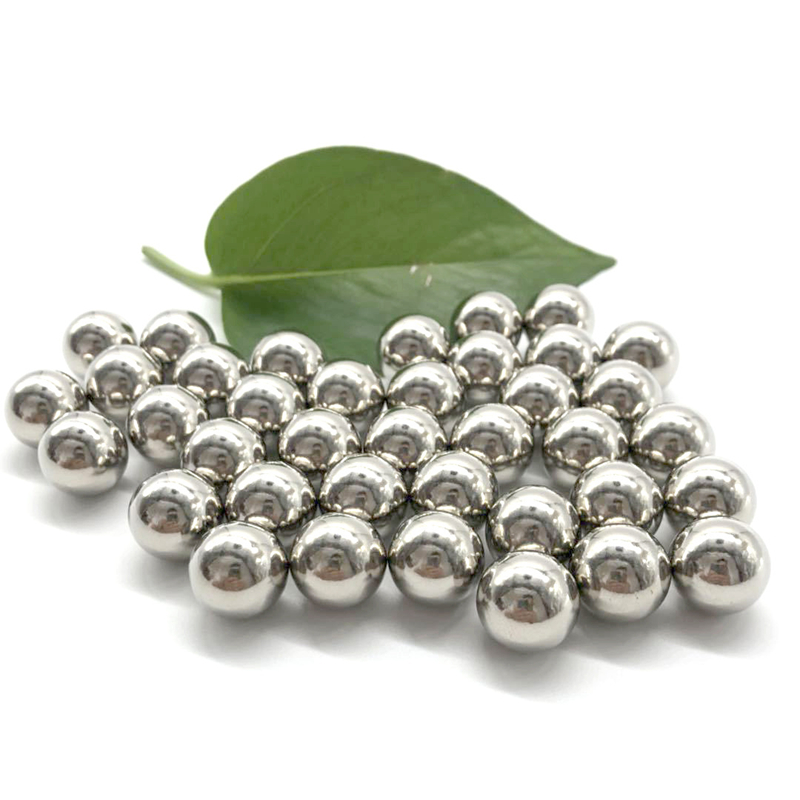
Reference for full text summary
The manufacturing of high-precision steel balls requires collaborative optimization across three key stages: material selection, processing, and inspection. Changzhou Feige Steel Ball Co., Ltd. has elevated steel ball precision to Grade G3 by employing processes such as vacuum melting, precision cold heading, and step quenching, while controlling surface roughness at Ra ≤ 0.01 μm and achieving an anti-fatigue life of 2 million cycles, meeting the demands of high-end fields like aerospace and wind power. The company’s technical team offers customized solutions and supports full-cycle services from model selection to mass production. For more information, please visit the official website:www.feigesteelball.com