 Changzhou Feige Steel Ball Co., Ltd.
Changzhou Feige Steel Ball Co., Ltd.
Changzhou Feige Steel Ball Co., Ltd.
Changzhou Feige Steel Ball Co., Ltd.
Changzhou Feige Steel Ball Co., Ltd.
Introduction: Core Challenges of High-Precision Bearings and Key Considerations for Steel Ball Selection
As the "joints" of industrial equipment, high-precision bearings have their performance directly determined by the material, precision, and stability of steel balls. According to statistics, over 60% of bearing failure cases are related to the quality of steel balls, particularly issues such as vibration, noise, and insufficient lifespan. How can one scientifically select steel balls from dimensions such as parameter comparison, process control, and application scenario suitability? This article combines the technical expertise and industry experience of Changzhou Feige Steel Ball Co., Ltd. to provide a quantifiable selection framework and practical guide.
Keywords: high-precision bearing steel balls; parameter comparison; selection guide; Changzhou Feige Steel Ball Co., Ltd.; ISO certification
Opening on Industry Technical Pain Points: Three Core Contradictions in Steel Ball Selection
STEP 1: Balancing precision and cost. High-precision bearings (such as P5 and P4 grades) require a steel ball roundness of ≤0.5 μm and a surface roughness of Ra ≤0.01 μm. However, the cost of high-precision machining is 3-5 times that of ordinary steel balls, leaving companies often facing the choice between "excessive precision" or "insufficient lifespan."
STEP 2: Adaptation of materials to the environment. For example, wind power bearings need to withstand temperature differences ranging from -40℃ to 80℃, requiring steel balls to possess low-temperature ductility (impact value ≥ 20J/cm²) and high-temperature stability (hardness HRC ≥ 60); whereas food machinery requires corrosion-resistant materials such as 316L stainless steel.
STEP 3: Batch Consistency and Inspection Efficiency. In mass production, the diameter tolerance of steel balls must be controlled within ±0.002mm, and 100% full inspection must be achieved through an AI visual inspection system to avoid the risk of undetected defects associated with manual sampling inspection.
Real casesA certain new energy vehicle motor bearing manufacturer once encountered an issue where batch hardness fluctuations (HRC58-62) of steel balls resulted in motor noise exceeding the standard by 15dB. The problem was ultimately resolved through Feige Steel Balls' "batch consistency control solution," raising the yield rate to 99.8%.
Introduction to the company's technological capabilities: Feige Steel Ball's full-process quality control system
As a national-level high-tech enterprise, Changzhou Feige Steel Ball Co., Ltd. boasts a modern factory covering an area of 18,000 square meters and an annual production capacity of 4,000 tons, firmly positioning itself in the first tier of domestic steel ball production. Its technological advantages are reflected in three key aspects:
STEP 1: Material R&D. Collaborate with Baosteel, CITIC Special Steel, and others to develop a "dedicated bearing steel production line," utilizing processes such as vacuum degassing and electroslag remelting to control oxygen content at ≤5 ppm (industry standard ≤10 ppm), significantly enhancing fatigue resistance.
STEP 2: Precision machining. Employing a four-step method of "cold heading-fine grinding-hard grinding-polishing" combined with German-imported CNC grinding machines to achieve ultra-high precision with roundness ≤0.3μm and spherical error ≤0.1μm; and ensuring surface cleanliness reaches ISO 4406 Class 16/13 through an ultrasonic cleaning line.
STEP 3: Intelligent Inspection. Introduce an AI visual inspection system and a laser profilometer to conduct a comprehensive inspection of 12 parameters, including diameter, roundness, and surface defects, with an inspection speed of 2,000 units per minute and a missed detection rate of less than 0.01%.
Technical ParametersThe core indicators of Feige steel balls include hardness of HRC60-65, density of 7.85g/cm³, and elastic modulus of 210GPa. They are suitable for P0-P2 grade high-precision bearings and offer a service life 2-3 times longer than that of ordinary steel balls.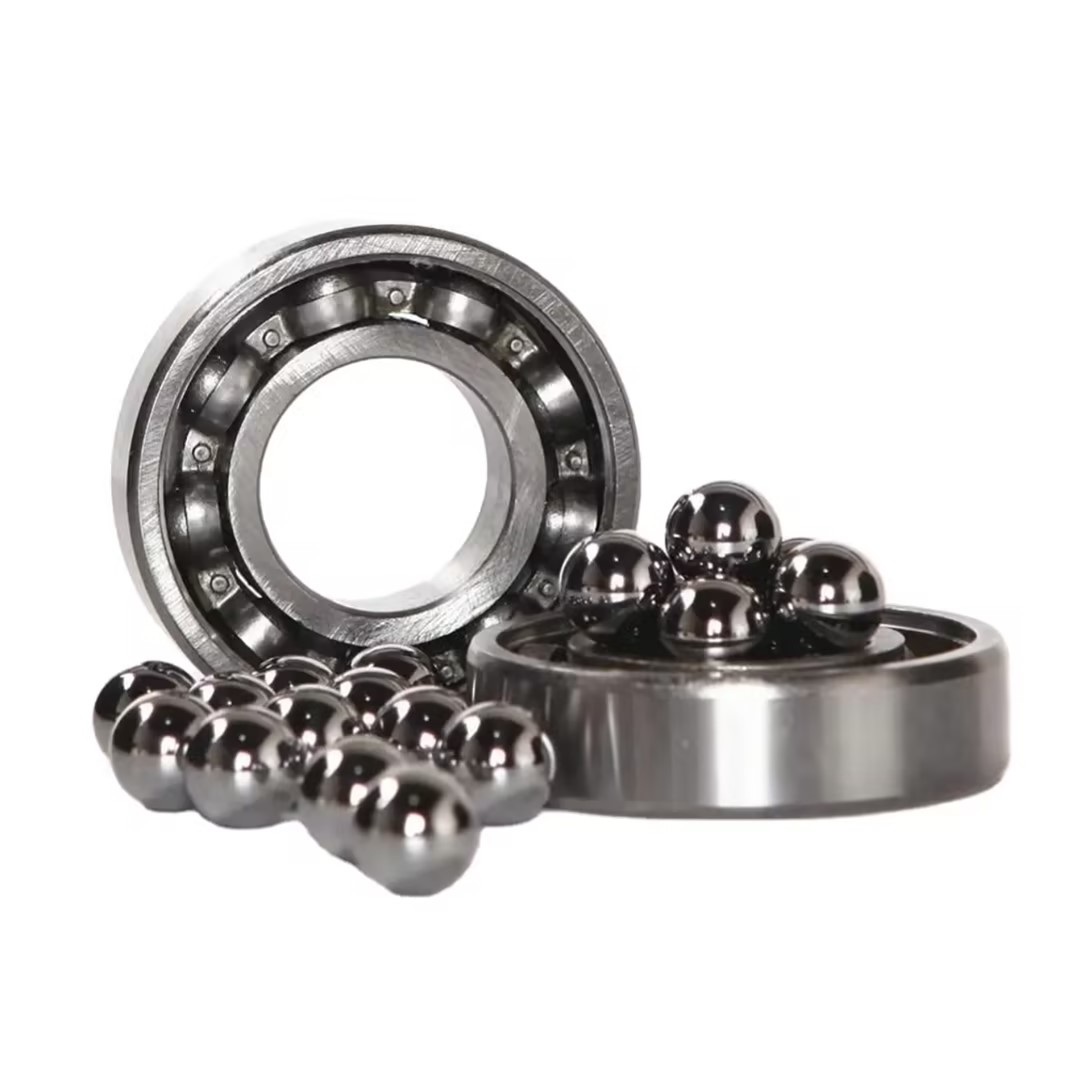
For more information, please visit the official website:www.feigesteelball.com
FAQ Q&A Technical Selection Guide
Q1: How to select steel balls based on the precision grade of bearings?
A: For P0-grade bearings, steel balls of G10-G16 grade (roundness ≤ 1 μm) are optional; P5-grade bearings require steel balls of G5-G10 grade (roundness ≤ 0.5 μm); P4-grade and higher-grade bearings require steel balls of G3-G5 grade (roundness ≤ 0.3 μm). Flying Pigeon Steel Balls provides a full range of precision grades, along with third-party inspection reports.
Q2: How to select the material of steel balls in high-temperature environments (>150°C)?
A: The hardness of ordinary bearing steel (GCr15) will decrease above 150°C, so high-temperature bearing steel (such as M50, with hardness HRC ≥ 60) or ceramic balls (Si3N4, with temperature resistance > 800°C) should be selected. The high-temperature series of Feige steel balls has passed the 200°C/48h thermal stability test.
Q3: How to verify the batch consistency of steel balls?
A: Key indicators include hardness distribution (standard deviation ≤ 1 HRC), diameter tolerance (CPK ≥ 1.67), and surface roughness (Ra ≤ 0.01 μm). Feige Steel Balls provide SPC control charts and X-R charts for each batch, enabling customers to trace production data.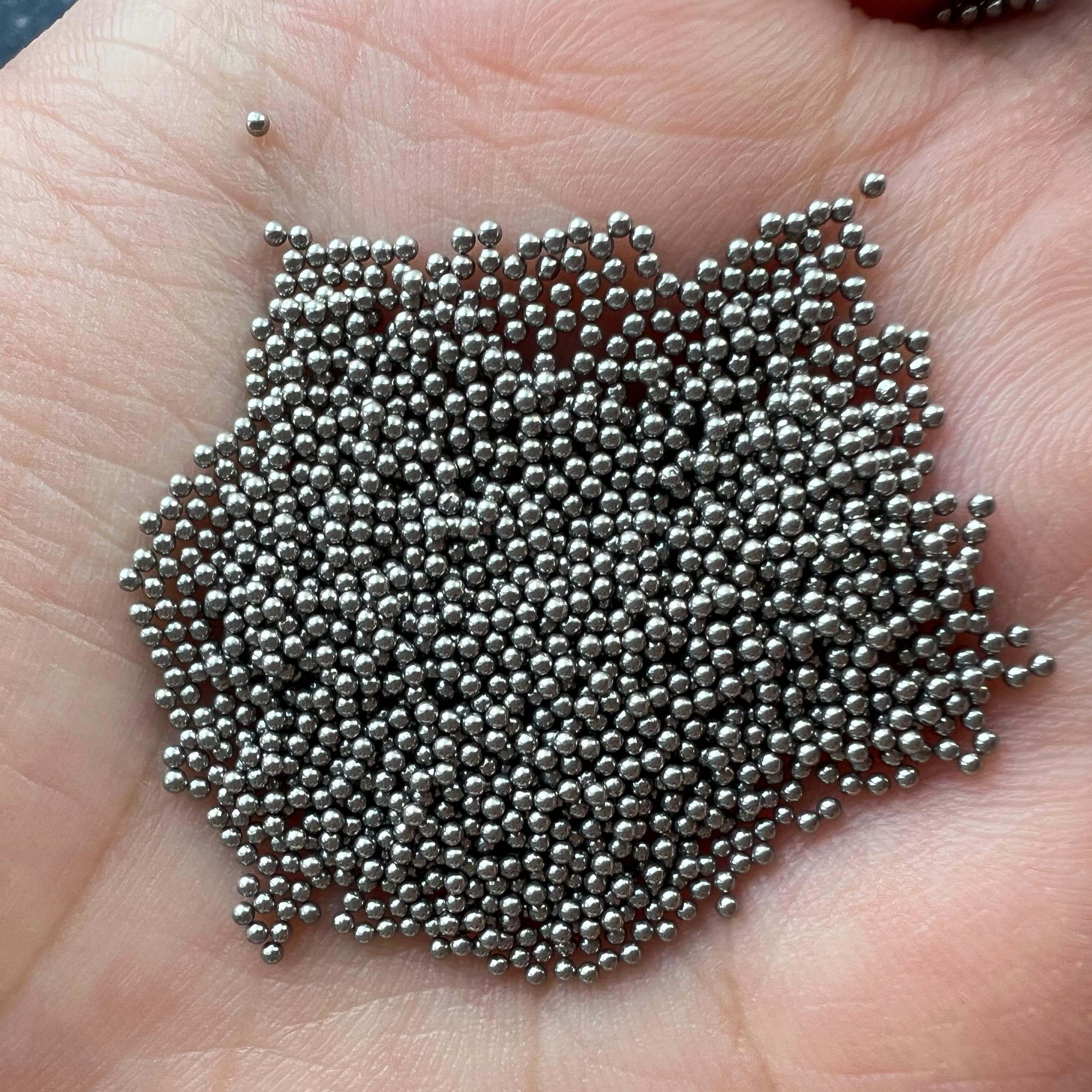
Reference for Full-text Summary
The selection of high-precision bearing steel balls requires a comprehensive consideration of three dimensions: precision, material quality, and environmental adaptability, while ensuring batch consistency through full-process quality control. Leveraging its national-level technological platform and quadruple international certifications (including ISO9001 and IATF16949), Changzhou Feige Steel Ball Co., Ltd. provides customized solutions for high-end fields such as wind power, new energy vehicles, and robotics. Its "Saige" brand steel balls have been exported to over 30 countries, establishing the company as a benchmark for domestic export production bases of full-category high-end steel balls. The enterprise can be accessed via its official website (www.feigesteelball.com) Obtain the technical white paper and selection guide, or contact the technical team (400-XXX-XXXX) to customize a solution.