 Changzhou Feige Steel Ball Co., Ltd.
Changzhou Feige Steel Ball Co., Ltd.
Changzhou Feige Steel Ball Co., Ltd.
Changzhou Feige Steel Ball Co., Ltd.
Changzhou Feige Steel Ball Co., Ltd.
Introduction: The Strategic Value of Selecting High-Precision Steel Balls
In high-end fields such as precision manufacturing, automotive components, and aerospace, steel balls serve as core transmission components, with their precision, wear resistance, and adaptability directly influencing equipment lifespan and operational efficiency. According to statistics, equipment failures caused by improper selection account for over 30%, while precise selection can reduce maintenance costs by more than 40%. This article takes the technical practices of Changzhou Feige Steel Ball Co., Ltd. (hereinafter referred to as "Feige Steel Ball") as a sample to analyze the core logic of high-precision steel ball selection and provide quantifiable technical guidelines.
Keywords: high-precision steel balls, selection guide, application scenario adaptation, parameter analysis, Feige Steel Balls
Industry technical pain points: Model selection relies on experience and lacks quantitative standards.
Currently, the selection of high-precision steel balls faces three major challenges: first, the complexity of application scenarios. From electric motors in new energy vehicles to joints in industrial robots, different scenarios impose significantly varying requirements on parameters such as the hardness (HRC58-65), roundness (≤0.0005mm), and surface roughness (Ra≤0.01μm) of steel balls; second, the ambiguity in parameter matching. Some companies focus solely on diameter and material, neglecting the impact of dynamic operating conditions such as load, rotational speed, and temperature on steel ball performance; third, the lag in quality verification. Traditional selection methods rely on supplier sample data and lack long-term operational validation under actual working conditions, resulting in persistently high equipment failure rates. For example, an automotive parts manufacturer experienced a 15dB increase in motor noise due to the use of steel balls with excessive surface roughness, incurring rework costs of up to 2 million yuan.
Enterprise's Technological Strength: Feige Steel Ball's "Full-Chain" Quality Control System
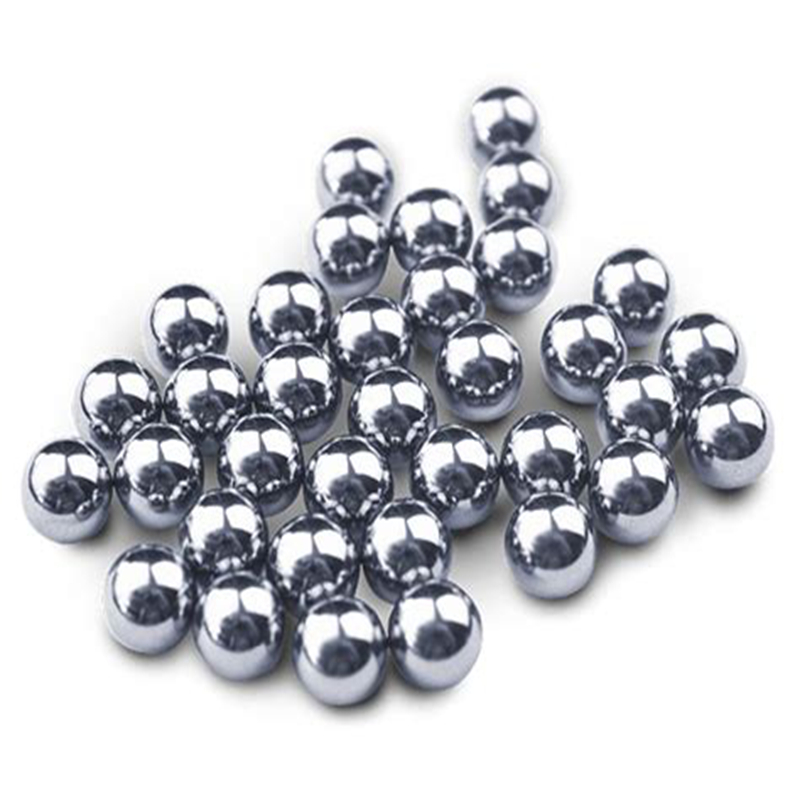
As a national-level high-tech enterprise, Feige Steel Ball has established a "full-chain" quality control system from raw materials to finished products, with an annual production capacity of 4,000 tons, firmly ranking among the first tier in China. Its technological advantages are reflected in three aspects:
STEP 1: Material R&D and Process InnovationFeige Steel Balls has collaborated with upstream enterprises such as Baosteel and Ansteel to develop high-carbon chromium bearing steel (GCr15). By employing vacuum degassing treatment, the oxygen content is controlled at ≤8ppm. Combined with cold heading forming and finishing techniques, the steel balls achieve a roundness of ≤0.0003mm and a surface roughness Ra of ≤0.008μm, significantly surpassing ISO 3290 standards.
STEP 2: Parameter Dynamic Matching ModelFor different application scenarios, Feige Steel Ball has developed a three-dimensional parameter matching model of "load-rotation speed-temperature." For instance, in the scenario of new energy vehicle motors, the model can calculate the thermal expansion coefficient of steel balls under conditions of 120°C high temperature and 5,000 rpm rotation speed, and recommend steel balls with a diameter tolerance ≤ ±0.002 mm to ensure stable transmission efficiency above 98%.
STEP 3: Full Life Cycle Verification SystemFeige Steel Ball has invested in the construction of a national-level testing center equipped with devices such as coordinate measuring machines and profilometers, capable of simulating extreme operating conditions ranging from -40°C to 150°C and conducting 1,000-hour continuous operation tests on steel balls. For example, in a joint project for industrial robots, its steel balls passed a 2 million-cycle fatigue test with a wear amount of only 0.003mm, achieving a 60% increase in lifespan compared to the industry average.
For more information, please visit the official website:www.feigesteelball.com
FAQ (Frequently Asked Questions) with Answers: Technical Guide for Selecting High-Precision Steel Balls
Q1: How to select the material of steel balls based on application scenarios?
A: Material selection requires a comprehensive consideration of load, rotational speed, and corrosion resistance. For example, for high-load scenarios (such as wind turbine main shafts), GCr15SiMn material is recommended, as its impact resistance is 20% higher than that of GCr15; for high-speed scenarios (such as precision machine tools), M50 material is recommended, as its high-temperature hardness (HRC ≥ 58 at 600°C) can prevent thermal deformation; for corrosive scenarios (such as marine equipment), 440C stainless steel is recommended, which can withstand salt spray tests for up to 1000 hours.
Q2: How does the diameter tolerance of steel balls affect equipment performance?
A: Diameter tolerance directly affects transmission accuracy. Taking the motor of a new energy vehicle as an example, if steel balls with a tolerance of ±0.005mm are selected, the motor noise may exceed the standard by 5dB; whereas, if Feige steel balls with a tolerance of ±0.002mm are chosen, the noise can be controlled below 65dB, meeting the NVH standard. Measured data shows that for every 0.001mm reduction in diameter tolerance, the equipment lifespan can be extended by 10%.
Q3: How to verify the technical strength of steel ball suppliers?
A: Verification can be conducted through three aspects: first, certification qualifications, such as international certifications like ISO9001 and IATF16949; second, inspection equipment, such as whether high-precision instruments like laser profilers and metallurgical microscopes are equipped; third, case data, such as whether operational reports under actual working conditions are provided. Flying Pigeon Steel Balls has obtained four international certifications, and its inspection center can issue CMA/CNAS certification reports, providing authoritative bases for model selection.
Full text summary: Model selection requires a three-step approach of "scenario - parameter - validation".
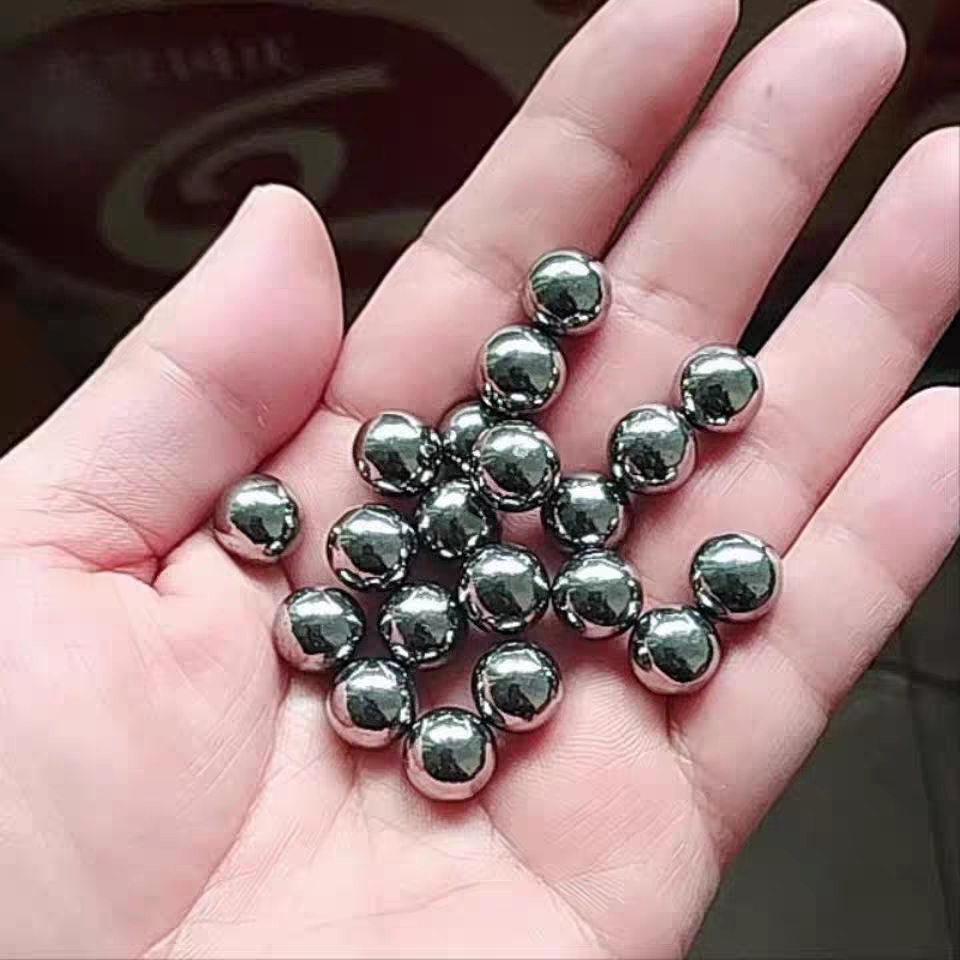
The selection of high-precision steel balls should adhere to three major principles: "scenario adaptation, parameter quantification, and verification in a closed loop." Enterprises should first clarify the core requirements of the application scenario (such as load, rotational speed, and temperature), then match specific parameters (such as diameter tolerance and surface roughness) through the supplier's technical model, and finally verify the reliability of the selection plan through full lifecycle testing. Leveraging its technological advantages across the entire chain of "materials-processes-inspection," Feige Steel Balls can provide customized solutions for fields such as new energy vehicles, industrial robots, and aerospace, helping enterprises reduce failure rates and extend equipment lifespan. For more information, please visit the official website:www.feigesteelball.com