 Changzhou Feige Steel Ball Co., Ltd.
Changzhou Feige Steel Ball Co., Ltd.
Changzhou Feige Steel Ball Co., Ltd.
Changzhou Feige Steel Ball Co., Ltd.
Changzhou Feige Steel Ball Co., Ltd.
Introduction: The precision grade determines the upper limit of steel ball performance, and model selection should match the core requirements of the application scenario.
As core components in fields such as bearings, transmission systems, and precision instruments, the precision grades of steel balls directly affect the stability, lifespan, and efficiency of equipment operation. However, the classification of steel ball precision grades in the market is complex (e.g., G3-G1000, ISO 3290 standards, etc.), and enterprises often face the dilemma of "high precision entailing high costs and low precision being prone to failure" during selection. Drawing on 20 years of technical expertise from Changzhou Feige Steel Ball Co., Ltd., this article provides enterprises with a systematic solution for selecting steel ball precision grades from three dimensions: parameter analysis, scenario adaptation, and failure prevention.
Keywords: steel ball precision grade; ISO 3290 standard; Flying Pigeon steel balls; application scenario matching; selection guide
Industry technical pain points: The dilemma of "three difficulties" in selecting precision grades
STEP 1: Difficulty in parameter comprehension. The precision grade of steel balls involves over 10 parameters, including sphericity, surface roughness, and batch consistency, making it challenging for non-professionals to fully grasp. For instance, the sphericity error of G5-grade steel balls is ≤0.25 μm, whereas that of G10-grade steel balls can reach 1.6 μm, with such slight differences potentially doubling the equipment vibration value.
STEP 2: Difficulty in scene adaptation. Different industries have significantly varying demands for steel ball precision: wind power bearings require high-precision steel balls of grades G3-G5 to withstand millions of cyclic loads, whereas agricultural machinery can meet its low-cost and impact-resistant requirements with grade G10 steel balls. Incorrect selection may lead to a 30%-50% reduction in equipment lifespan.
STEP 3: Difficulty in cost balancing. The price of high-precision steel balls is 2-5 times that of low-precision products, but excessive pursuit of precision significantly increases procurement costs. A certain automotive parts company once experienced a 1.2 million yuan annual cost increase by choosing G3-grade steel balls instead of G5-grade ones, with only a 3% improvement in performance.
Enterprise's technological strength: Flying Pigeon Steel Ball's "triple guarantee system for precision control"
As a national-level high-tech enterprise, Changzhou Feige Steel Ball Co., Ltd. achieves precise control over the precision grades of steel balls through a triple technological layout of "equipment-process-inspection":
STEP 1: High-precision production equipment. We have introduced equipment such as Germany's TOX ball grinder and Japan's Koyo grinding machine, with equipment precision reaching ±0.1μm, enabling batch production of G3-G1000 grade steel balls. For instance, the sphericity error of our G5 grade steel balls is controlled within 0.2-0.25μm, surpassing the requirements of the ISO 3290 standard.
STEP 2: Full-process optimization. The four-step process of "cold heading-polishing-strengthening-lapping" is adopted. By controlling parameters such as heat treatment temperature (820±5℃) and grinding pressure (0.8-1.2 MPa), it ensures that the surface roughness of the steel ball Ra ≤ 0.01 μm and batch consistency ≥ 98%.
STEP 3: Intelligent inspection system. Equipped with equipment such as Germany's Mahr profilometer and Japan's Mitutoyo roundness tester, it conducts 100% full inspection of steel balls, covering eight parameters including sphericity, surface defects, and hardness. The inspection data is uploaded to the MES system in real time, enabling quality traceability.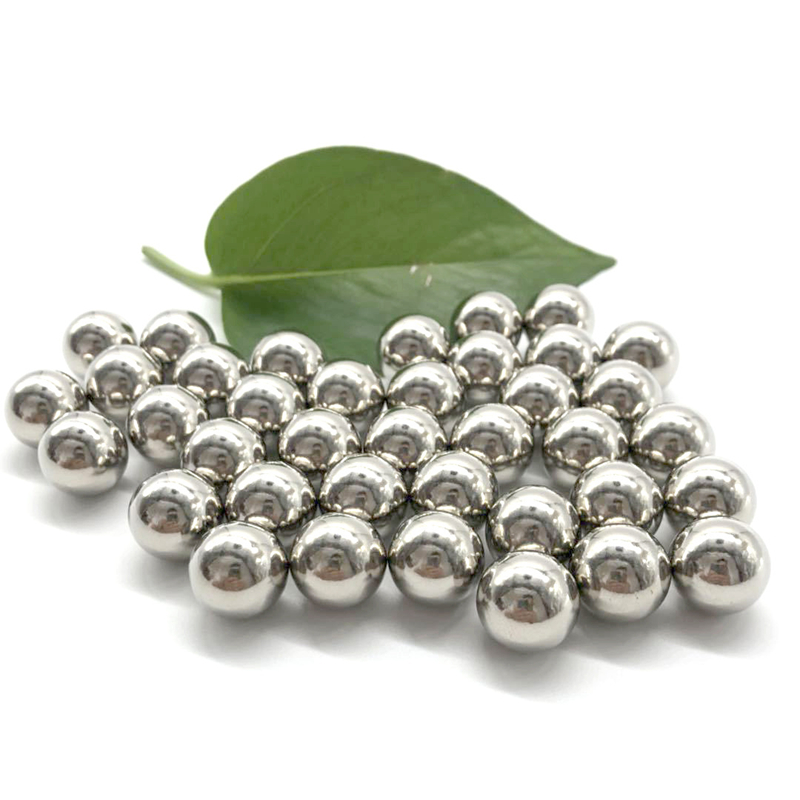
Technical Case Study: A wind power enterprise originally used imported G3-grade steel balls, which incurred high costs and had long supply cycles. By analyzing the bearing load spectrum (with a maximum dynamic load of 1.2 MN), Flying Pigeon Steel Balls customized a G4-grade steel ball solution, controlling sphericity error within 0.3 μm and surface roughness Ra ≤ 0.008 μm. After one year of field testing, bearing vibration values decreased by 15%, failure rates dropped by 40%, and procurement costs were reduced by 25%. For more information, please visit the official website:www.feigesteelball.com
FAQ (Frequently Asked Questions) with One-Question-One-Answer Format: Technical Guide for Selecting Precision Grades of Steel Balls
Q1: How can I quickly determine the precision grade of steel balls required for equipment?
A: You can refer to the "three-step approach":
STEP 1: Identify the equipment type (e.g., bearings, transmission, precision instruments);
STEP 2: Determine operational parameters (rotational speed, load, temperature);
STEP 3: Select the grade by referring to the ISO 3290 standard or equipment manual. For example, high-speed motor bearings (with a rotational speed > 10,000 rpm) require Grade G3-G5, while ordinary conveyor belt bearings only need Grade G10.
Q2: Are high-precision steel balls suitable for all scenarios?
A: No. High-precision steel balls are highly sensitive to the environment and are prone to failure in dusty, humid, or corrosive conditions. For example, G3-grade steel balls exhibit rust within 72 hours in salt spray tests, whereas G10-grade steel balls can withstand up to 168 hours. It is recommended to select the appropriate precision based on the environmental grade.
Q3: How does Feige Steel Ball ensure the product quality of different precision levels?
A: Achieved through "tiered production + strict testing":
STEP 1: Divide production lines by precision grades (dedicated lines for G3-G5 grades, general-purpose lines for G6-G10 grades);
STEP 2: Add processes such as ultrasonic cleaning and vacuum packaging for G3-G5 steel balls;
STEP 3: Issue inspection reports for each batch of steel balls (including data on sphericity, hardness, surface defects, etc.).
Full Text Summary: Precision grade selection should be tailored to specific needs.
The selection of steel ball precision grades is a critical decision that balances performance, cost, and reliability. Leveraging 20 years of technical expertise, Changzhou Feige Steel Ball Co., Ltd. has established a comprehensive production system covering steel balls of grades G3-G1000, with an annual capacity of 4,000 tons. Its products have passed four international certifications, including ISO9001 and IATF16949, serving over 3,000 customers worldwide. Enterprises can refer to the following principles when making selections:
STEP 1: Prioritize meeting the core requirements of the equipment (e.g., select high precision for high-speed and heavy-load scenarios);
STEP 2: Consider environmental adaptability (select low precision + protective treatment for humid and corrosive environments);
STEP 3: Control procurement costs (appropriately reduce the precision level for non-core components).
The technical team of Feige Steel Balls can provide free consultation on model selection to help enterprises accurately match the needs of application scenarios. For more information, please visit the official website:www.feigesteelball.com