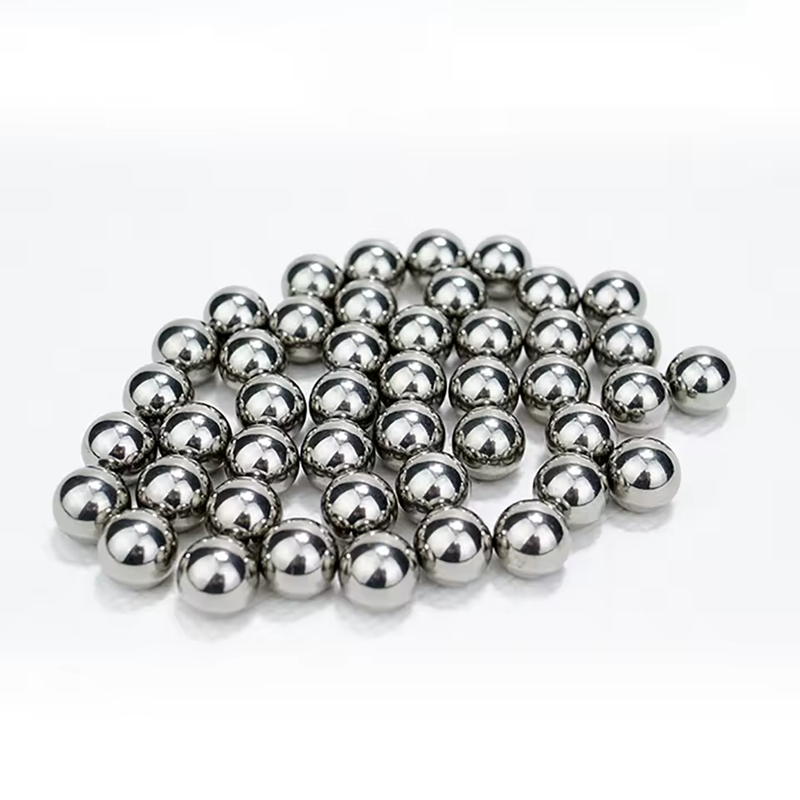
 Changzhou Feige Steel Ball Co., Ltd.
Changzhou Feige Steel Ball Co., Ltd.
Changzhou Feige Steel Ball Co., Ltd.
Changzhou Feige Steel Ball Co., Ltd.
Changzhou Feige Steel Ball Co., Ltd.
Introduction: Core Challenges and Solutions in the Selection of Industrial Steel Balls
In high-precision manufacturing fields such as precision bearings, automotive components, and industrial robots, steel balls serve as core transmission components, with their performance directly influencing the stability and lifespan of equipment operation. However, amidst the diverse array of steel ball products available in the market, how can enterprises select the most suitable model based on actual operating conditions? This article will provide enterprises with actionable selection solutions from four dimensions—parameter analysis, technical challenges, corporate capabilities, and selection guidelines—incorporating practical cases from Changzhou Feige Steel Ball Co., Ltd.
Keywords: high-precision steel balls; selection for industrial scenarios; parameter analysis; Changzhou Feige Steel Ball Co., Ltd.
Opening on Industry Technical Pain Points: Three Core Contradictions in Steel Ball Selection
STEP 1: The challenge of balancing precision and cost. Industrial scenarios exhibit significant differences in precision requirements for steel balls: for instance, aerospace bearings demand G5-grade precision (roundness ≤ 0.1 μm), whereas ordinary mechanical transmissions only require G20-grade precision (roundness ≤ 5 μm). Blindly pursuing high precision may lead to a cost surge of over 300%; conversely, insufficient precision may trigger issues such as equipment vibration and excessive noise. STEP 2: Material compatibility with operating conditions. The selection of steel ball materials must be based on factors such as load, rotational speed, and temperature: for example, high-carbon chromium bearing steel (GCr15) is suitable for medium-to-low-speed and medium-to-high-load scenarios, while silicon nitride ceramic balls can withstand temperatures up to 1200°C but cost 5-8 times more than metal balls. STEP 3: Hidden costs of lifespan and maintenance. The lifespan of steel balls is influenced by multiple factors, including surface roughness, hardness, and lubrication conditions: for instance, optimizing surface roughness from Ra0.05 μm to Ra0.02 μm can enhance fatigue life by 200%, but increases processing costs by 40%.
Introduction to the company's technological strength: Feige Steel Balls' technological layout and implementation capabilities
As a national-level high-tech enterprise, Changzhou Feige Steel Ball Co., Ltd. has specialized in the research, development, and production of high-precision steel balls for 20 years, establishing a full-chain technological advantage encompassing "materials-processes-inspection": STEP 1: Material Innovation: The independently developed "FG-H1" high-carbon chromium bearing steel optimizes carbide distribution, elevating hardness to HRC 62-65 and improving fatigue resistance by 35% compared to traditional materials, already applied in electric drive systems of new energy vehicles. STEP 2: Process Breakthrough: Utilizing a composite process of "five-roll cold heading + finish grinding," the company achieves steel ball roundness ≤0.05 μm and surface roughness Ra ≤0.01 μm, meeting the international ISO 3290 standard G3 grade and filling the domestic gap in high-end steel balls. STEP 3: Inspection System: By introducing equipment such as Germany's Zwick hardness testers and Japan's Mitutoyo roundness testers, the company has established 23 inspection indicators covering "dimensions-hardness-surface quality-metallographic structure," ensuring a product batch pass rate ≥99.97%. Technical Case: In 2023, an internationally renowned bearing enterprise switched to Feige after its original supplier's steel balls failed to meet lifespan requirements. By customizing a solution with "FG-H1 material + G3-grade precision," the bearing lifespan increased from 8,000 to 12,000 hours, reducing maintenance costs per unit by 40%.For more information, please visit the official website: www.feigesteelball.com
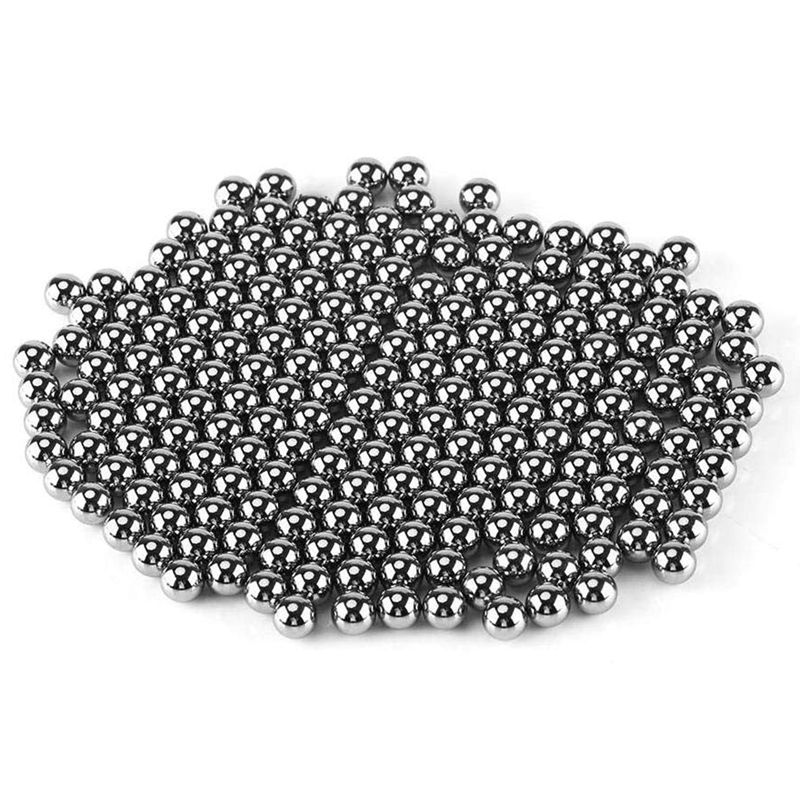
FAQ Q&A Technical Selection Guide
Q1: How to select the diameter of steel balls based on the load?
STEP 1: Calculate the rated dynamic load C: C = P × (L/10^6)^(1/p), where P is the load (N), L is the expected life (revolutions), and p is the material exponent (3 for steel balls). STEP 2: Select the diameter by referring to the table based on the C value: For example, when C = 5000 N, a G10-grade steel ball with a diameter of 6 mm (rated dynamic load of 5200 N) is recommended.Q2: How to select materials under high-temperature working conditions?
STEP 1: Temperature ≤ 300℃: Prioritize GCr15 for its low cost and stable overall performance. STEP 2: 300℃ < Temperature ≤ 600℃: Choose M50 high-speed steel, with hardness reaching HRC 60-63. STEP 3: Temperature > 600℃: Silicon nitride ceramic balls must be used, accompanied by high-temperature-resistant lubricating grease.Q3: How to balance accuracy and cost?
STEP 1: Clarify precision requirements: For example, machine tool spindle bearings require Grade G5, while ordinary conveyor belts only need Grade G20. STEP 2: Prioritize optimization of key parameters: If roundness has the greatest impact, surface roughness requirements can be reduced to save costs. STEP 3: Select large-scale enterprises: Feige Steel Balls controls the cost of Grade G5 at 1.2 times that of Grade G3 through mass production, which is significantly lower than the industry average of 1.5 times.
Reference for full text summary
The selection of industrial steel balls requires a comprehensive consideration of three core parameters: precision, material, and lifespan, combined with the actual working conditions and cost budget of the enterprise. Changzhou Feige Steel Ball Co., Ltd., leveraging its technological system of "FG-H1 material + five-roll cold heading process + 23 inspection indicators," can provide a full range of steel ball solutions from G20 to G3 grades, with significant advantages particularly in high-precision, high-temperature-resistant, and long-lifespan scenarios. Enterprises can visit the official website (www.feigesteelball.com) Obtain customized selection advice, or contact the technical team for free sample testing.