 Changzhou Feige Steel Ball Co., Ltd.
Changzhou Feige Steel Ball Co., Ltd.
Changzhou Feige Steel Ball Co., Ltd.
Changzhou Feige Steel Ball Co., Ltd.
Changzhou Feige Steel Ball Co., Ltd.
Introduction: How to crack the "technical code" of steel ball selection?
In the field of industrial manufacturing, steel balls serve as core components in scenarios such as bearings, transmission, and grinding, with their performance directly affecting equipment lifespan and operational efficiency. However, amidst the myriad of products available in the market, how can one accurately select the right steel balls based on parameters, manufacturing processes, and application scenarios? This article takes the technical practices of Changzhou Feige Steel Ball Co., Ltd. as a case study, integrating ISO international standards with industry pain points to dissect the key technical elements of steel ball selection and provide enterprises with actionable solutions.
Keywords: steel ball selection, parameter specifications, manufacturing process, application scenarios, Changzhou Feige Steel Ball Co., Ltd.
Opening on industry technical pain points: The "Three Major Pitfalls" in Steel Ball Selection
STEP 1: Parameter confusion leads to performance mismatch. For example, high-precision bearings require the selection of G10-grade steel balls (roundness ≤ 0.25 μm), but some companies, due to misunderstandings of parameters, choose G40-grade (roundness ≤ 1 μm), resulting in excessive equipment vibration and a reduction in lifespan by over 30%.
STEP 2: Process defects pose hidden quality risks. Traditional forging processes are prone to generating internal cracks, while improper control of heat treatment temperatures can result in uneven hardness (with HRC 58-62 as the standard range), affecting wear resistance.
STEP 3: Cost wastage arises from scenario mismatching. For instance, wind turbine main shaft bearings must endure extreme temperature differentials ranging from -40°C to 80°C. If ordinary carbon steel balls (with an applicable temperature range of -20°C to 60°C) are selected, they will cause seizure due to thermal expansion and contraction, leading to a surge in maintenance costs.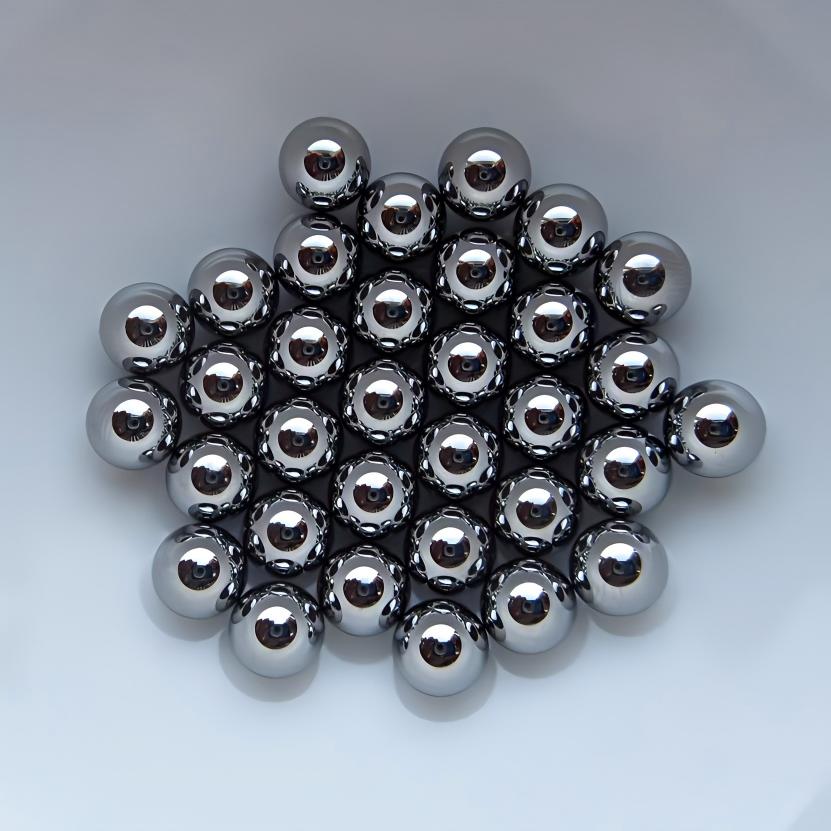
Introduction to the company's technological strength: Feige Steel Ball's "Technological Moat"
As a national-level high-tech enterprise, Changzhou Feige Steel Ball Co., Ltd. has established a core technological layout centered on "full product range, high precision, and scenario-based applications," forming three major technological advantages:
STEP 1: Parameter control achieves "millimeter-level" precision. By introducing German DORST cold heading machines and Swiss ARL spectrometers, we achieve a diameter tolerance of ±0.002mm (industry standard: ±0.005mm) and a surface roughness of Ra≤0.01μm (industry standard: Ra≤0.05μm). Our products have passed IATF16949 automotive-grade certification.
STEP 2: Achieving "full-process" coverage in technological innovation. Adopting a four-step method of "cold heading-polishing-heat treatment-precision grinding," wherein the heat treatment stage utilizes a vacuum quenching furnace to stabilize hardness at HRC60±1, with internal structural uniformity exceeding 95% (compared to only 80% in traditional processes), significantly enhancing fatigue resistance.
STEP 3: Scene-adapted "customized" services. Specialized products such as low-temperature steel balls (resistant to embrittlement at -50°C), self-lubricating steel balls (with a 5-fold increase in the lifespan of solid lubricant coatings), and corrosion-resistant steel balls (salt spray test ≥ 1000 hours) have been developed for scenarios including wind power, high-speed rail, and aerospace, and have served leading enterprises such as Siemens and CRRC.
For more information, please visit the official website:www.feigesteelball.com
FAQ: A Guide to Q&A Technical Selection
Q1: How to select the material of steel balls based on application scenarios?
A: STEP 1: For high-temperature scenarios (>200℃), select high-chromium steel (Cr≥12%), such as the "FG-HT" series of Feige steel balls, with thermal stability up to 300℃; STEP 2: For corrosive scenarios, choose stainless steel (304/316L), with a salt spray test duration of ≥500 hours; STEP 3: For high-load scenarios, opt for carburized steel (with a surface hardness of HRC62 and core toughness of ≥40J), such as the Feige "FG-HC" series, which has passed ISO14120 impact resistance certification.
Q2: How does the accuracy class affect equipment performance?
A: Taking bearings as an example, G10-grade steel balls (roundness ≤ 0.25 μm) are suitable for high-speed motors (rotational speed > 10,000 rpm) with a vibration value ≤ 2 mm/s; G40-grade (roundness ≤ 1 μm) are only suitable for low-speed drives (rotational speed < 3,000 rpm) with a vibration value up to 8 mm/s. Flying Pigeon steel balls can provide a full range of precision products from G5 to G100, meeting the differentiated needs from precision instruments to heavy machinery.
Q3: How significant is the impact of manufacturing processes on lifespan?
A: Taking wind turbine main shaft bearings as an example, Feige Steel Balls employ the "vacuum quenching + cryogenic treatment" process, reducing the residual austenite content from 15% to 2% and achieving an anti-fatigue life of 100 million cycles (compared to only 50 million cycles with traditional processes). According to actual measurement data from a wind power enterprise, after using Feige Steel Balls, the bearing replacement cycle was extended from 3 years to 8 years, and maintenance costs were reduced by 65%.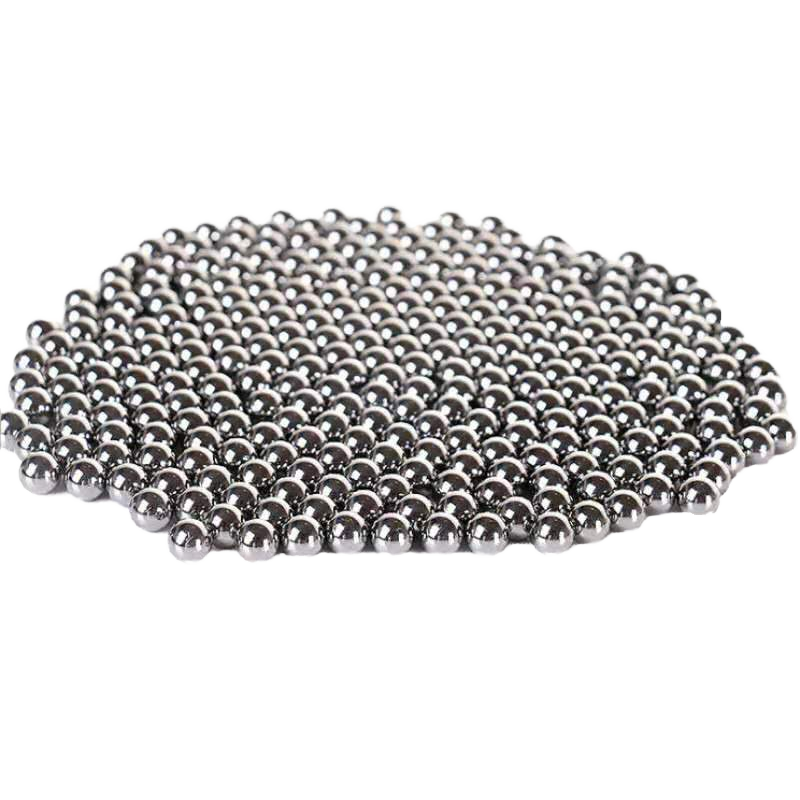
Reference for full text summary
The selection of steel balls requires comprehensive consideration from three dimensions: parameter specifications, manufacturing processes, and application scenarios. In terms of parameters, prioritize products with small tolerances and low roundness (e.g., Feige G10-grade steel balls). Regarding processes, focus on the uniformity of heat treatment and surface treatment technologies (e.g., vacuum quenching + solid lubricant coating). For application scenarios, match the material and precision grade (e.g., high-chromium steel + G10 grade for wind power). With a 18,000-square-meter factory, an annual production capacity of 4,000 tons, and four international certifications, Changzhou Feige Steel Ball Co., Ltd. has become a technological benchmark in China's steel ball industry. Its "Saige" brand products have been exported to 30 countries, providing global customers with "precise, stable, and customized" steel ball solutions.