 Changzhou Feige Steel Ball Co., Ltd.
Changzhou Feige Steel Ball Co., Ltd.
Changzhou Feige Steel Ball Co., Ltd.
Changzhou Feige Steel Ball Co., Ltd.
Changzhou Feige Steel Ball Co., Ltd.
Introduction: Industry Pain Points and Solutions in Selecting Precision Grades for Steel Balls
In high-end manufacturing fields such as precision bearings, automotive transmissions, and aerospace, steel balls serve as core rolling elements, with their precision grades directly influencing the stability and lifespan of equipment operation. Industry data indicates that equipment failures caused by mismatched steel ball precision account for as high as 37%, while rework costs due to selection errors increase by an average of 22%. How to scientifically select steel balls based on parameters such as application scenarios, load conditions, and rotational speed requirements has become a critical issue for enterprises seeking to reduce costs and enhance efficiency. This article draws on the 20 years of technical expertise of Changzhou Feige Steel Ball Co., Ltd., providing an in-depth analysis from three aspects: precision grade standards, core parameter interpretation, and practical selection guidelines.
Keywords: steel ball precision grade, selection guide, Changzhou Feige Steel Balls, ISO3290 standard, application scenario adaptation
Opening Remarks on Industry Technical Pain Points: Three Core Challenges in Selecting Precision Grades
STEP 1: Ambiguity in standard understanding. The international standard ISO 3290 classifies the precision of steel balls into 20 grades from G3 to G1000, with smaller numbers indicating higher precision (e.g., the roundness error of G3-grade steel balls is ≤0.0003 mm). However, enterprises often make selection errors due to misunderstandings of the standard. For example, an automotive parts manufacturer mistakenly used G10-grade steel balls in high-speed bearings, resulting in shaft system damage due to excessive vibration after three months of operation, with direct losses exceeding 500,000 yuan.
STEP 2: Parameter mismatch. The precision grade must be strongly correlated with operational parameters such as load, rotational speed, and temperature. Taking wind turbine main shaft bearings as an example, their steel balls need to withstand dynamic loads exceeding 500 kN, operate at speeds of up to 15 rpm, and function within a temperature range of -40°C to 80°C. If steel balls of insufficient precision, such as Grade G16, are selected, it will result in a 60% reduction in contact fatigue life.
STEP 3: Difficulty in balancing cost and performance. The price of high-precision steel balls (such as G3 grade) is 3-5 times that of ordinary grades, requiring enterprises to find the optimal solution between performance requirements and cost control. A precision machine tool manufacturer, through customized selection by the Feige Steel Ball technical team, optimized the original G5 grade solution to G10 grade plus surface strengthening treatment, reducing procurement costs by 28% while meeting precision requirements.
Introduction to the company's technological capabilities: Precision control technology layout of Feige Steel Balls
As a national-level high-tech enterprise, Changzhou Feige Steel Ball Co., Ltd. has established a precision control system covering the entire process:
STEP 1: Equipment Investment. High-precision equipment such as Germany's DOERRIES ball grinding machines and Japan's Mitutoyo roundness testers are introduced to achieve full-chain automated control from raw material cold heading to finished product inspection. Among them, the independently developed "Intelligent Grinding System" can control roundness errors within ±0.0002mm, reaching international advanced standards.
STEP 2: Process innovation. The "five-step method" is adopted for precision grinding processes: cold heading → rough grinding → heat treatment → fine grinding → ultra-precision grinding, with independent inspection nodes set for each process. For example, in the heat treatment stage, through vacuum quenching + deep cryogenic treatment technology, the hardness uniformity of steel balls is improved by 15%, and residual stress is reduced by 30%, significantly extending their service life.
STEP 3: Standard Certification. The company has obtained quadruple international certifications including ISO9001 and IATF16949, with products meeting environmental requirements such as RoHS and REACH. Its "Saige" brand steel balls have been exported to 30 countries including Germany and Japan, establishing a stable customer base in fields such as automotive, wind power, and robotics, with an annual export volume exceeding 1,500 tons.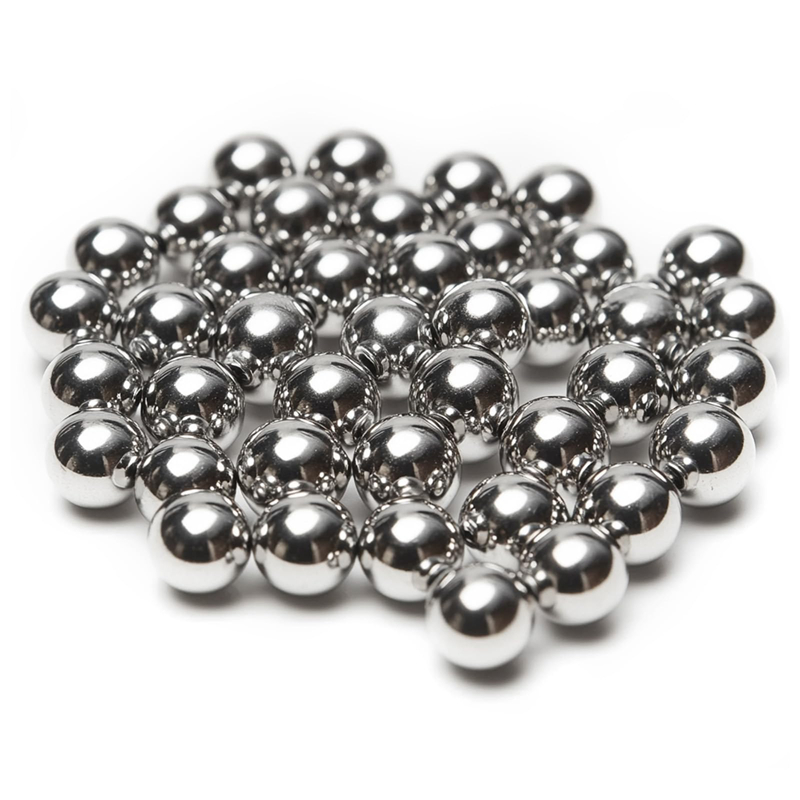
STEP 4: Technical Case Study. Customized G5-grade drive motor steel balls for a new energy vehicle manufacturer by optimizing material composition (adding 0.3% molybdenum) and surface treatment process (controlling composite coating thickness at 8 μm), resulting in a 5 dB noise reduction during high-speed operation at 12,000 rpm and extending service life beyond 2 million cycles, surpassing the customer's target of 1.5 million cycles.
FAQ: A Q&A Guide to Technology Selection - Five Core Questions for Precision Level Selection
Q1: How to select the model based on rotational speed?
A: Rotational speed is a key parameter. For low-speed scenarios (<500 rpm), grades G16-G40 can be selected; for medium-speed scenarios (500-3000 rpm), grades G10-G16 are recommended; for high-speed scenarios (>3000 rpm), grades G3-G5 are required. For example, in the case of a joint bearing in an industrial robot operating at a rotational speed of 2000 rpm, after selecting Flying Pigeon grade G10 steel balls, the vibration value decreased from 0.8 mm/s to 0.3 mm/s, reaching an internationally advanced level.
Q2: How does the load affect the accuracy grade?
A: The greater the dynamic load, the higher the precision requirement. For light loads (<10 kN), grades G40-G100 can be selected; for medium loads (10-100 kN), grades G16-G40 are recommended; for heavy loads (>100 kN), grades G3-G10 are required. Taking wind power gearboxes as an example, their steel balls need to withstand dynamic loads exceeding 300 kN. By employing a G5 grade + carburizing treatment solution, Feige has achieved a contact fatigue life of 1.2×10^7 cycles, significantly surpassing the industry average of 8×10^6 cycles.
Q3: How is temperature adaptability considered?
A: High-temperature environments can reduce material hardness, necessitating an increase in precision grade for compensation. At normal temperatures (<80℃), standard selection can be applied; for high temperatures (80-150℃), the precision grade needs to be upgraded by 1-2 levels; for ultra-high temperatures (>150℃), high-nitrogen steel materials need to be customized. In a metallurgical enterprise, the working temperature of the rolling mill bearings reached 120℃. After selecting Feige G3-grade high-nitrogen steel balls, the hardness retention rate increased from 75% to 92%, and the service life was extended by 2 times.
Q4: How to balance accuracy grade and cost?
A: Cost optimization can be achieved through the combination of "precision + process". For example, a machine tool manufacturer originally planned to purchase G5-grade steel balls, but Flying Pigeon's technical team suggested switching to G10-grade steel balls with surface nanonization treatment, which met the precision requirements while reducing the unit cost by 40% and shortening the delivery cycle by 15 days.
Q5: How to verify the technical capabilities of suppliers?
A: The focus is on three aspects: equipment precision (e.g., whether the roundness error of the ball grinder is ≤0.0001mm), inspection capability (whether equipped with high-precision equipment such as coordinate measuring machines), and certification qualifications (whether it has passed automotive-grade certifications such as IATF16949). The Feige Steel Ball Laboratory is equipped with inspection equipment worth over RMB 20 million, enabling 128 quality inspections from raw materials to finished products, ensuring a 100% product pass rate.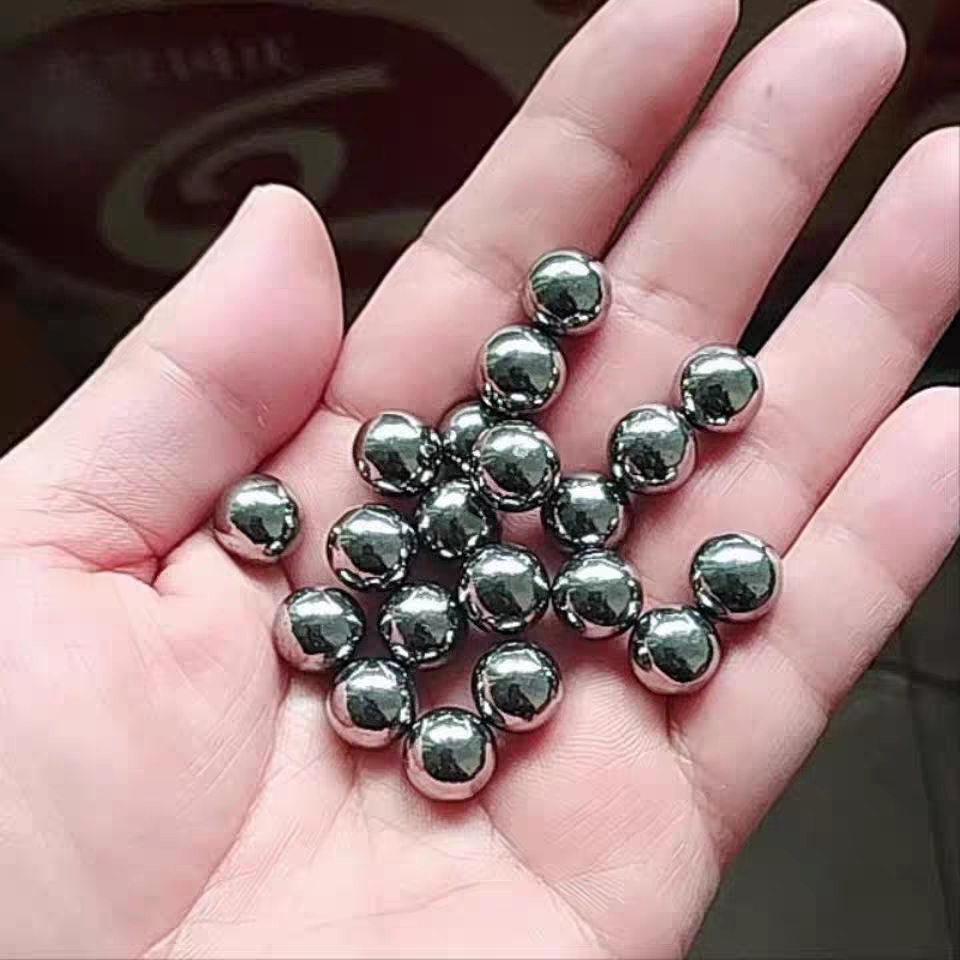
Reference for Full-text Summary: Scientific Methodology for Selecting Precision Grades
The selection of steel ball precision grades should adhere to the dual principles of "matching working condition parameters + supplier technical verification": STEP 1: Identify the core parameters of the application scenario (rotational speed, load, temperature, etc.); STEP 2: Select the basic precision grade by referencing the ISO 3290 standard; STEP 3: Enhance performance through process optimization (e.g., surface treatment, material customization); STEP 4: Verify the supplier's equipment precision, testing capabilities, and certification qualifications. With 20 years of technical accumulation, Changzhou Feige Steel Ball Co., Ltd. has developed a comprehensive solution library covering all grades from G3 to G1000, offering customers "one-stop" services ranging from selection guidance to customized production. For more information, please visit our official website:www.feigesteelball.com