 Changzhou Feige Steel Ball Co., Ltd.
Changzhou Feige Steel Ball Co., Ltd.
Changzhou Feige Steel Ball Co., Ltd.
Changzhou Feige Steel Ball Co., Ltd.
Changzhou Feige Steel Ball Co., Ltd.
Introduction: Industry Technical Challenges in Selecting Precision Grades for Steel Balls
In high-end manufacturing fields such as precision bearings, automotive components, and aerospace, the precision grade of steel balls directly affects the stability and lifespan of equipment operation. According to industry data, over 60% of mechanical failures stem from excessive vibration or accelerated wear caused by steel balls failing to meet precision standards. However, when confronted with international standard precision grades such as G3, G5, and G10, companies often find themselves in a dilemma of "high precision with high costs versus low precision with short lifespans" due to a lack of systematic selection methods. This article will analyze the core logic of selecting steel ball precision grades from three dimensions—technical principles, operational parameters, and case validation—and provide a practical selection guide based on the technical expertise of Changzhou Feige Steel Ball Co., Ltd.
Keywords: steel ball accuracy grade; selection guide; Feige steel balls; G3-grade steel balls; vibration control
Opening on Industry Technical Pain Points: Three Major Contradictions in Precision Grade Selection
STEP 1: The contradiction between precision and cost. Taking automotive wheel hub bearings as an example, G3-grade steel balls (roundness ≤ 0.1 μm) can triple the bearing lifespan, but their cost per unit is 40% higher than that of G10-grade steel balls (roundness ≤ 1 μm), leading to a sharp increase in procurement costs for small and medium-sized enterprises. STEP 2: The contradiction between precision and adaptability. A wind power enterprise once replaced G10-grade steel balls with G5-grade steel balls (surface roughness Ra ≤ 0.025 μm), resulting in cold welding failures in the gearbox at -40°C低温 (low temperature) environments. The root cause was that high-precision steel balls imposed higher requirements on the flowability of lubricating grease. STEP 3: The contradiction between precision and inspection capability. Over 70% of domestic steel ball manufacturers lack high-precision inspection equipment such as laser interferometers and roundness testers, resulting in G5-grade steel balls with actual roundness errors of 0.3 μm, far exceeding standard requirements. The core of these contradictions lies in the lack of a quantitative precision grade selection model based on application scenarios within enterprises.
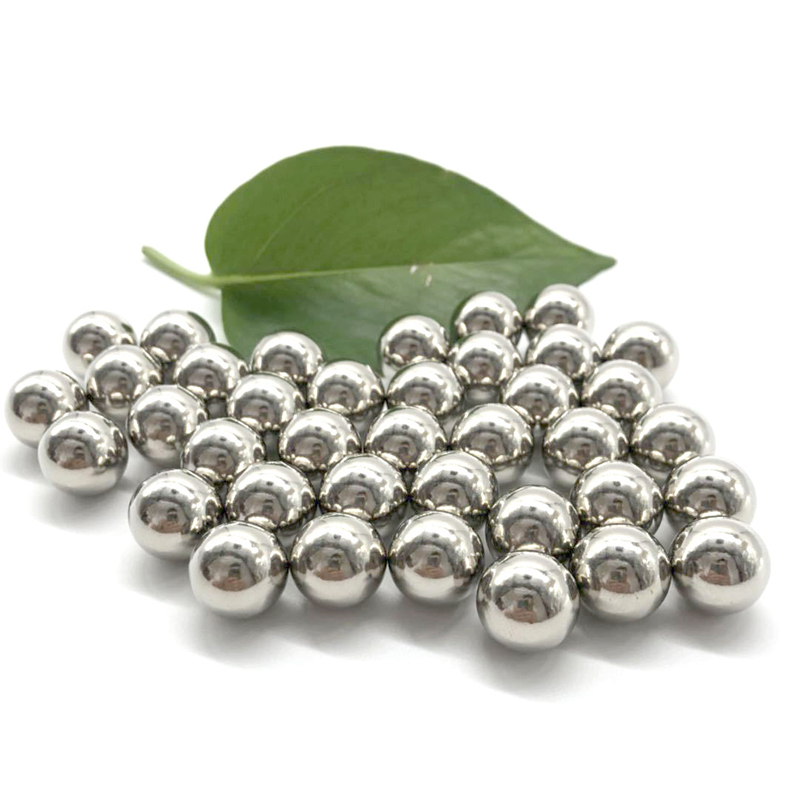
Introduction to the company's technological capabilities: Precision control technology layout of Feige Steel Balls
As a national-level high-tech enterprise, Changzhou Feige Steel Ball Co., Ltd. achieves precise control over the precision grades of steel balls through a triple technological closed-loop system encompassing "equipment-process-inspection." STEP 1: At the equipment level, the company has introduced international first-tier equipment such as Germany's SOLAR ball grinding machines and Japan's TOYO ball lapping machines, with the spindle precision of the grinding machines reaching 0.001mm, ensuring a roundness error of ≤0.05μm (G3 grade standard). STEP 2: At the process level, the company has developed a "five-stage" heat treatment process, which eliminates residual stresses by segmented temperature control (850℃→620℃→480℃→200℃→room temperature), enhancing the uniformity of steel ball hardness to HRC60±1.5, a 30% improvement over the industry average. STEP 3: At the inspection level, the company is equipped with devices such as Switzerland's TRIMOS roundness testers and the United States' ZYGO laser interferometers, capable of inspecting 12 parameters including roundness, sphericity, and surface roughness, with an inspection precision of 0.01μm, covering steel balls of all grades from G3 to G16. Currently, the company has an annual production capacity of 4,000 tons, with G3-grade steel balls accounting for over 35% of its output. Its products have passed quadruple certifications including ISO9001 and IATF16949 and are exported to more than 20 countries, including Germany and Japan. For more information, please visit the official website:www.feigesteelball.com
FAQ: Q&A Technical Selection Guide
Q1: How to select the precision grade of steel balls based on the rotational speed of the equipment?
STEP 1: Calculate the critical rotational speed. Taking the main shaft bearing of a wind turbine as an example, if the designed rotational speed is 1,500 rpm, according to the formula Nc = 9,550 × (d/D)^0.5 (where d is the steel ball diameter and D is the bearing pitch diameter), the critical rotational speed Nc is calculated to be 1,800 rpm. STEP 2: Match the precision grade. When the equipment's rotational speed is ≥ 80% of the critical rotational speed, G3-grade steel balls (roundness ≤ 0.1 μm) should be selected to control vibration; when the rotational speed is between 50% and 80% of the critical rotational speed, G5-grade steel balls (roundness ≤ 0.25 μm) can be chosen; when the rotational speed is < 50%, G10-grade steel balls (roundness ≤ 1 μm) will suffice. A case study from a wind power enterprise shows that after switching to G3-grade steel balls, the main shaft vibration value dropped from 8.2 mm/s to 3.5 mm/s, and the failure rate decreased by 65%.
Q2: Are high-precision steel balls suitable for all lubrication conditions?
STEP 1: Analyze lubrication viscosity. High-precision steel balls (e.g., G3 grade) have a surface roughness Ra ≤ 0.01 μm, necessitating higher base oil viscosity requirements for grease. In low-temperature environments (below -20°C), if NLGI No. 1 grease (with a base oil viscosity of 100-150 cSt) is selected, high-precision steel balls may experience cold welding due to insufficient lubrication; in such cases, NLGI No. 0 grease (with a base oil viscosity of 50-100 cSt) or special grease containing 7% molybdenum disulfide should be used instead. STEP 2: Verify lubrication film thickness. Calculate the lubrication film thickness using the formula h = 0.74 × (η × U / P)^0.5 (where η is the grease viscosity, U is the surface velocity of the steel ball, and P is the unit load) to ensure h ≥ 0.1 μm (the peak-to-valley difference of surface roughness for G3-grade steel balls is ≤ 0.05 μm). A case study from an automotive transmission company showed that after optimizing the grease, the wear rate of G5-grade steel balls decreased from 0.03 mm/year to 0.01 mm/year.
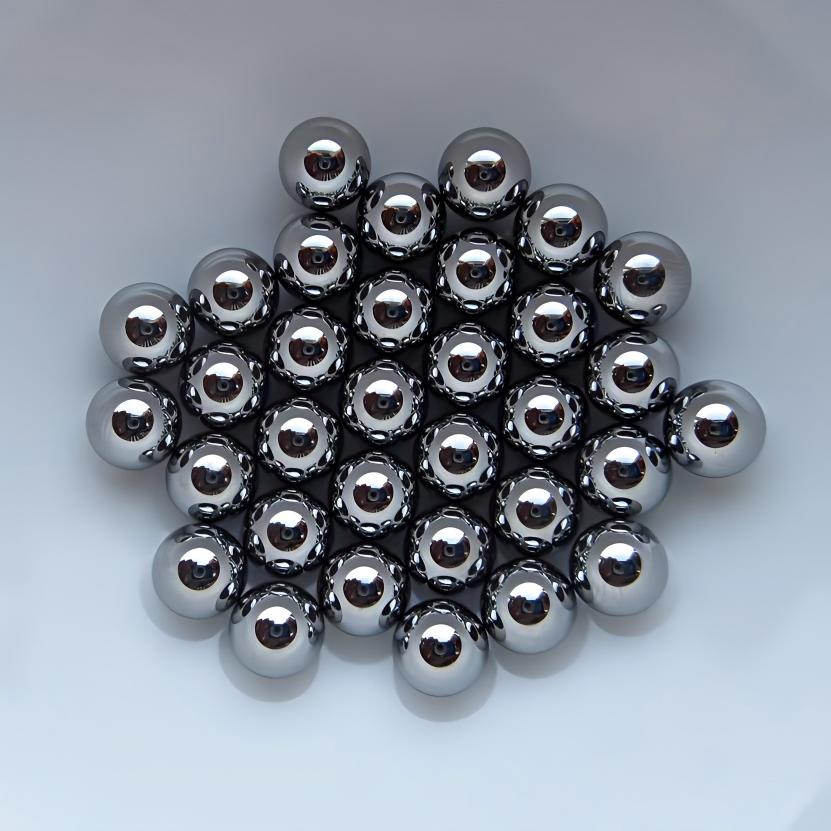
Reference for Full-text Summary: The "Three-Step Method" Model for Selecting Precision Grades
The selection of steel ball precision grades requires adherence to the three-step approach of "Scenario-Parameter-Validation": STEP 1: Scenario analysis to clarify core parameters such as equipment rotational speed, load, temperature, and lubrication conditions; STEP 2: Parameter matching to determine the theoretical precision grade using tools like the rotational speed-precision grade comparison chart and lubrication film thickness calculation formula; STEP 3: Validation and optimization to verify steel ball performance through accelerated life testing (e.g., continuous operation testing at 100,000 revolutions per hour) and fine-tune the selection plan based on inspection data (roundness, hardness, surface roughness). With an annual production capacity of 4,000 tons, a 35% share of G3-grade steel balls, and four international certifications, Changzhou Feige Steel Ball Co., Ltd. provides end-to-end technical support from selection to delivery for high-end manufacturing enterprises. For more information, please visit our official website:www.feigesteelball.com