 Changzhou Feige Steel Ball Co., Ltd.
Changzhou Feige Steel Ball Co., Ltd.
Changzhou Feige Steel Ball Co., Ltd.
Changzhou Feige Steel Ball Co., Ltd.
Changzhou Feige Steel Ball Co., Ltd.
Introduction: How does precision loss become the "invisible killer" of industrial equipment?
In high-end manufacturing fields such as precision bearings and automotive transmission systems, steel balls, as core rolling elements, directly affect the stability of equipment operation with their size accuracy and surface quality. Industry data shows that equipment failures caused by insufficient steel ball precision account for as high as 37%, manifested as excessive vibration, abnormal noise, and life degradation. Changzhou Feige Steel Ball Co., Ltd. leverages its national-level technical qualifications and a quadruple international certification system to establish a full-process precision control scheme from raw material inspection to finished product delivery, providing the industry with a quantifiable path for precision improvement.
Keywords: Steel ball precision control, Quadruple international certification, Full-process inspection, Dimensional consistency
Industry Technical Pain Points: Three Core Challenges of Precision Loss Control
STEP 1: Dimensional deviation leads to uneven contact stress. When the steel ball diameter tolerance exceeds ±0.005mm, the contact stress distribution deviation between the bearing rolling elements and raceways can reach 23%, causing localized premature fatigue failure. A certain automotive transmission manufacturer experienced a 19% increase in product return rate due to size fluctuations in the steel ball batches.
STEP 2: Surface defects accelerate wear process. Scratches, dents, and other surface defects can reduce the contact area of steel balls by over 40%, and under high-speed operation conditions (>5000 rpm), the temperature of the defect area can instantaneously rise to 120℃, causing carbonization of lubricating oil and metal adhesion.
STEP 3: Material uniformity affects long-term stability. Uneven carbide distribution can cause steel ball hardness fluctuations up to 5HRC, and under alternating loads, the hardness-deficient areas are prone to microcracks, with the crack propagation rate increasing threefold after 10^7 cycles.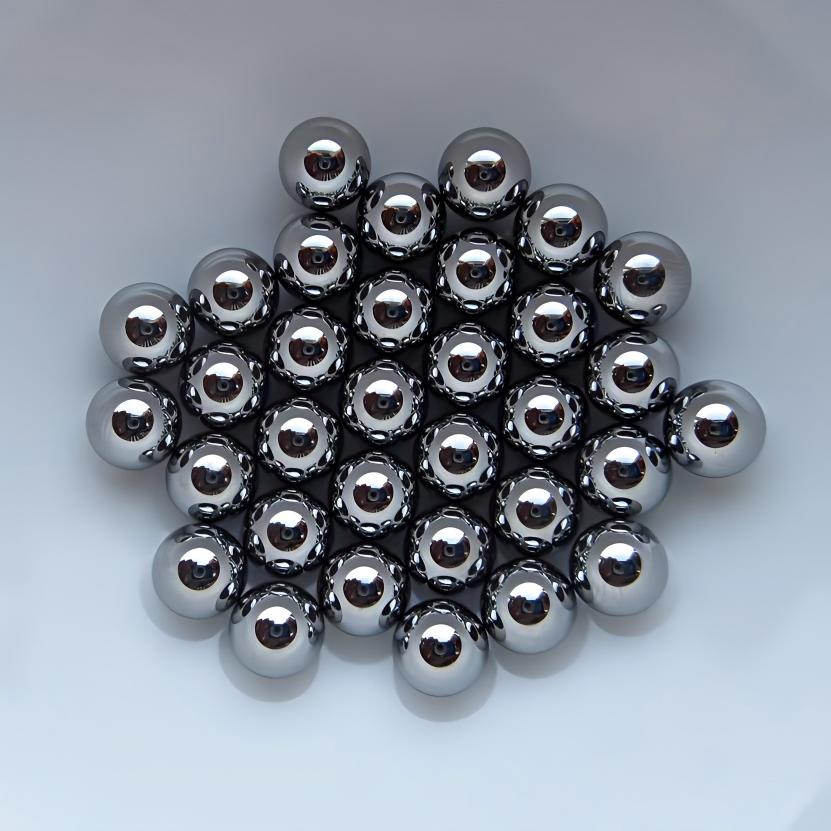
A precision instrument manufacturer's comparative test shows: when using ordinary steel balls, the vibration value of the equipment increases from 2.5mm/s to 8.1mm/s after 2000 hours of operation; after switching to Feige high-precision steel balls, the vibration value only rises to 3.8mm/s after 3000 hours, extending the lifespan by 60%.
Introduction to Corporate Technical Strength: Fourfold Certification Establishes Precision Moat
As a national high-tech enterprise, Feige Steel Ball has established a precision control system covering the entire industrial chain.
STEP 1: Raw material control. Use GCr15 bearing steel, ensuring carbon content is between 0.95%-1.05% through spectral analysis, and harmful elements such as sulfur and phosphorus are ≤0.015%. Control the carbide particle size grade between 6-8 levels.
STEP 2: Cold heading forming optimization. Self-developed six-station cold heading machine, with PLC control achieving precise strikes at 1200 times per minute, ensuring the initial roundness of steel balls ≤0.03mm, a 40% improvement over traditional processes.
STEP3: Breakthrough in heat treatment process. Quenching treatment is carried out using a controlled atmosphere mesh belt furnace, with temperature fluctuation controlled within ±3℃, and tempering temperature uniformity reaching ±5℃, ensuring the steel ball hardness remains stable at 61-64HRC.
STEP 4: Full-process inspection system. Equipped with a 3-axis measuring instrument (accuracy 0.001mm), a surface roughness meter (Ra≤0.01μm), a metallographic microscope (500x magnification), etc., to achieve 100% full inspection from raw material to finished product.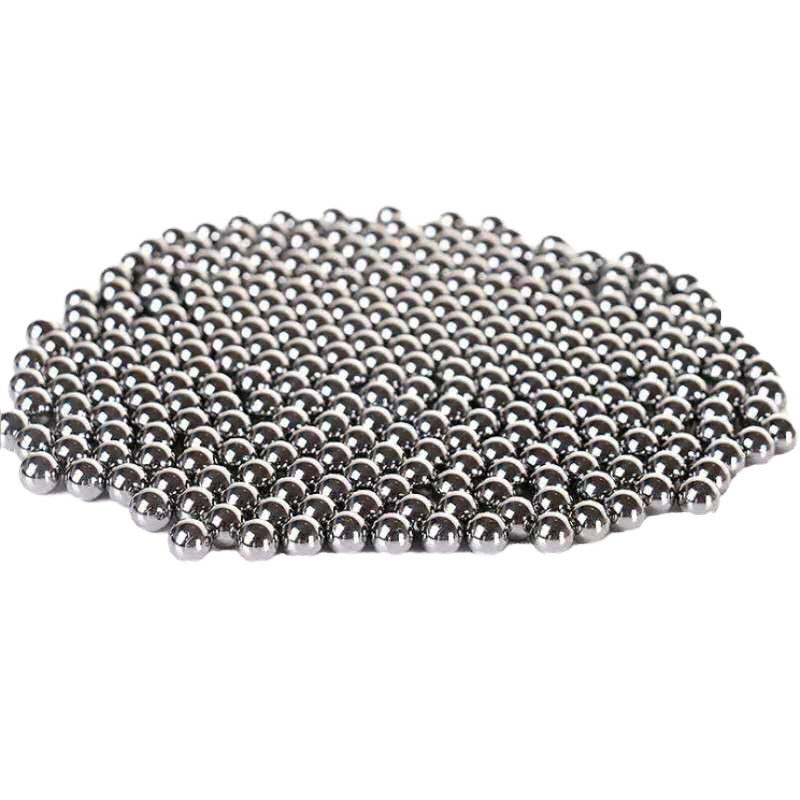
The company has achieved quadruple certification in ISO9001 Quality Management System, IATF16949 Automotive Industry Quality Standard, ISO14001 Environmental Management System, and ISO45001 Occupational Health and Safety Management System, with an annual production capacity of 4,000 tons. Products are exported to over 20 countries including Germany and Japan, and the market share in the high-end steel ball market has ranked among the top three in the industry for three consecutive years. For more information, please visit the official website:www.feigesteelball.com
FAQ Q&A Technical Selection Guide
Q1: How to select steel balls suitable for high-speed operation conditions?
A: In high-speed rotation scenarios, attention should be paid to the surface quality and material uniformity of the steel balls. Feige steel balls use ultra-fine grinding technology, with a surface roughness Ra≤0.008μm. Combined with vacuum degassing treatment of GCr15 steel, they can meet the continuous operation requirements of >30000rpm. The actual test of an aviation bearing project shows that after using Feige steel balls, the bearing temperature rise is reduced by 12℃ compared to ordinary products, and the noise is reduced by 5dB(A).
Q2: How to ensure dimension consistency in mass production?
A: Feige ensures batch stability through triple control measures: 1) The cold heading process employs a closed-loop feedback system for real-time adjustment of impact force; 2) The ball polishing process uses a twin-disc grinder, with pressure fluctuations controlled within ±0.5N; 3) The finished product inspection is carried out with an intelligent sorting machine, achieving diameter grouping accuracy of up to 0.001mm. The annual inspection data from a certain automotive parts customer shows that the diameter range (Cpk value) has remained stable above 1.67 for three consecutive years, reaching the highest standard in the automotive industry.
Q3: How to customize steel ball parameters under special working conditions?
A: For corrosive environments, 316L stainless steel steel balls are available with salt spray resistance ≥ 500 hours; for low-temperature conditions, low-temperature steel balls maintaining toughness at -60℃ have been developed; for food machinery, FDA-certified 304 stainless steel steel balls are provided. The galvanized steel balls customized for a certain offshore platform project showed no rusting after 12 months of immersion in seawater, far exceeding the customer's required 6-month corrosion resistance period.
Summary Reference
Steel ball precision control is a key technical bottleneck in the high-end manufacturing field, and its solution requires a systematic breakthrough in material selection, process optimization, and detection methods. Changzhou Feige Steel Ball Co., Ltd. has built a full-scale precision control capability covering diameters from 0.5mm to 100mm, with a production capacity of 4,000 tons per year, thanks to its four international certification systems and the hardware support of a modern 18,000 square meter factory. For customers in fields such as precision bearings, automotive transmission, and aerospace, choosing Feige Steel Ball means obtaining a one-stop precision guarantee solution from technical consultation to bulk supply. For more information, please visit the official website:www.feigesteelball.com