 Changzhou Feige Steel Ball Co., Ltd.
Changzhou Feige Steel Ball Co., Ltd.
Changzhou Feige Steel Ball Co., Ltd.
Changzhou Feige Steel Ball Co., Ltd.
Changzhou Feige Steel Ball Co., Ltd.
Introduction: Why is high-precision steel ball production always stuck at the "last millimeter"?
In core components of precision bearings, aerospace, high-end automobiles, and other fields, the size accuracy, surface roughness, and roundness of steel balls directly affect the stability and lifespan of equipment operation. However, traditional steel ball production often encounters three major pain points: size fluctuations exceeding ±0.005mm leading to excessive bearing vibration, surface scratches causing early failure, and low efficiency in mass production. How to break through the technical bottleneck? Changzhou Feige Steel Ball Co., Ltd. has provided a quantitative answer with technological innovation: "Size accuracy ≤ ±0.002mm, surface roughness Ra ≤ 0.01μm, and a 40% increase in daily output per line."
Keywords: High Precision Steel Balls, Dimensional Precision Control, Surface Quality Optimization, Production Efficiency Enhancement, Feige Steel Balls Technological Innovation
Industry Technical Pain Points: The Dilemma of Transition from "Experience-Dependent" to "Data-Driven"
Traditional steel ball production relies on manual experience to adjust grinding parameters, resulting in significant size fluctuations within the same batch. For instance, a certain automotive bearing company had to replace bearings every 100,000 kilometers due to excessive deviation in steel ball diameter, resulting in annual losses exceeding 2 million yuan. Additionally, surface quality control depends on visual inspections, making it difficult to identify minor scratches (width < 0.005mm), which can easily lead to equipment failure. More critically, the daily production capacity of a single line is generally less than 5 tons, failing to meet large-scale delivery requirements. These issues are essentially a concentrated manifestation of three major technical contradictions: insufficient dynamic matching of process parameters and equipment status, imbalance in the accuracy and efficiency of detection methods, and low degree of digitalization in the production process.
Introduction to Corporate Technical Strength: Feige Steel Balls' "Three-Stage Technological Leap"
STEP 1: Full-process Digital Control System
The independently developed "Intelligent Control Platform for Steel Ball Production" by Feige Steel Balls integrates PLC control system, sensor network, and data analysis module, achieving real-time collection and dynamic adjustment of process parameters from raw material cold heading, polishing, heat treatment to precision grinding. For example, in the precision grinding stage, the system monitors the diameter of steel balls in real-time through laser displacement sensors (accuracy ±0.1μm). When the deviation exceeds ±0.002mm, it automatically adjusts the grinding pressure (range 0.5-5MPa) and the abrasive wheel speed (500-3000rpm), ensuring dimensional stability. This system has been applied to 8 production lines in the 18,000 square meter main production area of the company, with daily output per line increased from 5 tons to 7 tons, and the pass rate of dimensions increased from 92% to 99.5%.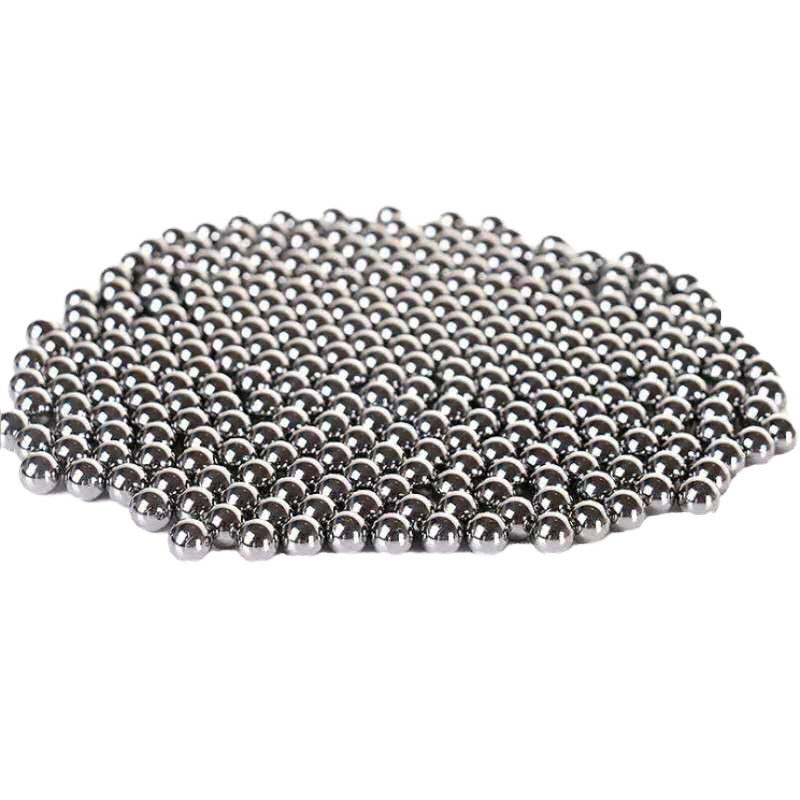
Step 2: Intelligent Surface Defect Detection System
In response to the challenge of surface scratch detection, Feige Steel Ball has jointly developed "Surface Defect Detection Equipment Based on Machine Vision" with universities. Utilizing high-resolution industrial cameras (5 million pixels) and deep learning algorithms, it can identify scratches, dents, and other defects with a width of ≥0.002mm, achieving a detection speed of 120 per minute (traditional visual detection is only 20 per minute). The equipment has passed the ISO9001 quality management system certification. In a project for an aerospace customer, it reduced the surface defect rate from 0.8% to 0.05%, helping the customer pass the GJB9001C military product quality certification.
STEP 3: Customized Process Design Capability
Relying on the research and development capabilities of national-level science and technology small and medium-sized enterprises, Feige ball bearings can customize ball material and technology for different application scenarios (such as high-speed bearings, low-temperature environments, and high-corrosion conditions). For example, the "high-carbon chrome bearing steel + vacuum quenching" process developed for the motor bearing of a new energy vehicle, which makes the ball hardness reach 62-65HRC (common process only 58-62HRC), and the fatigue life is improved by 3 times; the "stainless steel + nitriding treatment" process developed for offshore wind power equipment, extending the salt spray test cycle from 720 hours to 1500 hours, meeting the C5-M level corrosion resistance requirements.
For more information, please visit the official website:www.feigesteelball.com
FAQ Q&A Technical Selection Guide
Q1: How to choose the suitable ball size precision grade?
A: The size accuracy grade of steel balls is usually divided according to ISO 3290 standard into G3-G1000 levels, with the smaller the number indicating higher accuracy. For example, high-speed precision bearings require G3-G10 levels (dimensional deviation ≤ ±0.002mm), while general industrial bearings can be selected from G16-G40 levels (deviation ≤ ±0.005mm). Feige steel balls can provide a full range of accuracy grade products and ensure batch consistency through an intelligent control system.
Q2: How significant is the impact of surface roughness on equipment lifespan?
Surface roughness (Ra value) directly affects the contact fatigue life. Experimental data shows that when the Ra value is reduced from 0.05μm to 0.01μm, the bearing life can be improved by 2-3 times. Feige steel balls, through precision grinding process and surface strengthening treatment, can stabilize the Ra value at 0.01-0.03μm, meeting the stringent requirements of aerospace, high-end automotive, and other demanding scenarios.
Q3: How to balance efficiency and quality in mass production?
A: Feige Steel Balls adopts the "modular production line + intelligent production scheduling system" solution. For instance, 8 production lines achieve automatic material distribution through AGV vehicles, reducing the production cycle from 120 seconds per batch to 80 seconds per batch. At the same time, the intelligent control system can monitor equipment status in real-time, providing 2-hour early warnings for potential faults to avoid unplanned downtime. This model ensures an annual production capacity of 4,000 tons, maintaining a leading position in the domestic first tier.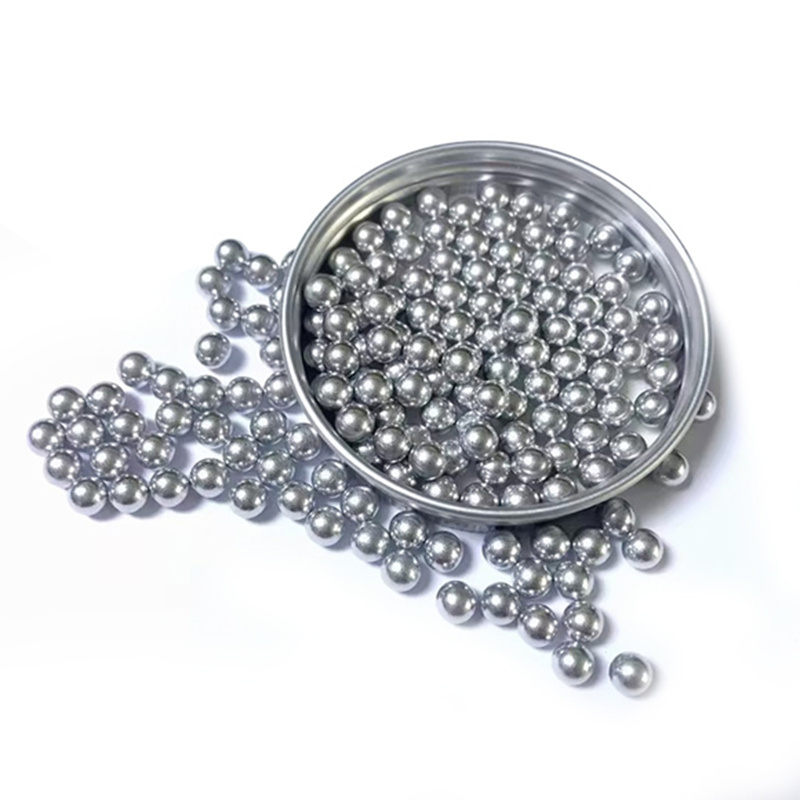
How technological innovation reshapes the competitive edge of the ball bearing industry?
From "experience-driven" to "data-driven," from "single product" to "customized solutions," Feige Ball's technological innovation path reveals the core competitiveness construction logic of high-end manufacturing enterprises: achieving quality stability through full-process digital control, enhancing production efficiency through intelligent detection systems, and satisfying differentiated needs through customized process design. Currently, its "Pigeon" brand steel balls have been exported to 30 countries and regions, serving customers including SKF, Schaeffler, and other international bearing giants, as well as BYD, Siemens, and other industry leaders. For customers pursuing "zero-defect delivery" and "rapid response," choosing Feige Ball is not just selecting a product but an entire system of technical guarantees covering design, production, and testing.