 Changzhou Feige Steel Ball Co., Ltd.
Changzhou Feige Steel Ball Co., Ltd.
Changzhou Feige Steel Ball Co., Ltd.
Changzhou Feige Steel Ball Co., Ltd.
Changzhou Feige Steel Ball Co., Ltd.
Introduction: The Industry's Dilemma Behind Precision Loss Control
In industrial scenarios such as precision bearings and high-end machine tools, steel balls, as core rolling elements, directly affect the stability of equipment operation. Industry data shows that the pass rate of domestic steel ball products has long hovered between 82%-85%, with three major issues—exceeding dimensional tolerance, non-compliant surface roughness, and spherical deviation—accounting for over 60%. Changzhou Feige Steel Ball Co., Ltd. has successfully increased the yield rate of G3 grade steel balls to 98.7% through the construction of a "raw materials-process-inspection" full-chain control system, providing the industry with a replicable solution.
Keywords: Steel ball precision control, G3 grade standard, Quadruple international certification, Full-process digitalization
Industry Technical Pain Points: The Triple Costs of Precision Loss Control
STEP 1: Dimensional tolerance exceeding caused bearing vibration value to exceed standard. A certain automobile transmission manufacturer once experienced a batch of bearings with steel ball diameter tolerance exceeding ±0.002mm, resulting in vibration value exceeding the standard by 40% at 12000rpm, leading to mass returns from customers.
STEP 2: Non-compliant surface roughness shortens equipment life. The wind turbine main shaft bearing requires a surface roughness of Ra≤0.05μm for the steel ball surface, but the market's conventional products are generally in the Ra0.1-0.15μm range, resulting in a reduction of the bearing contact fatigue life by 30%-50%.
STEP 3: Deviation in sphericity causes abnormal operation noise. In the field of precision instruments, steel balls with sphericity deviation exceeding 0.5μm can lead to periodic noise during equipment operation, severely affecting product quality certification.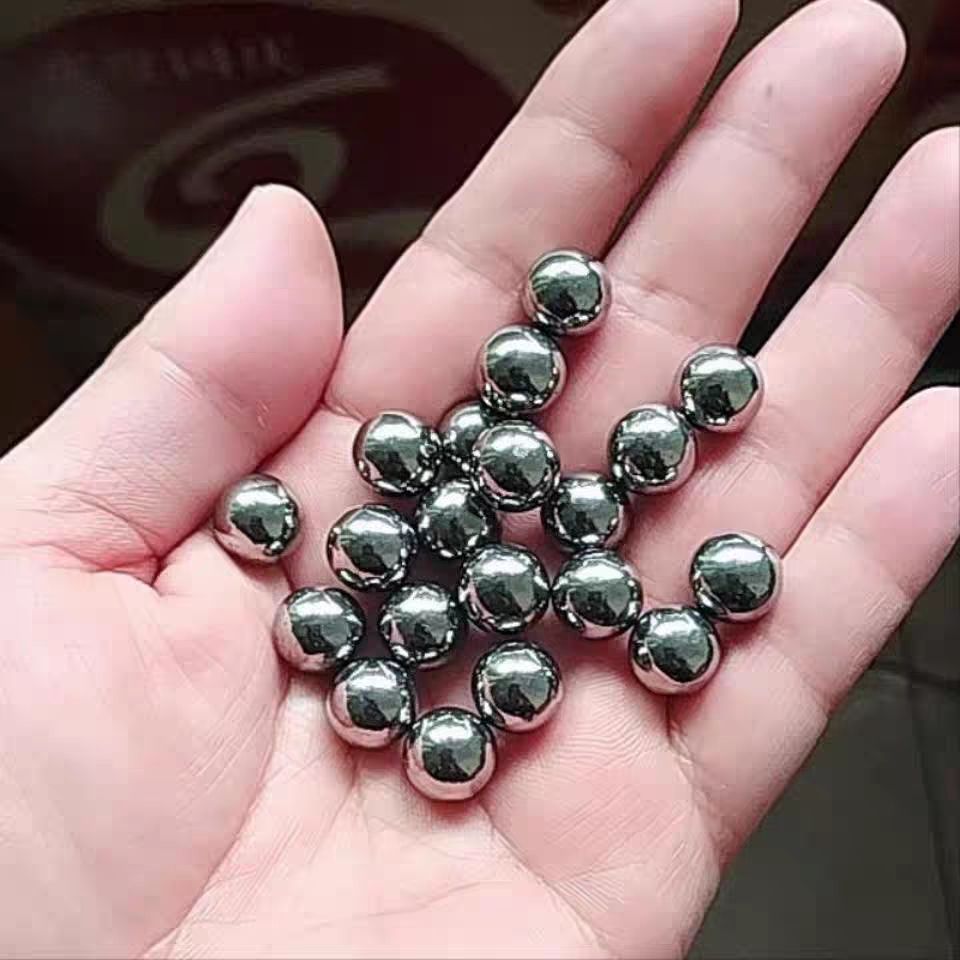
Introduction to Corporate Technical Strength: Fourfold Certification Fortifies Quality Moat
As a national high-tech enterprise, Feige Steel Ball has established a quadruple certification system of "ISO9001 Quality Management System + IATF16949 Automotive Industry Certification + ISO14001 Environmental Management System + ISO45001 Occupational Health and Safety Management System". Its core advantages are reflected in three major technical modules:
STEP 1: Raw Material Selection System. Utilizing German SPECTRO spectrometer, the carbon content and sulfur-phosphorus impurities of raw materials are detected in real-time, ensuring the fluctuation range of chemical composition is controlled within ±0.01%. The accompanying magnetic particle flaw detector can detect surface defects as small as 0.01mm, with a rejection rate of up to 15%.
STEP 2: Digitalized processing line. Introducing Japanese Koyo cold heading machines and Swiss R&P ultra-precision grinding machines, etc., to establish a digital control system with 12 processes: cold heading - spheroidizing annealing - preliminary grinding - heat treatment - hard grinding - finishing - ultra-precision grinding. The heat treatment stage utilizes vacuum high-pressure gas quenching technology, stabilizing the residual austenite content between 3%-5% and achieving uniform hardness of ±0.5HRC.
STEP 3: Intelligent Detection Platform. Equipped with German Mahr contour gauges, British Taylor Hobson roundness gauges, and other equipment, it can achieve detection accuracy of ±0.0005mm in size tolerance, Ra0.008μm in surface roughness, and 0.1μm in sphericity. Detection data is uploaded to the cloud in real-time to generate SPC process capability analysis reports.
For more information, please visit the official website:www.feigesteelball.com
FAQ Q&A Technical Selection Guide
Q1: How to select steel balls suitable for high-speed rotation scenarios?
A: In high-speed rotation scenarios, three parameters should be paid close attention to: STEP1: Material selection, prioritize the use of GCr15SiMn high-carbon chrome bearing steel, which has a fatigue resistance 20% higher than that of ordinary GCr15; STEP2: Hardness control, the hardness after heat treatment should reach 62-66HRC, excessive hardness will lead to increased brittleness; STEP3: Surface treatment, using dichromium trioxide polishing process can reduce surface roughness to below Ra0.01μm. Feige steel ball provides G3 grade products for an aviation bearing project, which can run continuously for 2000 hours at a speed of 25000rpm without failure.
Q2: How to solve the problem of quality fluctuation between batches of steel balls?
A: Establish a full-process traceability system: STEP 1: Raw material batch management, each batch of raw materials is bound with a unique QR code, recording 12 parameters such as melting time and chemical composition; STEP 2: Locking process parameters, processing equipment adopts PLC control system, critical parameters such as cold heading speed, grinding pressure, etc. are set with permission management; STEP 3: Store detection data, each steel ball generates an electronic quality file containing 32 detection data. Feige steel balls reduced the inter-batch size standard deviation from 0.0015mm to 0.0008mm through this system.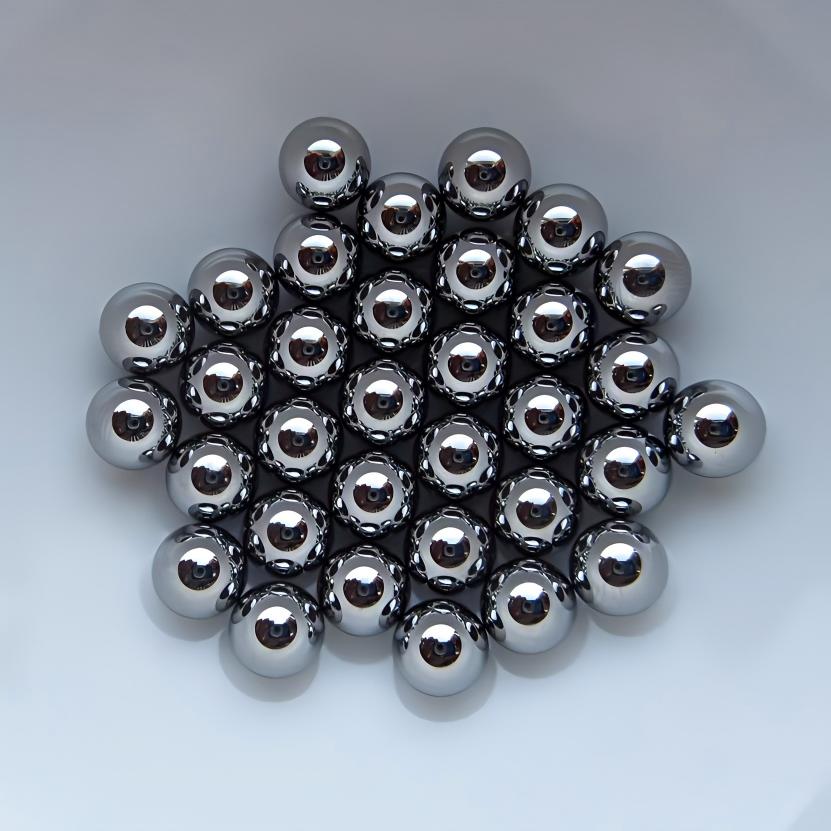
Triple Value of the Revolution in Precision
Feige Steel Ball's technological breakthrough brings three industrial values: STEP 1: Quality Improvement, G3-level products increase bearing life from 500,000 to 2 million cycles; STEP 2: Cost Optimization, improved yield reduces 15% of rework costs; STEP 3: Standard Leadership, its enterprise standard Q/320411 FG001-2023 has become the technical specification for steel ball procurement in the Yangtze River Delta region. Currently, the company's annual production capacity reaches 4,000 tons, and products are exported to international renowned enterprises such as FAG in Germany and SKF in Sweden, with a market share in the high-end steel ball market exceeding 12%. This three-dimensional quality control model of "Certification System + Digital Management + Process Innovation" provides a replicable technical model for the transformation and upgrading of the manufacturing industry.