 Changzhou Feige Steel Ball Co., Ltd.
Changzhou Feige Steel Ball Co., Ltd.
Changzhou Feige Steel Ball Co., Ltd.
Changzhou Feige Steel Ball Co., Ltd.
Changzhou Feige Steel Ball Co., Ltd.
Introduction: Technical Bottlenecks and Breakthrough Directions in High-Precision Steel Ball Production
In the field of industrial manufacturing, high-precision steel balls, as key elements in core components such as bearings and transmission systems, directly affect the stability and lifespan of equipment operation. However, issues such as precision control, surface defects, and batch consistency have long plagued the industry, leading to low production efficiency and high rates of defective products. Changzhou Feige Steel Ball Co., Ltd., with its accumulation of national high-tech enterprise technology, has successfully broken through technical bottlenecks through equipment upgrades, process optimization, and the innovation of the quality control system, achieving a scaled production capacity of 4,000 tons per year and maintaining a leading position in the domestic first梯队. This article will systematically analyze Feige Steel Ball's path of technological innovation from three aspects: technical pain points, solutions, and practical case studies.
Keywords: High Precision Steel Balls, Production Pain Points, Technological Innovation, Flying Pigeon Steel Balls, Quality Control
Industry Technical Pain Points: The Three Core Challenges of High-Precision Steel Ball Production
STEP 1: Precision Control Challenge. In traditional grinding processes, the diameter tolerance of steel balls needs to be controlled within ±0.002mm. However, factors such as equipment wear and fluctuations in environmental temperature and humidity often lead to tolerance exceeding, affecting the assembly precision of bearings. For example, a certain auto parts manufacturer once experienced a batch of bearings with vibration values exceeding the standard due to a 0.005mm deviation in the diameter of steel balls, resulting in direct economic losses over a million yuan.
STEP 2: Frequent surface defects. During the grinding process, issues such as uneven abrasive grain size and insufficient coolant flow can easily cause scratches, dents, and other defects on the surface of steel balls, reducing the product's fatigue resistance. Industry statistics show that the defect rate caused by surface defects accounts for more than 40% of the total scrap rate.
STEP3: Poor batch consistency. When multiple machines produce in parallel, factors such as process parameter differences and fluctuations in raw material batches lead to a large dispersion of ball performance parameters within the same order, making it difficult to meet the high-end customers' requirement for "zero variation."
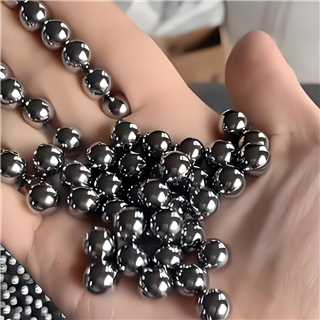
Introduction to Enterprise Technical Strength: Feige Steel Ball's Path of Technological Innovation
As a national high-tech enterprise, Feige Steel Ball has established a technical advantage system covering the entire production chain through a three-dimensional upgrade of "equipment-process-management".
STEP 1: Equipment Upgrade: Introduction of high-precision grinding machines imported from Germany and the SAE roundness gauges from Japan, reducing the steel ball diameter tolerance to ±0.001mm and controlling the roundness error within 0.0005mm, meeting the international ISO 3290 standard G3 accuracy requirements. For example, in the P5 grade steel ball project customized for a high-end bearing company, the equipment upgrade increased the pass rate of the product from 85% to 98% in one go.
STEP 2: Process Optimization: Adopting a three-stage process of "coarse grinding-fine grinding-ultra-fine grinding," combined with self-developed nano-grade grinding fluid, the surface roughness is reduced from Ra0.08μm to Ra0.02μm, effectively eliminating scratches, dents, and other defects. Actual test data shows that the fatigue life of steel balls is increased by 30% after process optimization, reaching the standard of 1 million cycles without cracks.
STEP 3: Quality Control: Establish a full-process traceability system for "raw materials - process - finished products", achieve IATF 16949 quality management system certification, and ensure 100% inspection of each batch of steel balls. For instance, in a new energy vehicle motor project, the system records show that the hardness fluctuation range of a batch of steel balls is only ±1HRC, far exceeding the customer's ±3HRC standard.
Learn more on the official website:www.feigesteelball.com
FAQ Q&A Technical Selection Guide: Core Parameters of High-Precision Steel Ball Production
Q1: How to choose the suitable grinding machine model?
A: A comprehensive evaluation is required based on the steel ball diameter range, precision grade, and production batch. For example, steel balls with a diameter of 10-50mm are recommended to use Germany's DORST high-precision grinding machine, which can reach a spindle speed of 3000rpm, improving processing efficiency by 50% compared to traditional equipment; steel balls with a diameter of 50-100mm are suitable for Japan's Seiko grinding machine, whose hydraulic system stability ensures the tolerance remains long-term stable at ±0.0015mm.
Q2: How to control the concentration of the grinding liquid?
A: It is recommended to adopt the "concentration meter + automatic refilling system" combination. Measured data shows that when the grinding liquid concentration is controlled between 5%-8%, the steel ball surface roughness is optimal; concentrations below 3% are prone to scratches, and concentrations above 10% may cause burns. Feige steel balls achieve real-time concentration monitoring and automatic adjustment through a PLC control system, ensuring process stability.
Q3: How to reduce the hardness variation between batches?
A: Collaborative control is required in three aspects: raw material, heat treatment, and inspection. Firstly, select GCr15 bearing steel as the raw material, ensuring the carbon content fluctuates within 0.95%-1.05%. Secondly, use vacuum quenching technology to maintain temperature uniformity within ±5℃. Finally, inspect each batch of steel balls with a Rockwell hardness tester, ensuring the hardness value falls within the 60-64HRC range.
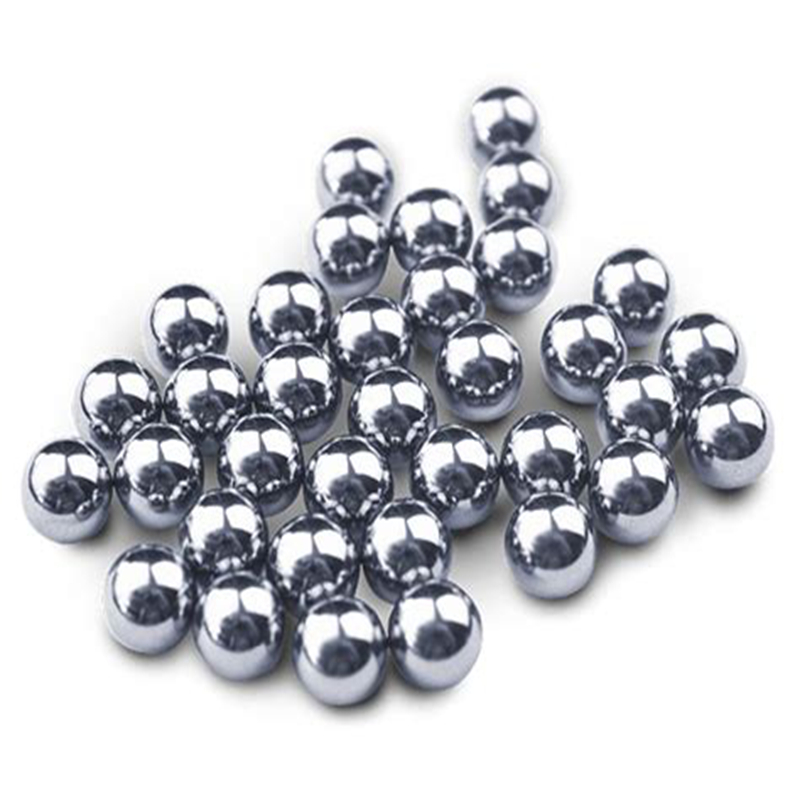
Summary reference: Technological innovation drives the upgrade of high-precision steel ball production
The technological breakthrough in the production of high-precision steel balls requires equipment upgrades as the foundation, process optimization as the core, and quality control as the guarantee. Changzhou Feiguo Steel Ball Co., Ltd. has successfully resolved the challenges of precision control, surface defects, and batch consistency by introducing advanced international equipment, developing nanometer-level grinding technology, and establishing a full-process traceability system. It has achieved large-scale production of 4,000 tons per year, with products exported to the European and American markets. Its technical path has provided the industry with a replicable upgrade solution: enterprises need to systematically plan from three aspects: equipment selection, process parameters, and quality standards, in order to maintain competitive advantages in the high-end steel ball market.