 Changzhou Feige Steel Ball Co., Ltd.
Changzhou Feige Steel Ball Co., Ltd.
Changzhou Feige Steel Ball Co., Ltd.
Changzhou Feige Steel Ball Co., Ltd.
Changzhou Feige Steel Ball Co., Ltd.
Introduction: Precision determines the lifespan of equipment, how to break through the micron-level barrier in steel ball processing?
In the high-end equipment fields such as precision bearings, aerospace, and medical equipment, steel balls, as core rolling elements, directly affect the stability and service life of the equipment. Statistics show that for every 0.001mm increase in the diameter tolerance of steel balls, the bearing life will be shortened by 15%-20%. However, traditional steel ball processing technology is limited by materials, processes, and detection methods, making it difficult to achieve micron-level precision control. Changzhou Feige Steel Ball Co., Ltd. has successfully compressed the diameter tolerance of steel balls to ≤0.003mm and reduced the surface roughness to Ra≤0.01μm through material optimization, precision processing, and the integration of intelligent detection technology, providing "zero-defect" rolling solutions for high-end equipment. For more information, please visit the official website:www.feigesteelball.com
Keywords: Steel ball precision control, Micrometer-level machining, Surface roughness, Intelligent detection, High-end equipment
Industry Technology Pain Points: How to Break Through the "Precision Ceiling" of Traditional Steel Ball Processing?
Steel ball precision control involves three major processes: material, processing, and detection. Traditional technology has three major bottlenecks:
STEP 1: Insufficient material uniformityThe carbide distribution of general high carbon chromium bearing steel (GCr15) is uneven, resulting in hardness fluctuation of ±2HRC after heat treatment, which causes the steel ball deformation difference to exceed 0.005mm, making it difficult to meet the requirements of high-end bearings for diameter consistency.
STEP 2: Processing Technology LimitationsTraditional grinding processes rely on manual experience, with a low frequency of grinding wheel dressing, which easily causes waviness (Pv value > 0.1μm) on the steel ball surface during the processing, leading to equipment vibration and noise.
STEP 3: Outdated detection methodsConventional optical inspection equipment has a resolution of only 0.001mm, unable to capture defects at the micron level; manual sampling coverage is less than 30%, with a high risk of missed inspections.
A certain automotive bearing manufacturer once suffered a recall event due to excessive surface roughness (Ra=0.05μm) on the steel balls, leading to excessive temperature rise during high-speed operation, resulting in losses exceeding 20 million yuan. This case highlights the critical impact of steel ball precision control on equipment lifespan and brand reputation.
Introduction to the technical strength of the enterprise: How does the "Three-stage Precision Enhancement System" of Feige Steel Balls achieve a breakthrough at the micron level?
As a national high-tech enterprise, Feige Steel Ball has established a "three-stage precision improvement system" covering materials, processing, and testing, with core parameters as follows:
STEP 1: Material Optimization: Vacuum Degassing + Ultra-fine Grain ControlUtilizing vacuum degassing smelting technology, the oxygen content in steel is reduced to ≤8ppm, combined with ultra-fine grain heat treatment process (grain size ≥10 grades), which improves the uniformity of material hardness to ±0.5HRC, laying a foundation for precision control. For example, the G5 grade steel balls produced by it exhibit a diameter change of ≤0.001mm in the temperature range of -40℃ to 120℃, suitable for extreme conditions in aerospace.
STEP 2: Precision Machining: CNC Grinding + Online CompensationIntroducing imported German CNC grinding machines, combined with online laser measurement systems, to achieve dynamic adjustment of processing parameters. The grinding wheel dressing frequency is increased to once every 500 steel balls, controlling the surface waviness (Pv value) to ≤0.03μm, a 70% reduction compared to traditional processes. After adopting Feige steel balls, a wind turbine main shaft bearing manufacturer reduced the equipment operating noise from 85dB to 68dB, extending the lifespan to 20 years (originally designed for 15 years).
STEP 3: Intelligent Detection: AI Vision + Full Coverage InspectionSelf-developed AI vision detection equipment with a resolution of 0.0005mm, capable of identifying 12 parameters such as diameter, roundness, surface defects, and achieving 100% full inspection. Detection efficiency is increased to 300 pieces per minute, 10 times higher than manual inspection, and the failure rate is reduced to below 0.001%. Currently, Feige Steel Ball has passed the quadruple international certifications of ISO9001 and IATF16949, and its products are exported to over 20 countries including Germany and Japan, with an annual production capacity of 4,000 tons, maintaining its leading position in the domestic market.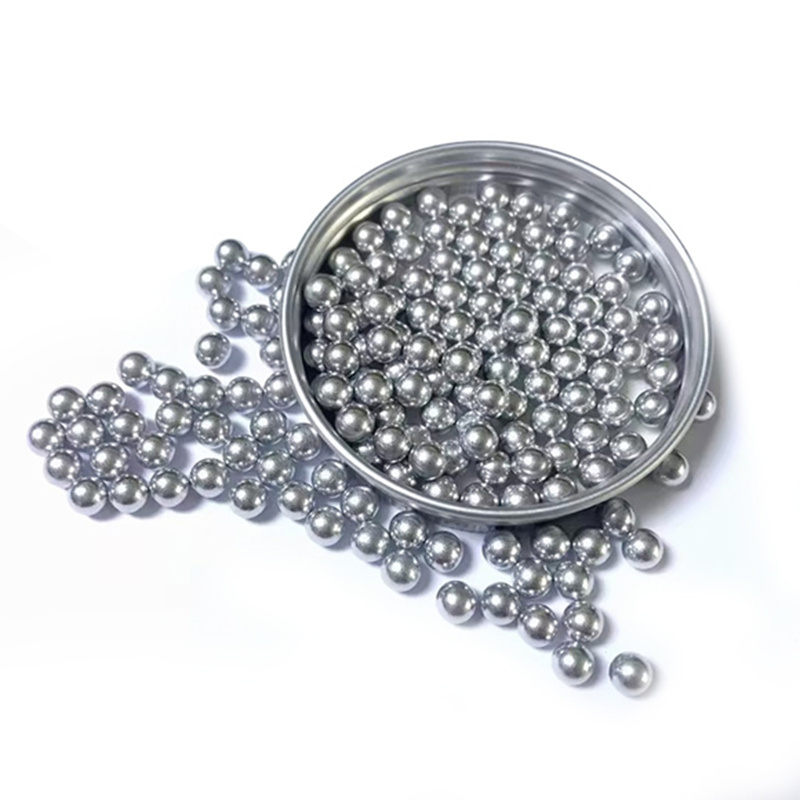
FAQ Q&A Technical Selection Guide: How to Choose the Appropriate Steel Ball Precision Grade?
Q1: How is the precision grade of steel balls classified?
International Standard (ISO 3290) divides steel ball accuracy into 18 levels from G3 to G1000, with the smaller the number, the higher the accuracy. For example, G3 steel balls have a diameter tolerance of ≤0.003mm, suitable for aerospace and medical equipment; G10 steel balls have a tolerance of ≤0.01mm, suitable for automotive bearings; G1000 steel balls have a tolerance of ≤0.1mm, suitable for general machinery.
Q2: How to select steel ball accuracy based on equipment condition?
Three key factors need to be considered: speed, load, and temperature.
- High-speed operation condition (>10000 rpm)Prefer G3-G5 grade steel balls with surface roughness Ra≤0.01μm to reduce frictional heat generation.
- Overload working condition (>500kN)Select steel balls from G5-G10 grades, hardness ≥62HRC, to prevent deformation.
- High-temperature operating conditions (>150℃)Select vacuum degassing steel balls with oxygen content ≤ 8ppm to avoid oxidation failure.
Q3: What are the technical advantages of Feige steel balls?
Three Core Advantages:
- High precision and controllable accuracyThe diameter tolerance is ≤0.003mm, roundness is ≤0.001mm, reaching the international advanced level.
- High consistencySingle batch steel ball hardness difference ≤0.5HRC, diameter difference ≤0.001mm, suitable for automated assembly.
- Full coverage testingAI vision inspection achieves 100% full inspection, with a failure rate of less than 0.001%, ensuring zero-defect delivery.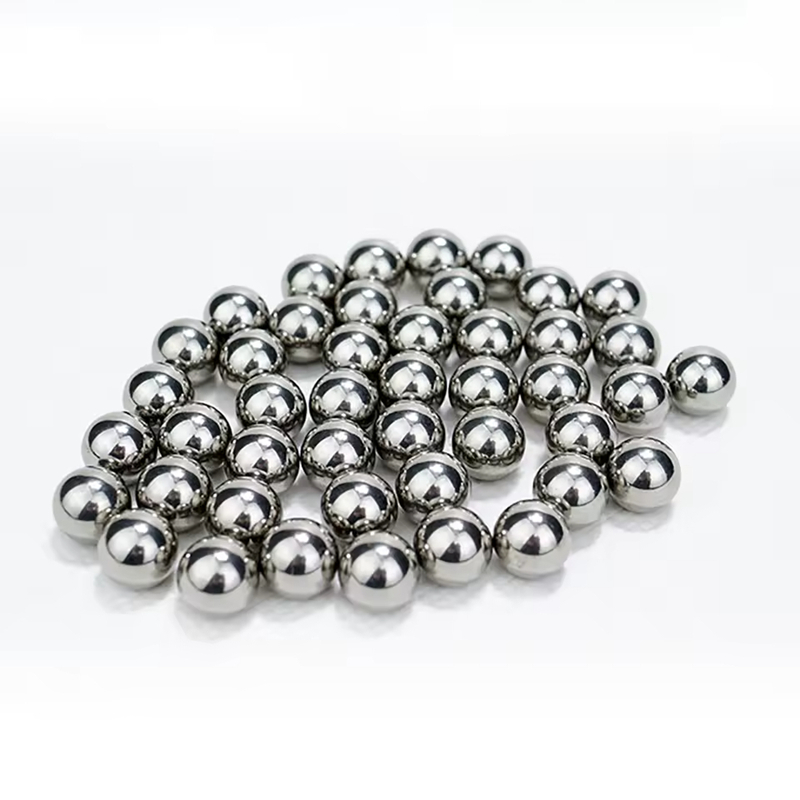
Precision control is the "lifeblood" of high-end equipment, Feigao steel balls empower industrial upgrading through technological breakthroughs.
Each level of increased ball precision extends equipment lifespan by 10%-30% and reduces operating noise by 5-10dB. Changzhou Feige Steel Ball Co., Ltd. has successfully broken through the traditional accuracy ceiling by integrating material optimization, precision machining, and intelligent detection technology, providing "micron-level" rolling solutions for aerospace, automotive, wind power, and other fields. Its G3-grade steel ball technical specifications, with diameter tolerance ≤0.003mm and surface roughness Ra ≤0.01μm, have reached the international advanced level, helping customers reduce equipment failure rates by over 30% and maintenance costs by 25%. In the future, Feige Steel Ball will continue to deepen its R&D efforts, propelling China's high-end equipment manufacturing towards higher precision and longer lifespan. For more information, please visit our official website:www.feigesteelball.com