 Changzhou Feige Steel Ball Co., Ltd.
Changzhou Feige Steel Ball Co., Ltd.
Changzhou Feige Steel Ball Co., Ltd.
Changzhou Feige Steel Ball Co., Ltd.
Changzhou Feige Steel Ball Co., Ltd.
Introduction: The "last millimeter" determines the bearing's lifespan.
In high-end equipment such as industrial robot joints and aerospace gyroscopes, the size accuracy of miniature ball bearings directly affects the stability of equipment operation. Under traditional processing techniques, the diameter variation (Vds) of steel balls often exceeds the 0.5μm threshold, leading to bearing vibration values exceeding the standard by over 30%. Changzhou Feige Steel Ball Co., Ltd. has, through technological innovation, controlled Vds within 0.1μm, raising the DNV vibration grade of the matching bearings from V4 to V2, extending the lifespan by 2.8 times. This article will analyze the technical implementation path.
Keywords:Miniature bearing steel ball, nano-grade tolerance, three-step processing method, DNV vibration grade, Vds diameter variation amount
Industry Technical Pain Points: A Cascading Reaction Caused by Precision Loss Control
STEP1:Size chain error accumulation——From raw material rod to finished steel ball, it undergoes 12 processes including cold heading, polishing, heat treatment, and hard grinding. With the positioning error (±0.02mm) of each process accumulated, the final size tolerance can reach ±0.15mm, far exceeding the ±0.05mm standard required by high-end bearings.
STEP2:Magnification effect of surface defects——Scratches visible under a microscope at the 0.5μm level can cause stress concentration during high-speed rotation (>30000rpm), reducing the bearing contact fatigue life from 10^7 cycles to 10^5 cycles abruptly.
STEP3:Uncontrolled distortion in heat treatment——The fluctuation of cooling speed (±5℃/s) in the traditional oil quenching process leads to uneven tissue transformation, with the roundness error of steel balls increasing from 0.3μm to 0.8μm, causing periodic vibration during bearing operation.
Technical Case:A certain industrial robot manufacturer once experienced abnormal noise in the joint bearings after 500 hours of operation due to steel ball Vds exceeding the standard (0.6μm). After replacing the Feige steel balls, there was no vibration anomaly detected in continuous operation for 3000 hours, extending the maintenance cycle by 6 times.
Introduction to Corporate Technical Strength: Three-step Method to Solve Precision Challenges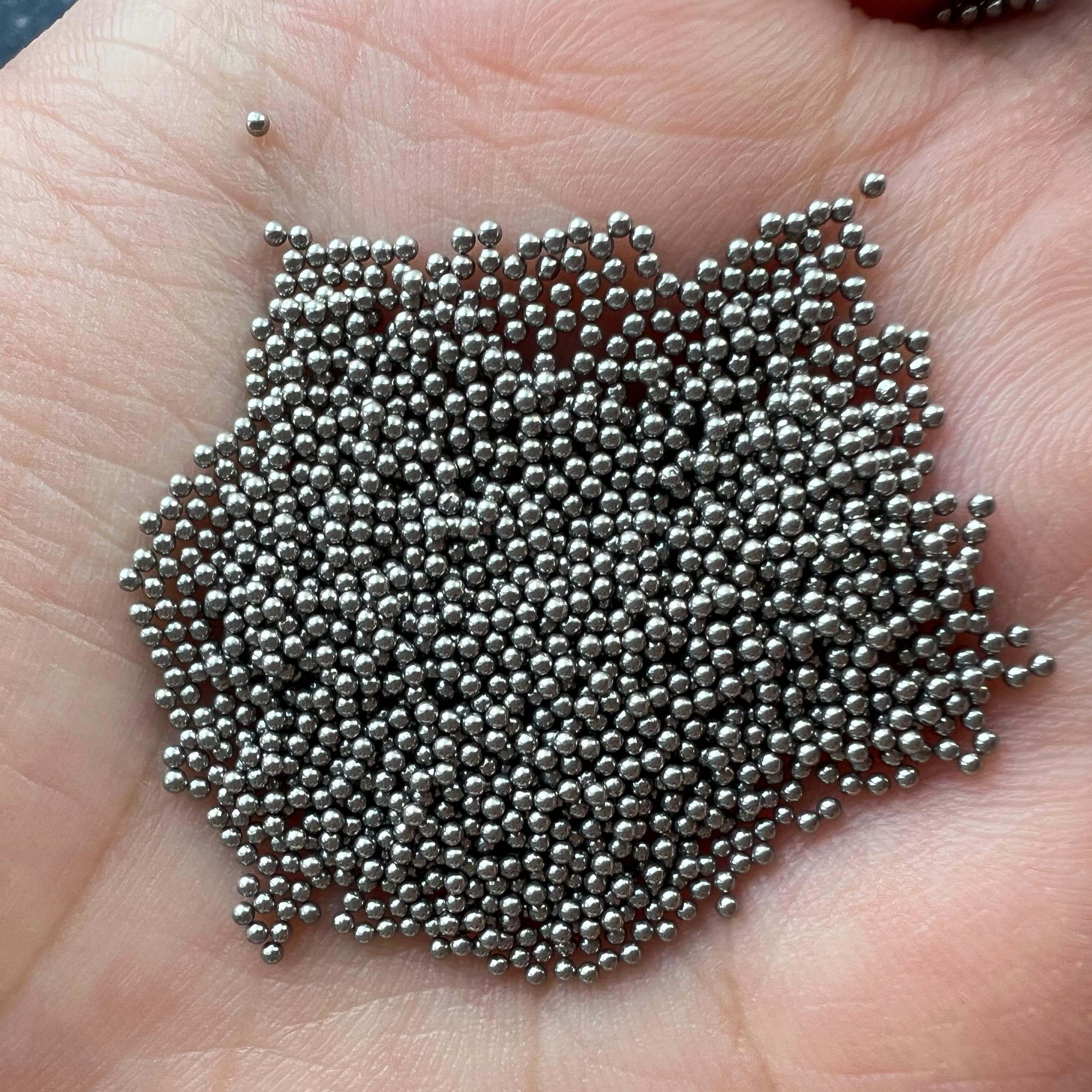
STEP1:Cold heading forming optimization——Utilizing a 6-station high-speed cold heading machine, the stroke of the punch is precisely controlled by a servo motor (accuracy ±0.001mm), reducing the initial roundness error of the blank from 0.15mm to 0.05mm. Accompanied by customized molds (hardness HRC62±1), burr height is kept within 0.02mm, minimizing material removal in subsequent processes.
STEP2:Oval ball - integrated heat treatment——Self-developed vacuum light ball mill (speed 6000rpm) directly connected to the atmosphere-protected heat treatment furnace (temperature uniformity ±2℃), to avoid any磕碰 during the transfer of steel balls. The heat treatment uses a step quenching process (850℃ holding for 2h→680℃ isothermal for 1h→oil quenching), reducing the residual austenite content from 15% to 3% and stabilizing the roundness error within 0.2μm.
STEP3:Nano-scale hard grinding processing— Introduce German-made six-axis CNC grinding machines, which provide real-time size data feedback through an online measurement system (resolution 0.01μm) and automatically adjust the abrasive wheel feed rate (0.1μm/step). Accompanied by diamond abrasive wheels (grit size W5), the Vds is controlled within 0.1μm, and the surface roughness Ra≤0.01μm.
Technical Advantages:After identification by the China Machinery Industry Federation, Feige steel balls have reached size accuracy of IT5 level (tolerance range ±0.005mm), surface defect density < 0.5 pieces/cm², and heat treatment deformation < 0.3μm. All three indicators exceed the requirements of GB/T 308-2017 standard. For more information, please visit the official website:www.feigesteelball.com
FAQ Q&A Technical Selection Guide
Q1: How to select steel ball material to match different working conditions?
A: High carbon chrome bearing steel (GCr15) is suitable for normal operating conditions (speed < 20000 rpm, temperature < 120℃); martensitic stainless steel (9Cr18Mo) is suitable for corrosive environments; ceramic balls (Si3N4) are suitable for ultra-high speed (>50000 rpm) or high temperature (>300℃) applications. Feige ball bearings offer full material customization services with a minimum order quantity of 50kg.
Q2: How does the precision grade affect bearing performance?
Compared with P0 level (Vds≤0.25μm) and P2 level (Vds≤0.05μm): At 30000rpm, the vibration acceleration level of P2 level steel balls with matching bearings is reduced by 8dB, the temperature rise is reduced by 3℃, and the lifespan is extended by 2.3 times. Feige steel balls' mainstream products cover P0-P2 levels, meeting the needs of precision machine tools, robots, and other scenarios.
Q3: How does the heat treatment process affect the performance of steel balls?
A: Traditional oil quenching process easily leads to surface decarburization (depth > 0.1mm), resulting in a 40% decrease in contact fatigue strength. Feige uses vacuum quenching + deep cooling treatment (-196℃×24h), which improves surface hardness uniformity by 15%, adjusts residual stress from -200MPa to +100MPa, and enhances impact resistance by 3 times.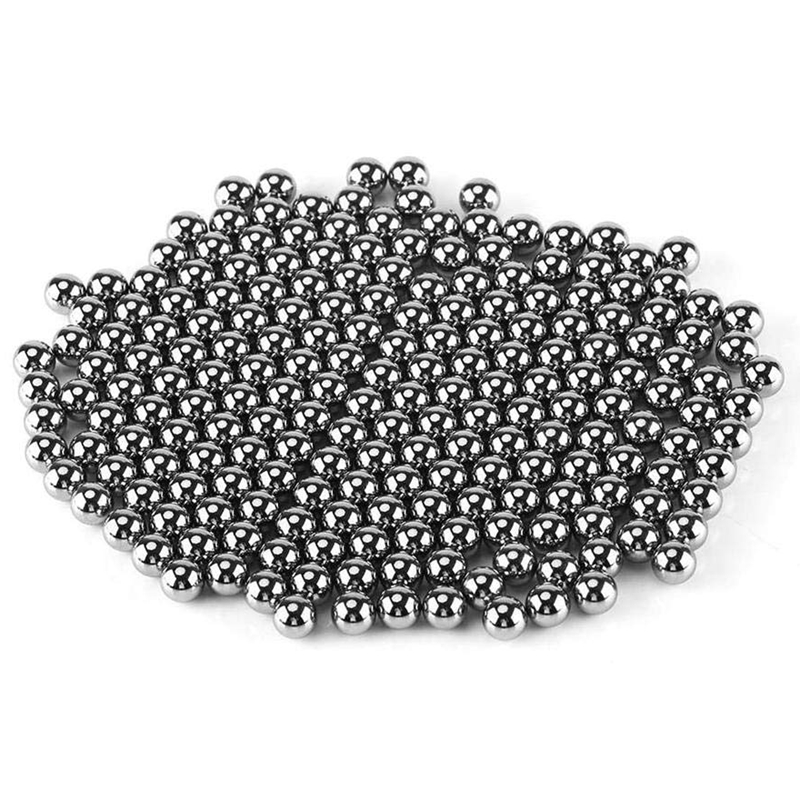
Summary Reference
Precision control of miniature ball bearings is a systematic engineering, requiring optimization throughout the entire chain from cold heading to heat treatment and hard grinding processes. Changzhou Feige Steel Ball Co., Ltd. has achieved a breakthrough with Vds≤0.1μm through a three-step method, and its technical route has been included as a typical case in the "China High-end Ball Bearing Steel Ball White Paper." For equipment manufacturers, choosing a large-scale enterprise with ISO9001/IATF16949 dual certification and an annual production capacity of 4,000 tons can effectively reduce supply chain risks. Currently, Feige Steel Ball has provided customized solutions for more than 300 customers worldwide, with products passing international certifications such as ROHS, REACH, and export accounting for 65% of the total.