 Changzhou Feige Steel Ball Co., Ltd.
Changzhou Feige Steel Ball Co., Ltd.
Changzhou Feige Steel Ball Co., Ltd.
Changzhou Feige Steel Ball Co., Ltd.
Changzhou Feige Steel Ball Co., Ltd.
Introduction: Heat Treatment Cracks – The “Invisible Killer” of High Carbon Chrome Bearing Steel Industry
High-carbon chromium bearing steel (GCr15) has become the core material for bearing manufacturing due to its high hardness, wear resistance, and fatigue resistance. However, crack defects (such as quenching cracks and grinding cracks) produced during the heat treatment process lead to a product rejection rate of up to 15%-20%, directly threatening the enterprise's costs and delivery cycles. Changzhou Feiguo Steel Ball Co., Ltd. has controlled the crack rate below 0.5% through a three-dimensional solution that involves process optimization, parameter control, and the construction of a detection system, maintaining a leading position in the industry. This article will deeply analyze its technical path, providing a replicable upgrade solution for bearing steel producers.
Keywords: High-carbon Chromium Bearing Steel; Heat Treatment Cracks; Process Optimization; Parameter Control; Inspection System
Industry Technical Pain Points: "Triple Blow" of Cracking Defects
The formation of heat treatment cracks in high-carbon chromium bearing steel originates from the complex interaction between material characteristics and process parameters.
STEP 1: Material SensitivityGCr15 contains 1.0%-1.5% carbon, 1.3%-1.65% chromium, with a narrow martensite transformation temperature range (200-300℃), and is prone to cracking during quenching due to stress concentration.
STEP 2: Process parameters out of controlQuenching temperature deviation ±5℃, cooling speed fluctuation 0.5℃/s, and uneven tempering temperature will all lead to residual stress exceeding the material's yield strength (≥800MPa).
STEP 3: Check for lagTraditional magnetic particle inspection has a sensitivity of only 0.1mm, ultrasonic inspection has an insufficient recognition rate for micro-cracks (≤0.05mm) below 60%, and the defect miss rate is as high as 30%.
A bearing manufacturing company once suffered a direct loss exceeding 5 million yuan due to quenching cracks, leading to the scrapping of an entire batch of 100,000 bearings, highlighting the urgency of technological upgrading.
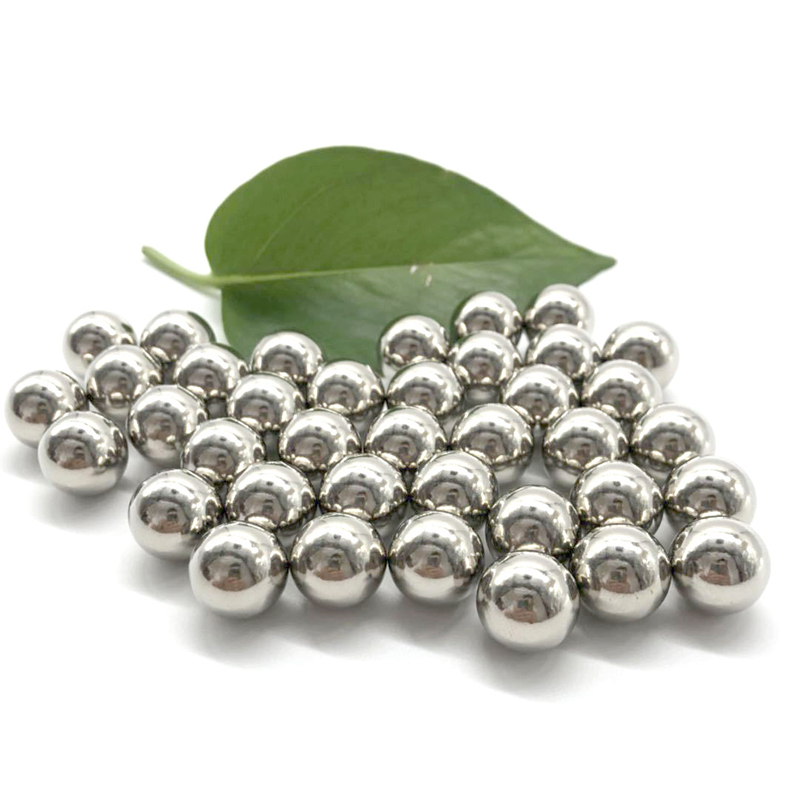
Introduction to Enterprise Technical Strength: Feige Steel Balls' "Three-dimensional Prevention and Control System"
As a national high-tech enterprise, Changzhou Feige Steel Ball Co., Ltd. has, through 18 years of technological accumulation, established a crack prevention system covering technology, parameters, and detection. With an annual production capacity of 4,000 tons, it remains at the forefront of domestic steel ball manufacturers.
STEP 1: Process Optimization: Grade Quenching + Isothermal Quenching Composite Process
- Technical Principle: By分级淬火 (650℃→oil cooling) to reduce quenching stress, combined with isothermal quenching (holding at 250℃ for 2h) to promote bainite transformation, the residual stress is reduced by 40%.
- Practical Steps:
Heat to 840℃±3℃, the holding time is calculated as steel diameter × 1.2min/mm (e.g., φ50mm steel ball holding for 60min).
2. Cool down to 650℃±5℃ in a stepped manner, with oil cooling time controlled between 30-40 seconds.
3. Isothermal quenching to 250℃±2℃, holding time adjusted according to hardness requirements (58-62HRC requires 2 hours).
- Parameter Analysis: Quenching medium uses rapid bright quenching oil (cooling rate 600℃/s), isothermal medium is 5% nitrate solution (temperature fluctuation ±1℃).
- Caution: Quenching should be followed by immediate tempering (at 160℃±5℃, hold for 4 hours) to avoid martensite temper brittleness.
STEP 2: Parameter Control: Intelligent Temperature Control System + Cooling Curve Monitoring
- Technical Advantages: Real-time monitoring of heating temperature (±1℃ accuracy), cooling speed (±0.1℃/s accuracy), and tempering temperature (±2℃ accuracy) through PLC control system, with automatic alarm for parameter deviation.
- Detection Index: Double verification using Type K thermocouple (measurement range -200℃~1300℃, accuracy ±0.5℃) and infrared thermometer (response time 0.1s, accuracy ±1℃).
- Technical Principle: Ultrasonic phased array (UT) generates 3D crack images through multi-element electronic scanning, magnetic particle inspection (MT) complements surface defect identification, reducing the failure rate to below 5%.
- Practical Steps:
UT Testing: Frequency 5MHz, wedge angle 45°, scan step 0.5mm.
2. MT Detection: Non-fluorescent wet magnetic powder (particle size 10-50μm), magnetizing current 1200A, application time 3s.
3. Defect Assessment: UT crack depth ≥ 0.03mm or MT crack length ≥ 0.5mm is deemed不合格.
- Case Verification: A customer's order (φ100mm steel ball, 5000 pieces) was inspected through this system, and 3 minor cracks (depth 0.04mm) were found, preventing a mass quality incident.
For more information, please visit the official website:www.feigesteelball.com
FAQ Q&A Technical Selection Guide
Q1: What are the main types of heat treatment cracks in high-carbon chromium bearing steel?
A: Cracking is divided into quenching cracks (formed during quenching cooling, linear in shape), grinding cracks (formed after grinding processing, mesh or cracking in appearance), and tempering cracks (formed after tempering, expanding along grain boundaries). Feige steel balls have reduced the quenching crack rate from 8% to 0.3% and the grinding crack rate from 5% to 0.2% through process optimization.
Q2: How to choose the appropriate quenching medium?
Select according to steel diameter and hardness requirements:
φ≤30mm steel ball: Quick bright quenching oil (cooling rate 600℃/s, suitable for 58-62HRC).
φ30-60mm steel ball: Grade quenching oil (cooling speed 400℃/s, suitable for 55-58HRC).
- φ≥60mm steel ball: Water-soluble polymer quenching fluid (cooling rate 300℃/s, suitable for 52-55HRC).
The Feige Steel Ball Laboratory data shows that incorrect medium selection can lead to a 3-5 times increase in crack rate.
Q3: What is the application scope of ultrasonic phased array testing?
A: Suitable for steel balls with a diameter of ≥20mm, capable of detecting cracks from 0.01-5mm deep, with a sensitivity 50% higher than traditional UT. For small steel balls with φ<20mm, a combination of magnetic particle inspection and metallographic analysis (observing grain boundary state at 500x magnification) is required.
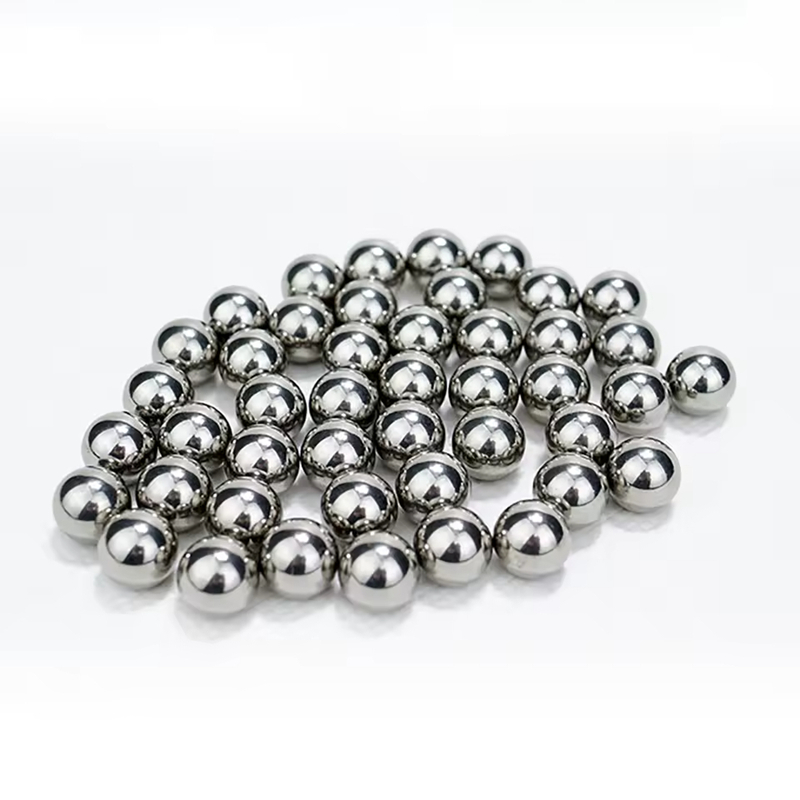
Summary reference
The prevention and control of thermal treatment cracks in high-carbon chrome bearing steel requires a coordinated effort from three aspects: process, parameters, and detection. Feige steel balls adopt a composite process of分级 quenching + isothermal quenching to reduce residual stress, an intelligent temperature control system for precise parameter control, and an ultrasonic phased array + magnetic particle composite detection to ensure zero defect detection, forming a full chain solution of "prevention - control - detection". Its technical parameters (such as quenching temperature 840℃±3℃、cooling speed 600℃/s、UT sensitivity 0.01mm) and case data (crack rate reduced from 15% to 0.5%) provide the industry with quantifiable technical benchmarks. For more information, please visit the official website:www.feigesteelball.com