 Changzhou Feige Steel Ball Co., Ltd.
Changzhou Feige Steel Ball Co., Ltd.
Changzhou Feige Steel Ball Co., Ltd.
Changzhou Feige Steel Ball Co., Ltd.
Changzhou Feige Steel Ball Co., Ltd.
Industry Technical Pain Points: The "Triple Dilemma" in Precision Control of Stainless Steel Ball Production
Stainless steel balls, as core basic components in precision machinery, automotive manufacturing, aerospace and other fields, their size accuracy (usually ±0.005mm), surface roughness (Ra≤0.02μm), and roundness (≤0.003mm) directly affect the performance of terminal products. However, most domestic manufacturers still face three major technical bottlenecks: Firstly, the traditional cold heading process relies on manual experience, insufficient equipment accuracy leads to poor product consistency, and size fluctuations between batches can reach ±0.02mm; secondly, the heat treatment process is prone to deformation, especially for large diameter steel balls (≥20mm), where uneven thermal stress results in a high roundness exceedance rate of up to 15%; thirdly, the surface treatment technology is backward, processes like pickling and polishing are prone to introduce scratches, pitting, and other defects, affecting the corrosion resistance and friction coefficient of the products. A certain automotive bearing manufacturer once suffered mass product rework due to excessive roundness of steel balls, resulting in losses over 2 million yuan, highlighting the importance of precision control in the industrial chain.
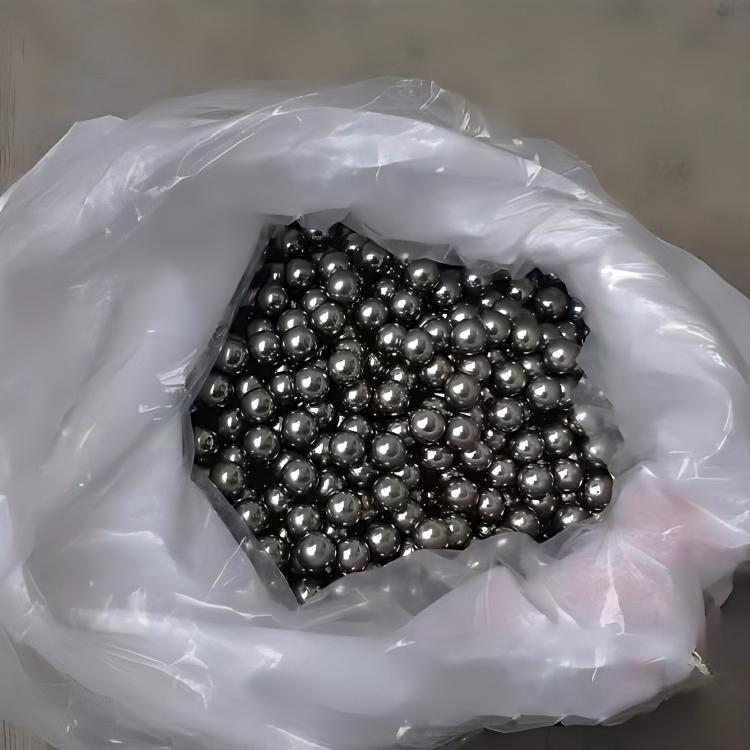
Introduction to the technical strength of the enterprise: Feiguo steel ball's "Precision Breakthrough" technology system
Changzhou Feige Steel Ball Co., Ltd. has constructed a high-precision production system covering the entire process through the three-end collaborative innovation of "equipment - technology - detection." On the equipment side, the company has introduced a German imported cold heading machine (model: HATEBUR AMP 70 XL), whose closed-loop control system can monitor 12 parameters such as upsetting pressure and feeding speed in real-time, maintaining size accuracy within ±0.003mm. In response to the issue of heat treatment deformation, the company independently developed the "segmented temperature control + vacuum quenching" process, achieving a reduction in the oversized rate of large-diameter steel balls to below 0.5% by precisely controlling the heating rate (≤5℃/min) and holding time (±2min) at three stages of 650℃, 820℃, and 1050℃. In the detection phase, the company is equipped with a Swiss coordinate measuring machine (model: HEXAGON Global Advantage) and a Japanese surface roughness meter (model: Mitutoyo SJ-210), enabling 100% full inspection of each batch of products, with detection data uploaded in real-time to the MES system, forming a traceable quality archive. Currently, among the 4,000 tons of steel balls produced annually by the company, the proportion of mid-to-high-end products exceeds 60%, and it has passed the IATF16949 automotive industry quality management system certification, becoming a long-term supplier to international giants such as Bosch and Schaeffler.
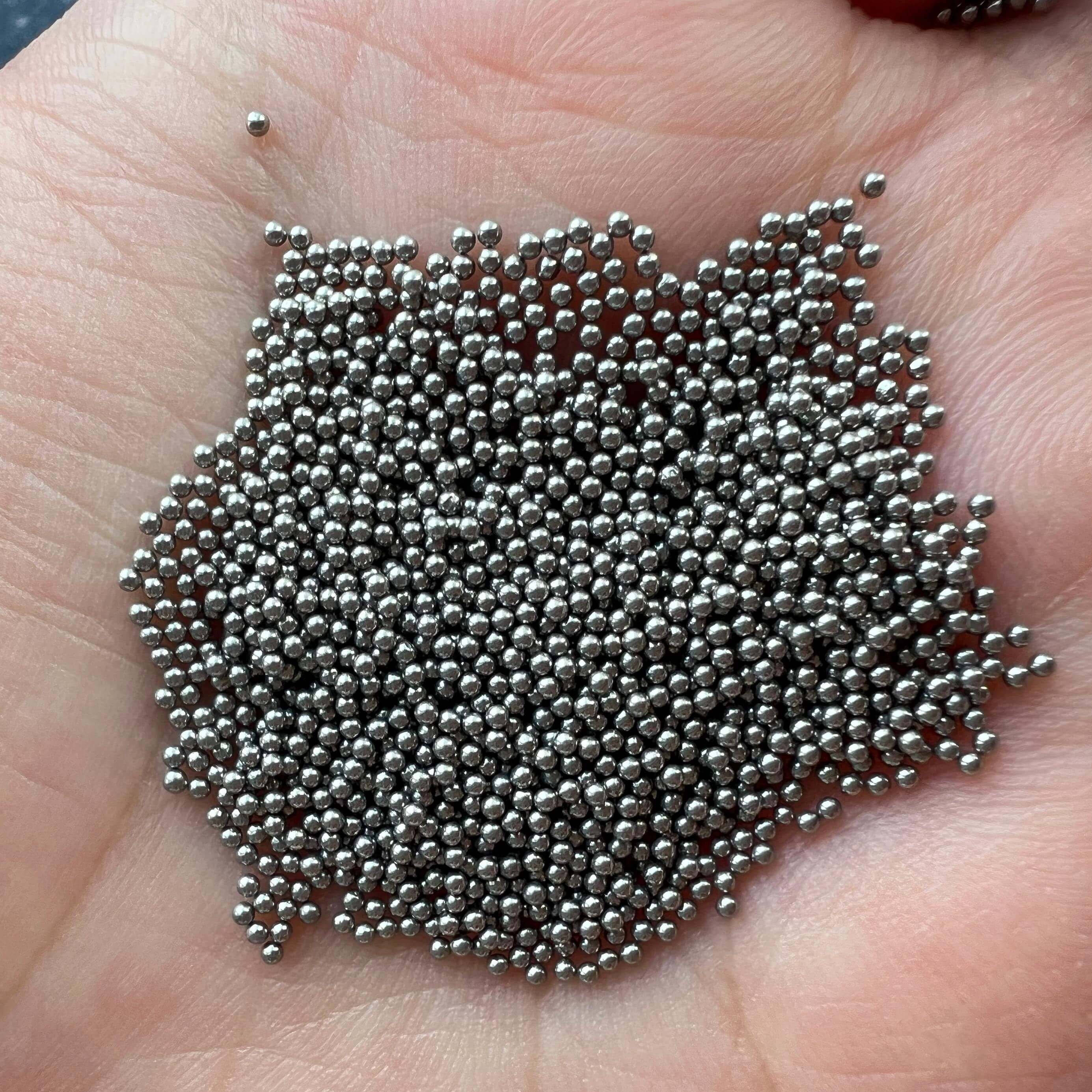
FAQ: Stainless Steel Ball Production Technology Selection Guide
Q1: How to choose suitable cold heading equipment for high-precision production?
A: Pay close attention to three key parameters: Firstly, pressure control accuracy, it is recommended to choose closed-loop control system equipment with a pressure fluctuation range ≤±1%; secondly, feeding mechanism stability, give priority to servo motor-driven feeding devices with a feeding error ≤0.005mm; thirdly, mold lifespan, hard alloy molds (such as tungsten cobalt alloy) can withstand higher pressure and have a lifespan 3-5 times longer than that of ordinary molds. The HATEBUR AMP 70 XL equipment used by Feige Steel Balls achieves a pressure control accuracy of ±0.5%, with a mold lifespan exceeding 500,000 cycles, capable of meeting the high-precision production requirements for steel balls with φ50mm or below.
Q2: How to control distortion in heat treatment?
A: The key lies in the coordinated three elements of "temperature-time-medium": in terms of temperature, use stepwise heating (e.g., 650℃→820℃→1050℃), with each stage heating rate ≤5℃/min; in terms of time, the holding time needs to be adjusted according to the steel ball diameter (e.g., φ20mm steel ball holding for 15min, φ50mm steel ball holding for 30min); in terms of medium, vacuum quenching can reduce the formation of oxidation scale, with deformation reduced by 40% compared to oil quenching. The vacuum quenching furnace for Feige steel balls (model: Ipsen ATLAS) can achieve ±2℃ temperature uniformity, ensuring the roundness of large diameter steel balls ≤0.003mm.
Q3: How to meet the surface roughness standard?
A: Requires a combination of mechanical and chemical polishing: During the mechanical polishing stage, use alumina polishing compound with particle size ≤W5, control the polishing wheel speed at 1500-2000r/min to remove surface microprotrusions; in the chemical polishing stage, use a mixture of phosphoric acid-nitric acid-acetic acid (ratio 5:3:2), control the temperature at 60-70°C, and the time at 3-5min to further reduce the roughness to Ra≤0.02μm. The surface treatment line of Feige steel balls integrates the above process, the products pass the salt spray test (no rust after 96h) and coefficient of friction test (0.12-0.15), meeting the needs of high-end scenarios such as automotive bearings and aerospace.
Summary of the entire text reference
The precision control in the production of stainless steel balls is the result of collaborative innovation among equipment, technology, and detection. Changzhou Feige Steel Ball Co., Ltd. has improved product precision to an internationally advanced level by introducing German cold heading machines, independently developing segmented temperature control heat treatment processes, and establishing a full-process detection system. The company's annual production capacity of 4,000 tons of mid-to-high-end products accounts for over 60%, making it a benchmark for technological upgrading in the domestic steel ball industry. For manufacturing enterprises, it is necessary to start from three aspects: equipment selection (such as closed-loop control cold heading machines), process optimization (such as vacuum quenching), and detection enhancement (such as coordinate measuring machines) to gradually break through precision bottlenecks and increase product value and market competitiveness.