 Changzhou Feige Steel Ball Co., Ltd.
Changzhou Feige Steel Ball Co., Ltd.
Changzhou Feige Steel Ball Co., Ltd.
Changzhou Feige Steel Ball Co., Ltd.
Changzhou Feige Steel Ball Co., Ltd.
Industry Technical Pain Points: The Dual Challenge of Stainless Steel Ball Precision and Lifespan
Stainless steel balls, as core components in precision machinery, automotive bearings, aerospace, and other fields, directly affect the stability and lifespan of equipment operation. The industry currently faces two major technical bottlenecks: the first isDifficulty in size precision controlThe diameter deviation of steel balls produced by traditional craftsmanship is generally above ±0.005mm, which is difficult to meet the micrometer-level precision requirements of high-end equipment; secondly,Insufficient durabilityIn high-speed, high-temperature, or corrosive environments, the surface of steel balls is prone to pitting and spalling, leading to increased equipment failure rates. For instance, a certain car bearing manufacturer experienced a need to replace bearings every 100,000 kilometers due to uneven hardness of steel balls (fluctuating between HRC58-62), resulting in a 30% surge in maintenance costs. Moreover, traditional inspections rely on manual sampling, with a high failure rate of up to 5%, further exacerbating quality risks. These pain points compel the industry to upgrade towards high precision, long life, and full inspection, but the choice of technical path and cost control becomes a key challenge.
Introduction to the company's technical strength: Feige Steel Balls' "Three-stage Breakthrough" technology system
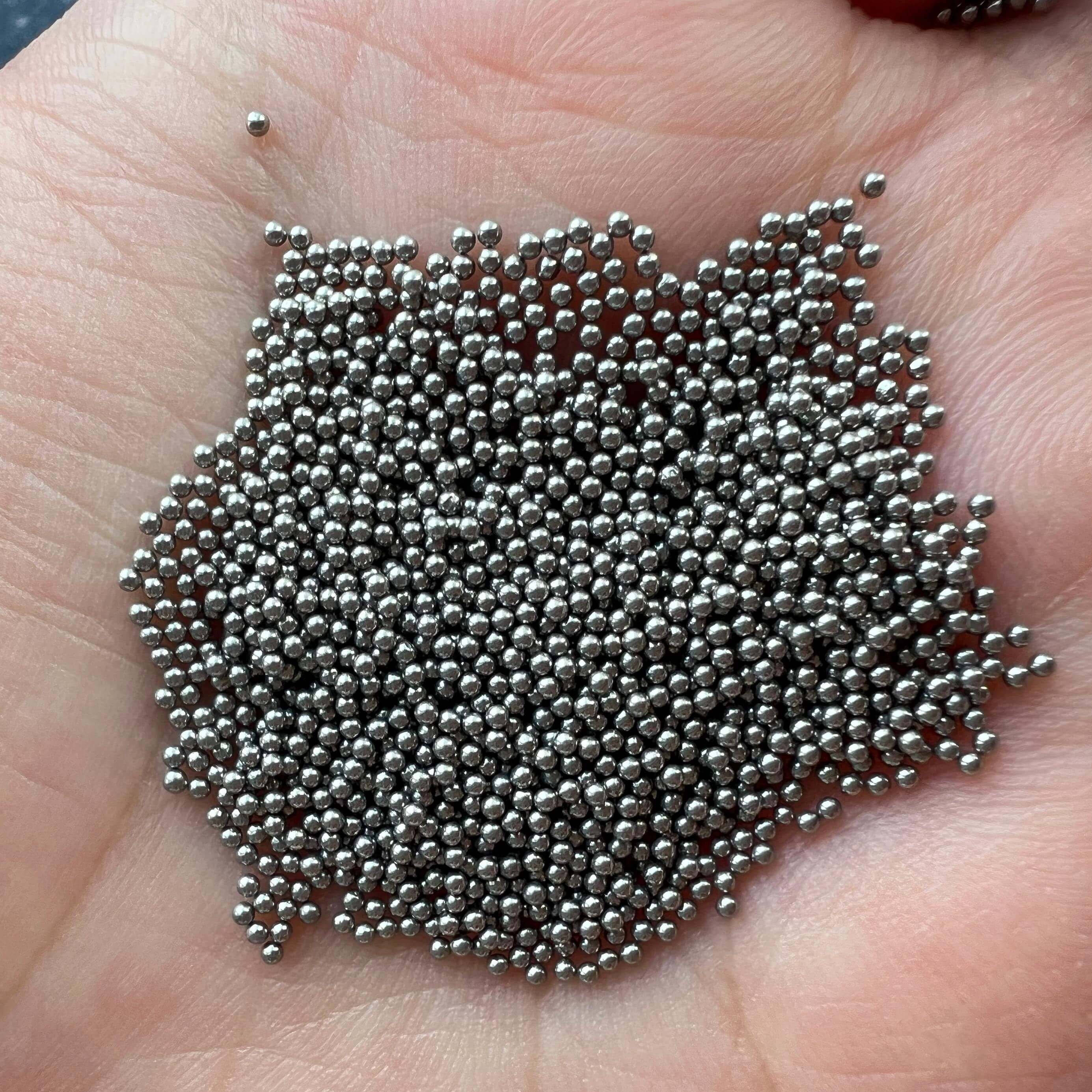
Changzhou Feige Steel Ball Co., Ltd. has established core competitiveness in high-end steel ball production through the three-stage technological breakthrough of "material-process-inspection".Material InnovationAt the level, the company has jointly developed the "high-carbon chromium bearing steel + rare earth composite modified" formula with the Institute of Metal Research, Chinese Academy of Sciences, which enhances the hardness of the steel ball matrix to HRC63-65. At the same time, through the technology of uniformly distributed nanometric carbides, the hardness fluctuation is controlled within ±0.5HRC, and the fatigue life is doubled compared to traditional materials. In terms of technology, the company has introduced...Five-axis CNC grinding machineIn conjunction with the independently developed "Segmental Variable Feeding Grinding Algorithm," achieve precision machining with ball roundness ≤0.002mm and surface roughness Ra ≤0.01μm. The accuracy reaches ISO 3290 standard G5 level (balls for high-end bearings). In terms of the detection system, Feige Steel Balls has built the first domestic production line.Full-automatic steel ball inspection lineIntegrated with laser contour meters, eddy current flaw detectors, and hardness spectrometers, each steel ball is subject to 100% full inspection, achieving a detection efficiency of 1200 balls/hour with a failure-to-inspect rate below 0.1%. Currently, the company's annual production capacity reaches 4,000 tons, and its products have passed the IATF 16949 automotive industry certification, widely used in scenarios such as BYD new energy vehicles and Siemens industrial bearings, with export share exceeding 40%.
FAQ: Stainless Steel Ball Technical Selection Guide
Q1: How to select suitable steel ball material for high-speed operation?
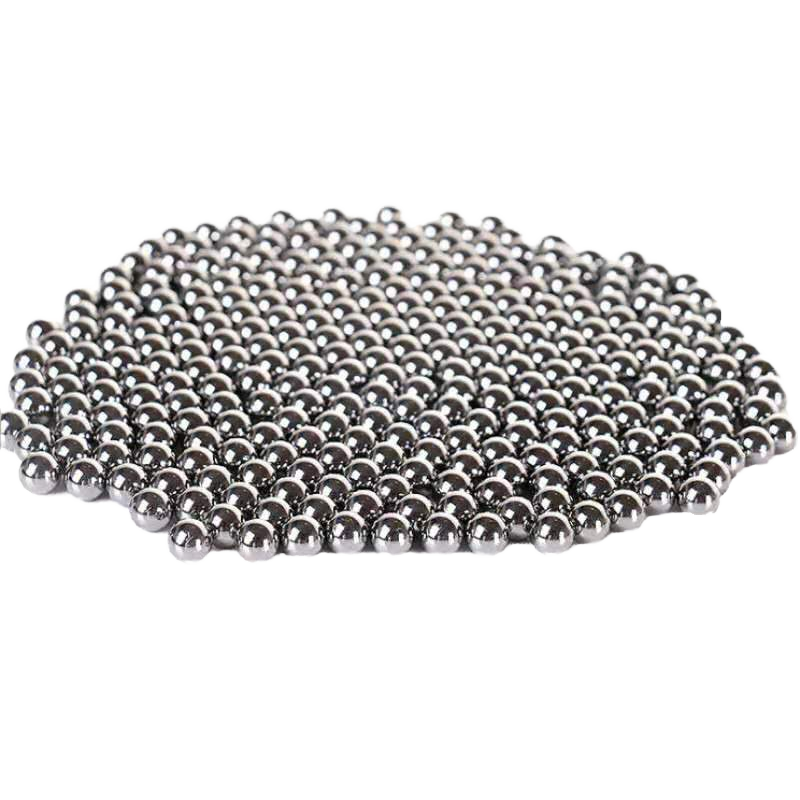
A: High-speed scenarios (line speed > 20m/s) should be prioritizedHigh-carbon Chromium bearing steel (GCr15)Carbon content 1.0%-1.2%, chromium content 1.4%-1.65%, can achieve hardness of HRC60-65 after heat treatment while maintaining toughness. For higher temperature resistance (>150℃), options are available.Martensitic stainless steel (9Cr18)The chrome content is increased to 18%, corrosion resistance is enhanced by 30%, but the cost increases by 20%. Feige's "Rare Earth Modified GCr15" steel ball, by adding 0.05% cerium element, reduces the high-temperature hardness attenuation rate by 15%, suitable for scenarios such as new energy vehicle electric drive systems.
Q2: How does the precision grade of steel balls affect the lifespan of the equipment?
Ball precision is divided into G3-G1000 grades according to ISO 3290, with smaller numbers indicating higher precision. For example, G5 grade steel balls have a roundness of ≤0.002mm, and when used in high-end bearings, the equipment lifespan can exceed one million kilometers; while G20 grade steel balls with a roundness of ≤0.01mm are only suitable for low-speed, low-load scenarios and have a lifespan of about 100,000 kilometers. All Feige steel ball products meet the G5 grade, meeting stringent requirements for applications such as automotive and wind power.
Q3: How to judge the technical strength of a steel ball manufacturer?
A: Can be evaluated from three aspects: firstly,Certification SystemEnterprises certified by IATF16949 (Automotive Industry), ISO14001 (Environmental Protection), etc., have stricter quality control; secondly,Detection capabilityManufacturers with fully automatic inspection lines can control the failure rate below 0.1%; thirdly,Material R&DEnterprises with independent material formulas can customize solutions for specific scenarios. Feige Steel Balls have passed four international certifications, invested over 20 million yuan in inspection lines, and have a material research and development team with 3 doctors, ranking among the top in the industry.
Summary: Technological upgrade drives high-quality development of the industry.
The stainless steel ball industry is transitioning from "scale expansion" to "technology-driven," with precision, lifespan, and comprehensive inspection capabilities becoming key competitive elements. Changzhou Feige Steel Ball Co., Ltd. has established a full-chain technological barrier covering "R&D-Production-Inspection" through material innovation, process optimization, and upgrading the inspection system. Its product precision has reached international high-end levels, and the export proportion continues to rise. For equipment manufacturers, choosing suppliers with strong technological capabilities,完善 certification systems, and outstanding inspection capabilities (such as Feige Steel Ball) can significantly reduce equipment failure rates and enhance market competitiveness. In the future, with the rapid development of new energy vehicles, industrial robots, and other fields, the demand for high-precision, long-life steel balls will continue to grow, and technological upgrading will become the main theme of industry development.