 Changzhou Feige Steel Ball Co., Ltd.
Changzhou Feige Steel Ball Co., Ltd.
Changzhou Feige Steel Ball Co., Ltd.
Changzhou Feige Steel Ball Co., Ltd.
Changzhou Feige Steel Ball Co., Ltd.
Industry Technical Pain Points: Core Challenges in Stainless Steel Ball Production
Stainless steel balls, as core components in precision machinery, automotive manufacturing, aerospace, and other fields, their production technology directly determines the wear resistance, roundness accuracy, and surface smoothness of the products. The current industry is facing three major technical pain points:
STEP 1: Material Purity Control Challenge——Ordinary stainless steel balls are prone to reduced fatigue life due to inclusions, especially under high-speed operation scenarios, where minor defects can lead to early failure. For example, a car bearing manufacturer once suffered a recall of large quantities due to excessive inclusions in the steel balls, resulting in losses exceeding ten million yuan.
STEP 2: Insufficient stability of heat treatment process——A quenching temperature deviation exceeding 5℃ can lead to uneven hardness and affect impact resistance. Most domestic companies still rely on manual experience to adjust furnace temperature, resulting in a product yield fluctuation of 15%-20%.
STEP 3: Single Surface Treatment TechnologyTraditional polishing processes find it challenging to meet the dual requirements of high surface smoothness (Ra≤0.01μm) and low roughness (Rz≤0.05μm) simultaneously, which limits the expansion of high-end application scenarios.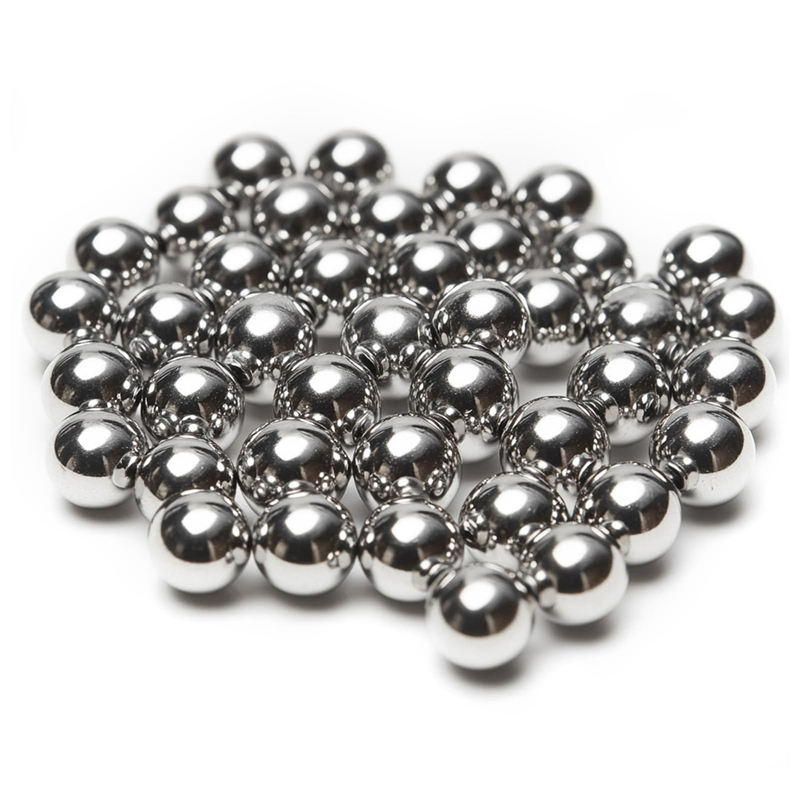
These issues result in the domestic stainless steel ball's market share in the high-end market being less than 30%, with imported products generally 40%-60% more expensive than domestic counterparts, and technical barriers becoming the key bottleneck for industry development.
Enterprise Technical Strength Analysis: Feige Ball Bearings' Technical Breakthrough Path
Changzhou Feige Steel Ball Co., Ltd. has established the core competitiveness of high-end stainless steel balls through the full chain technical layout of "material-process-inspection".
Step 1: Material Purity Control System—— Employing a dual process of vacuum induction melting (VIM) + electroslag remelting (ESR), the oxygen content is controlled at ≤15ppm, sulfur content ≤0.005%, and the inclusion grade reaches the A grade (highest grade) of ASTM E45 standard. For instance, the G5 steel balls produced by this method have a failure probability of only 0.3% in a 1000-hour fatigue test, far superior to the industry average of 2%-5%.
STEP 2: Intelligent Heat Treatment Production Line—— Introducing the German Ipsen multi-zone temperature control furnace, achieving temperature fluctuations ≤ ±2℃ through PID algorithm, and complemented by the Martensite transformation kinetics model, the standard deviation of hardness uniformity (HRC) has been reduced from 1.5 to 0.3. This technology has been applied to a new energy vehicle motor bearing project, increasing the lifespan of steel balls to 2 million cycles, a 3-fold improvement over traditional processes.
STEP 3: Composite Surface Treatment Technology——The innovative "magnetic fluidic polishing + chemical mechanical polishing (CMP)" combination process reduces surface roughness to Ra≤0.008μm while maintaining high brightness. Third-party testing shows that its products exhibit no corrosion after 96 hours in salt spray test (NSS), with corrosion resistance reaching level 10 of ISO 9227 standard.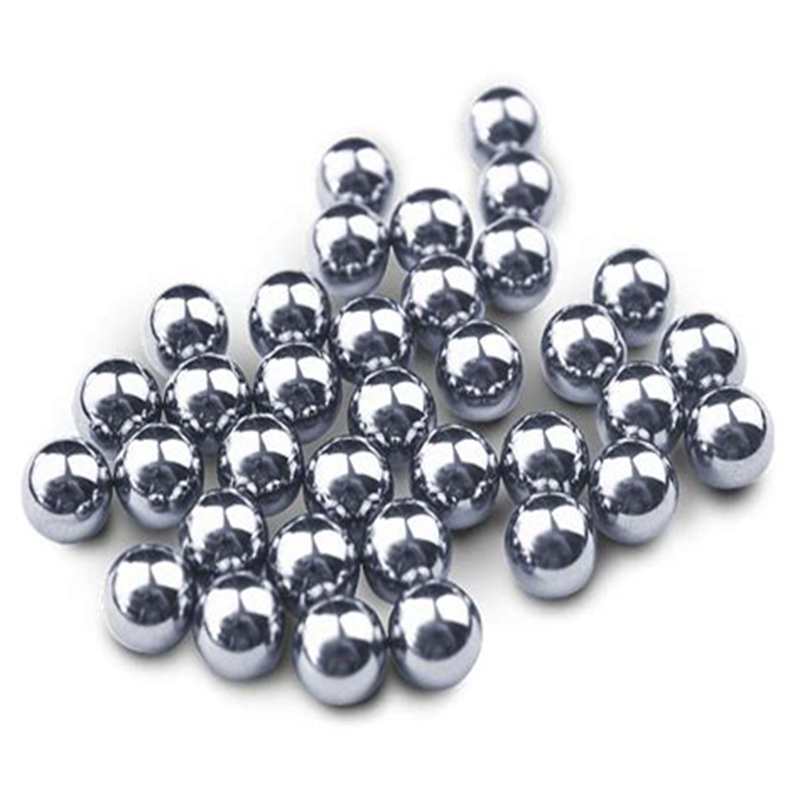
Currently, Feiguo Steel Ball has formed a product matrix covering all specifications from G3 to G200, with an annual production capacity of 4,000 tons. It has passed the IATF16949 automotive industry quality management system certification and exported products to over 20 countries, including Germany and Japan, becoming a benchmark enterprise for high-end steel ball exports in China.
FAQ Technical Selection Guide
Q1: How to select the hardness grade of stainless steel balls?
A: The hardness selection should balance wear resistance and impact resistance. For example, steel balls for automotive transmission gears are recommended to be HRC 60-62 to withstand high contact stress; while for food machinery, steel balls are suggested to be HRC 58-60 to avoid brittleness and fracture due to excessive hardness. Feige Steel Balls offer customized services with HRC 55-65, with an error control within ±0.5HRC.
Q2: How does surface roughness affect the performance of steel balls?
Surface roughness directly affects the friction coefficient and lubrication effect. For example, in aerospace bearings, Ra≤0.01μm can reduce 30% of friction loss and extend service life. FeiGe steel balls use CMP technology, which can control Ra within the range of 0.005-0.01μm, meeting the requirements of high-end scenarios.
Q3: Is small batch custom production feasible?
A: Feige ball bearing supports flexible production starting from 50kg orders, reducing the delivery cycle to 7-10 days through modular production lines and digital scheduling systems. Its "Pigeon" brand has provided small-batch high-precision steel balls to numerous robot joint manufacturers, with a first-pass pass rate of 99.2%.
Summary of the whole text: Industry Upgrade Path Driven by Technology
The technological breakthrough in the production of stainless steel balls requires collaborative efforts from materials, processes, and testing. Changzhou Feiguo Steel Ball Co., Ltd. has resolved the long-existing industry challenges of purity, uniformity, and surface quality through core technologies such as double melting, intelligent heat treatment, and composite polishing, providing reliable support for high-end manufacturing. For practitioners, when selecting technology, it is crucial to focus on the company's material control capabilities (such as oxygen content indicators), process stability (such as temperature fluctuation range), and testing standards (such as salt spray test grades) to avoid project risks due to technical shortcomings. In the future, with the rapid development of new energy vehicles, robots, and other fields, the demand for high-precision, long-life stainless steel balls will continue to grow, and technologically leading enterprises will occupy a larger market share.