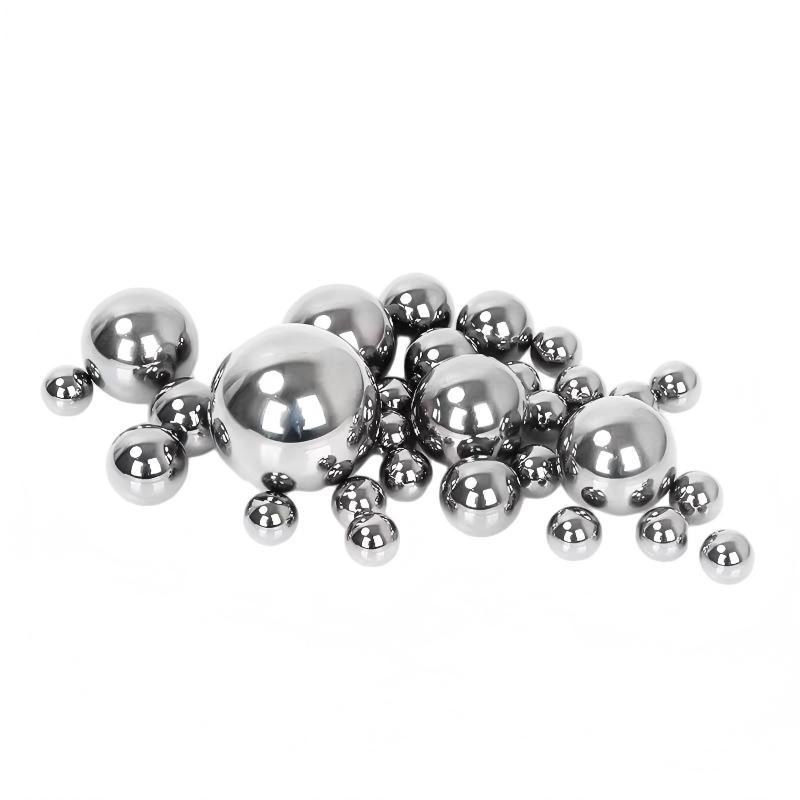
 Changzhou Feige Steel Ball Co., Ltd.
Changzhou Feige Steel Ball Co., Ltd.
Changzhou Feige Steel Ball Co., Ltd.
Changzhou Feige Steel Ball Co., Ltd.
Changzhou Feige Steel Ball Co., Ltd.
Industry Technical Pain Points: The "Invisible Threshold" of Stainless Steel Ball Production
Stainless steel balls, as core components in fields such as precision machinery, automotive bearings, and medical devices, their production quality directly affects the performance and lifespan of terminal products. However, the industry has long been facing three major technical pain points: Firstly, it is difficult to control the purity of the material; steel balls produced by ordinary processes are prone to leave scale and inclusions, leading to reduced wear resistance. Secondly, there is a large fluctuation in size accuracy; traditional cold heading or hot forging processes are difficult to meet the ±0.005mm tolerance requirements, affecting the stability of bearing operation. Thirdly, the surface smoothness is insufficient; ordinary polishing processes easily produce micro-cracks, reducing the fatigue resistance of steel balls. According to statistics, about 60% of domestic steel ball manufacturers, due to technical bottlenecks, can only meet the demand of the mid-to-low-end market, and the high-end market has been monopolized by imported brands for a long time.
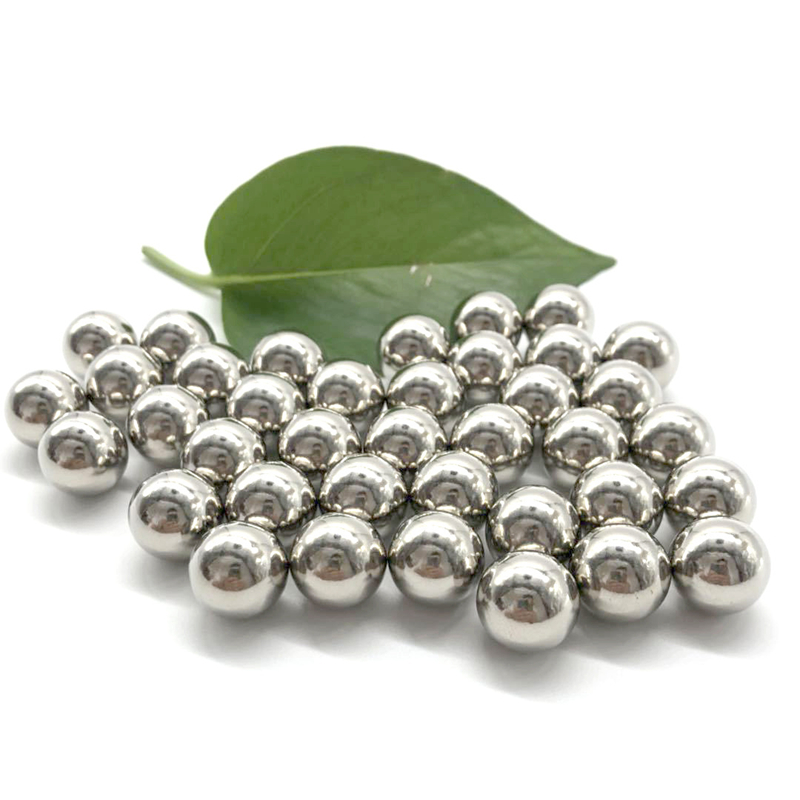
Enterprise Technical Strength Analysis: Feige Steel Ball's "Full Chain" Technical Layout
Changzhou Feige Steel Ball Co., Ltd., as a national high-tech enterprise, has broken through industry pain points through the full-chain technology optimization of "material-process-inspection". On the material side, vacuum degassing furnace melting technology is used to control the oxygen content of the steel melt below 15ppm, combined with rare earth element micro-alloying treatment, which improves the hardness of the steel ball matrix by 15% and wear resistance to HRC60 and above; on the process side, German cold heading machines and Japanese optical finishing machines are introduced to realize integrated production of cold heading forming, multi-pass rolling, and ultra-fine grinding, with size accuracy stable at ±0.003mm and surface roughness Ra≤0.01μm; on the inspection side, German Zeiss three-coordinate measuring instruments and British Taylor Hobson profilometers are configured to carry out 100% full inspection for each batch of products, ensuring a defect rate below 0.02%. Currently, the company's annual production capacity reaches 4,000 tons, and its products have passed four international certifications including ISO9001 and IATF16949, exporting to more than 30 countries such as Germany and Japan, becoming a benchmark enterprise for high-end steel ball exports in China.
FAQ: Stainless Steel Ball Technical Selection Guide
Q1: How to choose stainless steel ball materials suitable for high-speed bearings?
A: High-speed bearings should prioritize the use of high-carbon chromium bearing steels such as GCr15SiMn or 9Cr18Mo, with carbon content of 0.95%-1.05% and chromium content of 1.40%-1.65%, which can form a uniform carbide distribution and enhance fatigue resistance. Feige steel balls utilize a double process of vacuum melting plus electroslag remelting, raising the purity of the material to Grade A of ASTM E45 standard, suitable for precision bearings with a speed of ≥30000r/min.
Q2: How to detect and avoid micro-cracks on the surface of stainless steel balls?
A: Microcrack detection requires magnetic particle inspection or fluorescent penetrant testing. Feige steel ball is equipped with a German FOERSTER magnetic particle inspection machine, which can detect cracks above 0.005mm. The key to avoiding microcracks lies in controlling the polishing pressure and medium. The company uses a combination of resin abrasive and oily coolant, keeping the polishing pressure below 0.2MPa and reducing the surface residual stress to -50MPa or less.
Q3: How to ensure consistency in the size of stainless steel balls during mass production?
A: Dimension consistency is achieved through the "cold heading + multi-pass rolling" process. Feige steel balls use a Japanese Komatsu cold heading machine, paired with a 6-pass rolling mold, with each pass tolerance decreasing by 0.001mm, resulting in a final size fluctuation of ≤±0.003mm. Additionally, 10 steel balls are sampled every 2 hours for 3-axis measurement, with data real-time feedback to the production system to ensure process stability.
Summary: Industry Upgrade Path Driven by Technology
The technological upgrade of stainless steel ball production is essentially the collaborative optimization of "material-process-inspection." Changzhou Feige Steel Ball Co., Ltd. has not only resolved industry pain points through a combination of technologies such as vacuum melting, cold heading rolling, and full inspection certification, but has also promoted the transformation of the domestic steel ball industry from "mid-to-low-end manufacturing" to "high-end customization." Their experience shows that enterprises need to take international certifications as standards, customer needs as guidance, and continuously invest in R&D and equipment upgrades to occupy a place in the high-end market. In the future, with the rapid development of new energy vehicles, industrial robots, and other fields, the technical requirements for stainless steel balls will further improve, and Feige Steel Ball's technological layout undoubtedly provides an replicable upgrade model for the industry.