 Changzhou Feige Steel Ball Co., Ltd.
Changzhou Feige Steel Ball Co., Ltd.
Changzhou Feige Steel Ball Co., Ltd.
Changzhou Feige Steel Ball Co., Ltd.
Changzhou Feige Steel Ball Co., Ltd.
Industry Technical Pain Points: How High Are the "Invisible Barriers" in Stainless Steel Ball Production?
Stainless steel balls, as core components in precision machinery, automotive manufacturing, aerospace, and other fields, their production technology directly determines product performance and applicability. The industry currently faces three major technical challenges: Firstly, it is difficult to control material purity; excessive impurity content can easily lead to brittle cracking of the balls, affecting their service life. Secondly, it is hard to balance size accuracy and surface roughness; under traditional processes, surface smoothness is often below Ra0.05μm with 0.1mm tolerance control, failing to meet the requirements of high-end bearings. Thirdly, the stability of mass production is poor; fluctuations in heat treatment process parameters can easily cause uneven hardness of the balls, resulting in performance differences exceeding 15% among products in the same batch. These issues not only increase production costs but also limit the competitiveness of domestically produced stainless steel balls in the high-end market.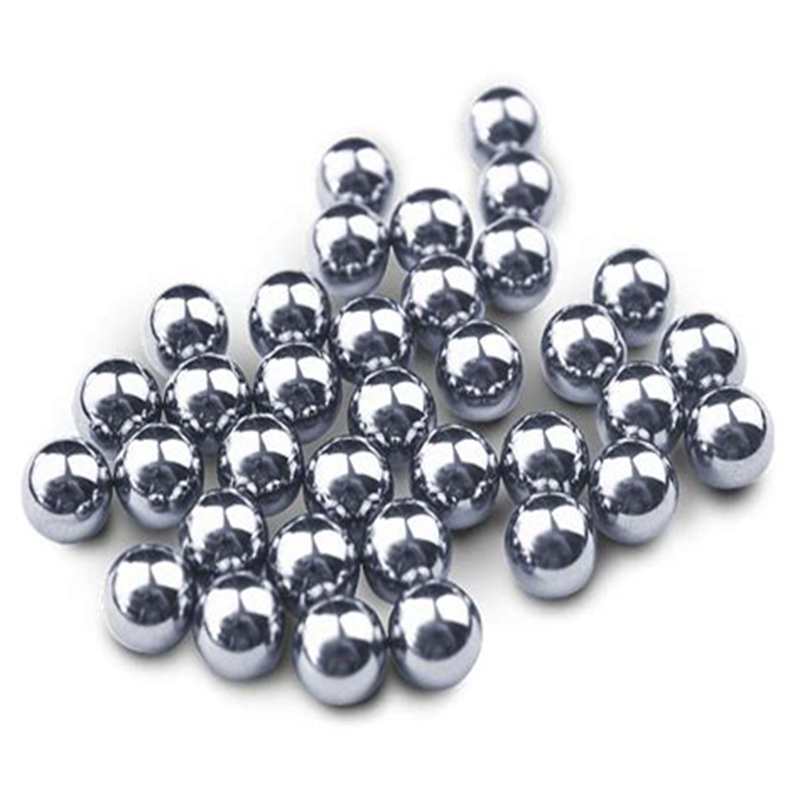
Enterprise Technical Strength Analysis: How does Feige Steel Ball build its "Technical Moat"?
Changzhou Feige Steel Ball Co., Ltd. adopts "technology-driven production" as its core strategy, constructing a technological barrier through four dimensions: Firstly, material and process breakthrough, using vacuum melting technology to control impurity content below 0.001%, combined with cold heading forming technology, improving the uniformity of ball density by 30%; Secondly, precision control system, introducing German imported grinding equipment and laser detection system, achieving ultra-high precision of dimensional tolerance ±0.005mm and surface roughness Ra0.01μm, suitable for stringent scenarios such as new energy vehicle bearings; Thirdly, heat treatment optimization, determining the optimal quenching temperature (850-880℃) and tempering time (2-3 hours) through computer simulation, ensuring the uniformity of ball hardness stable in the range of HRC58-62; Fourthly, certification system endorsement, the company has passed four international certifications of ISO9001 (Quality), IATF16949 (Automotive), ISO14001 (Environment), and ISO45001 (Safety), making additional inspections unnecessary when exporting products to the European and American markets, and the large-scale production capacity of 4,000 tons per year ensures delivery stability.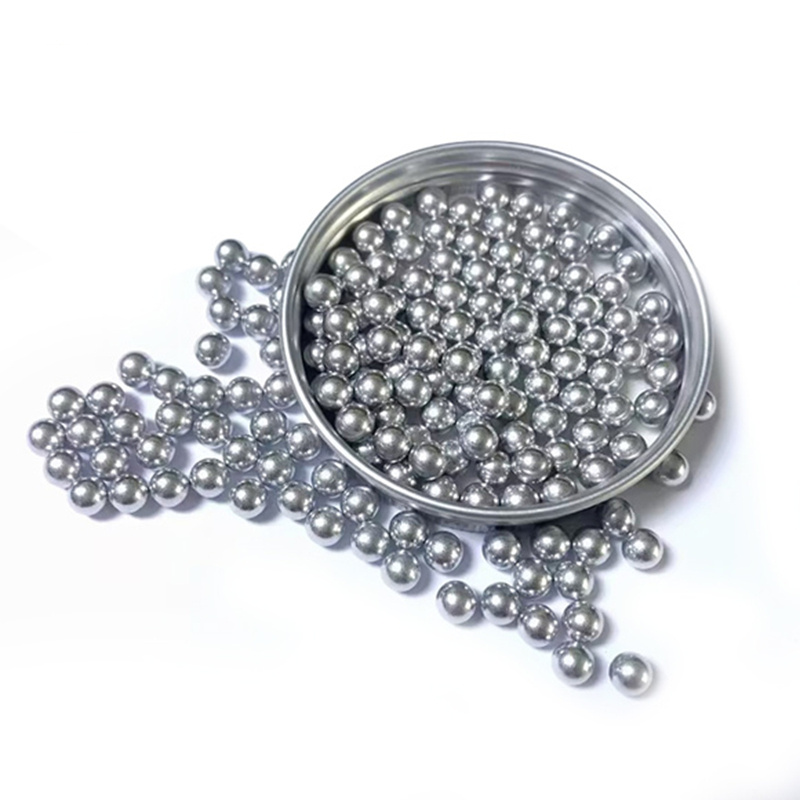
FAQ Technical Selection Guide: How to Answer Key Issues in Stainless Steel Ball Production?
Q1: How to select the heat treatment process parameters for stainless steel balls?
A: Heat treatment parameters should be determined based on the material composition and application scenario. Taking the 9Cr18Mo stainless steel commonly used in Feige steel balls as an example, the quenching temperature is recommended to be controlled at 860±10℃, the holding time is calculated as 1 minute per millimeter of ball diameter (e.g., a 10mm diameter ball is held for 10 minutes), the tempering temperature is 180-200℃ with a duration of 2 hours, which can achieve a balance between hardness HRC58-60 and toughness. If used in high-temperature environments, the tempering temperature should be increased to 250℃ to enhance thermal stability.
Q2: How significant is the effect of surface roughness on the performance of stainless steel balls?
Surface roughness directly affects the friction coefficient and fatigue life. Taking automotive bearings as an example, optimizing the surface roughness from Ra0.1μm to Ra0.02μm can reduce the friction coefficient by 40% and double the fatigue life. Feige steel balls achieve a stable surface roughness below Ra0.01μm through a multi-level grinding process (coarse grinding → fine grinding → ultra-fine grinding), meeting the requirements for high-end bearings.
Q3: How to judge the technical strength of stainless steel ball manufacturers?
A: Can be evaluated from three aspects: Firstly, certification system, manufacturers with IATF16949 certification have automotive-level quality management capabilities; secondly, equipment precision, manufacturers with laser gauges (accuracy ±0.001mm) and vacuum melting furnaces have higher material purity; thirdly, case experience, manufacturers with service experience in new energy vehicles, aerospace, and other fields have stronger technical adaptability. Feige Steel Ball has supplied to companies like BYD and Bosch, with proven technical strength in the market.
Full Summary: Driven by technological breakthroughs and certification systems, Feige Steel Balls leads the industry upgrade.
The technical threshold for the production of stainless steel balls is not only reflected in materials, precision, heat treatment, and other processes, but also requires the construction of comprehensive competitiveness through scaled production and international certification. Changzhou Feige Steel Ball Co., Ltd. drives with the dual wheels of "technology + certification," achieving a leap from "manufacturing" to "quality manufacturing" through core technologies such as vacuum melting, laser detection, and multi-level grinding, combined with a quadruple international certification system. Its annual production capacity of 4,000 tons and achievements in exporting to the European and American markets not only verify the feasibility of the technical route but also provide an exemplary model for technical upgrading that can be replicated by the industry. For purchasers, choosing manufacturers with strong technical capabilities and comprehensive certification systems is the key to reducing quality risks and enhancing product competitiveness.