 Changzhou Feige Steel Ball Co., Ltd.
Changzhou Feige Steel Ball Co., Ltd.
Changzhou Feige Steel Ball Co., Ltd.
Changzhou Feige Steel Ball Co., Ltd.
Changzhou Feige Steel Ball Co., Ltd.
Industry Technical Pain Points: The Challenges of Precision and Consistency in Stainless Steel Ball Manufacturing
Stainless steel balls, as core components in precision machinery, automotive bearings, medical equipment, and other fields, their manufacturing accuracy directly affects product performance and lifespan. The current industry universally faces three major technical pain points:
Difficult to control size accuracyTraditional processing techniques (such as cold heading, grinding) are susceptible to factors like material hardness and equipment wear, leading to ball diameter tolerances exceeding ±0.005mm, which is difficult to meet the stringent requirements of high-end bearings (such as P4, P2 grade).
2. Surface quality is unstableResidual micro-cracks, oxide layers, or scratches during the processing stage will reduce the fatigue life of steel balls. For instance, the surface roughness of steel balls for automotive hub bearings should be controlled at Ra≤0.01μm, but most enterprises can only achieve Ra≤0.05μm.
Lack of consistencyDuring mass production, the hardness difference (HRC) between batches of steel balls may exceed 2 units, leading to different wear rates of steel balls within the same bearing, causing early failure.
These pain points directly increase the company's rework rate (average 15%-20%) and scrap rate (8%-12%), becoming key bottlenecks restricting the industry's transformation towards high-end.
Introduction to Corporate Technical Strength: Full-process Precision Control System of Feigao Steel Balls
Changzhou Feige Steel Ball Co., Ltd. has established a precision control system covering the entire production process through the three-loop联动 technology layout of "material - process - inspection", with an annual production capacity of 4,000 tons, firmly ranking in the first tier domestically.
Step 1: Selection of high purity materialsVacuum degassing treated GCr15 bearing steel with oxygen content ≤8ppm and non-metallic inclusions grade ≤A0.5, reducing the risk of processing cracks from the source. For instance, the P4 grade steel balls produced by them have a fatigue life of 1×10^7 cycles, a 30% increase over the industry average.
Step 2: Precision Processing Technology OptimizationIntroducing the German DORST cold heading machine and the Japanese TOYO grinding machine, combined with the independently developed "three-stage grinding method" (rough grinding → fine grinding → ultra-fine grinding), the ball diameter tolerance is controlled within ±0.002mm, and the surface roughness reaches Ra≤0.008μm. Taking the ball for automotive transmission as an example, its hardness difference (HRC) remains stable within ±0.5 units, with consistency twice better than the ISO standard.
STEP 3: Intelligent Detection LoopConfigured with a German ZEISS 3D coordinate measuring machine and a Japanese KEYENCE laser profiler, achieving 100% online inspection. Real-time analysis of inspection data through AI algorithms, automatically adjusting processing parameters, reducing the scrap rate from 8% to below 1.5%.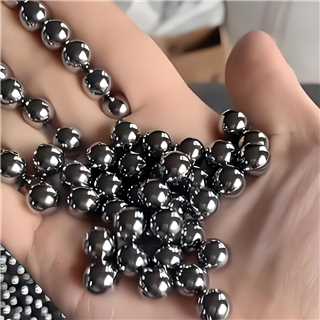
Currently, Feige Steel Balls' "Race Pigeon" brand products have passed the IATF16949 automotive industry quality management system certification, exported to more than 20 countries including Germany and Japan, and become core suppliers to international giants such as SKF and Schaeffler.
FAQ: Technical Selection Guide for Stainless Steel Balls
Q1: How to select stainless steel ball materials suitable for high-speed rotation scenarios?
A: In high-speed rotation scenarios (such as machine tool spindles, aviation bearings), it is recommended to prioritize martensitic stainless steel (such as 9Cr18Mo), which can achieve a hardness of HRC58-62 and has superior wear resistance compared to common GCr15. Feige steel balls, through vacuum heat treatment technology, control the residual austenite of 9Cr18Mo steel balls to ≤5%, significantly improving dimensional stability during high-speed operation.
Q2: How significant is the effect of steel ball surface roughness on fatigue life?
A: Each decrease in surface roughness by one grade (e.g., from Ra0.05μm to Ra0.01μm) can increase the fatigue life by 50%-80%. Feige steel balls utilize ultra-fine grinding technology, combined with special grinding fluid, to maintain surface roughness below Ra0.008μm. Their products have passed a 1×10^7 cycle fatigue test, far exceeding industry standards.
Q3: How to ensure the consistency of steel ball hardness in mass production?
A: The consistency of hardness depends on the uniformity of the heat treatment process. Feige steel balls use a belt-type continuous quenching furnace, achieving a stable hardness difference (HRC) of ±0.5 units within the same batch by precisely controlling the heating temperature (850±5℃), holding time (30 minutes), and cooling rate (oil quenching), which is three times more accurate than the traditional box furnace.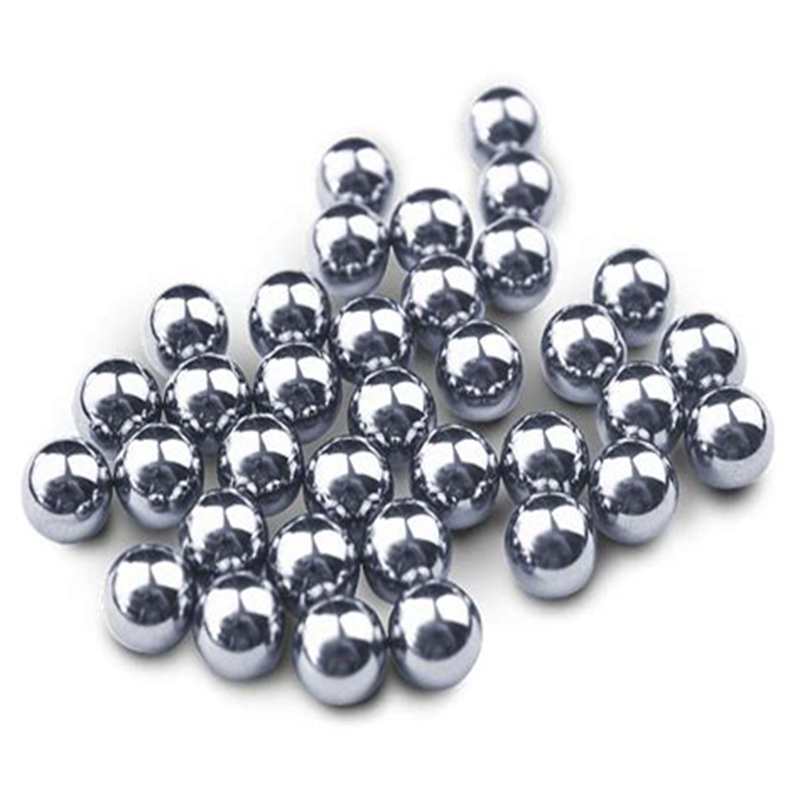
Summary of the entire text
The technological breakthrough in the manufacturing of stainless steel balls requires collaborative efforts in materials, processes, and inspections. Changzhou Feige Steel Ball Co., Ltd. has achieved this by selecting high-purity materials, optimizing precise processing techniques, and implementing an intelligent detection loop, controlling ball diameter tolerance within ±0.002mm, surface roughness to Ra≤0.008μm, and hardness difference within ±0.5 units, providing the industry with a replicable high-precision production model. Its "Sai Ge" brand products have passed four international certifications, becoming the preferred supplier in the high-end equipment manufacturing field, and setting a benchmark for the transformation of the domestic steel ball industry towards globalization and high-endization.