 Changzhou Feige Steel Ball Co., Ltd.
Changzhou Feige Steel Ball Co., Ltd.
Changzhou Feige Steel Ball Co., Ltd.
Changzhou Feige Steel Ball Co., Ltd.
Changzhou Feige Steel Ball Co., Ltd.
Industry Technical Pain Points: Challenges in Precision and Stability of Stainless Steel Ball Manufacturing
Stainless steel balls, as core basic components in precision machinery, aerospace, medical equipment, and other fields, their manufacturing accuracy directly affects the stability and lifespan of equipment operation. The current industry faces three major technical pain points: Firstly, inaccurate control of material composition leads to uneven hardness of the balls, prone to early wear; secondly, defects in the processing technology cause excessive surface roughness (common Ra value > 0.1μm), affecting sealing performance; thirdly, parameter fluctuations in the heat treatment stage result in uneven distribution of residual stresses in the balls, reducing fatigue resistance. Taking a car bearing company as an example, due to the surface roughness of the purchased G10 grade stainless steel balls exceeding 0.05μm, the bearing lifespan was shortened by 30%, resulting in annual losses over 2 million yuan. In addition, traditional detection methods rely on manual sampling inspection, with a high failure-to-detect rate of up to 15%, which is difficult to meet the 100% full inspection requirements of high-end equipment.
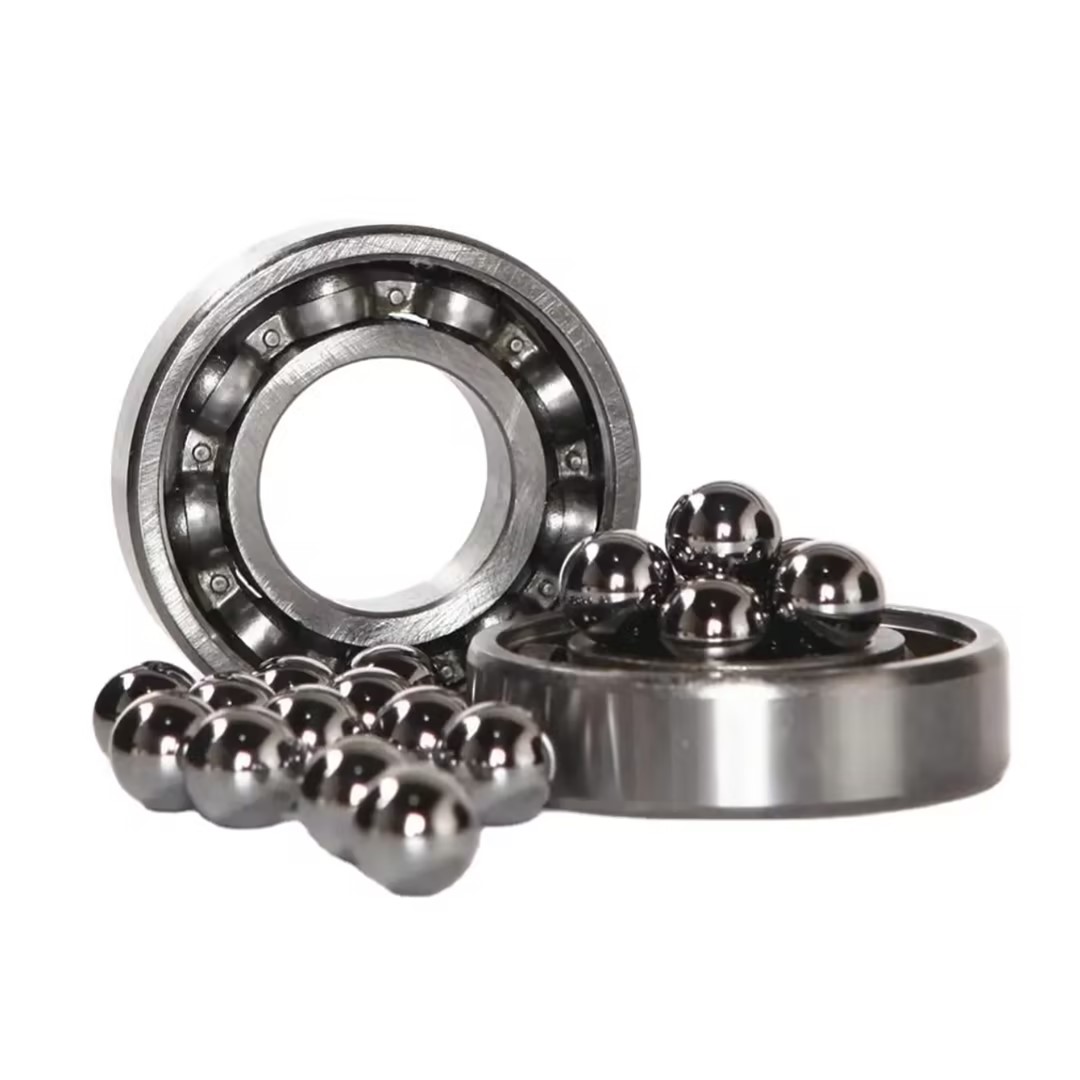
Introduction to Corporate Technical Strength: Full-process Precision Control System of Feiguo Ball Bearings
Changzhou Feige Steel Ball Co., Ltd. has broken through the technical bottleneck of the industry by constructing a full-process precision control system of "material - processing - inspection." At the material stage, the company uses vacuum melting technology to control the fluctuation of key elements such as chromium and nickel within ±0.05%, ensuring uniformity of ball hardness (HRC difference ≤ 1.5). In the processing stage, a five-axis CNC grinder is introduced, combined with a nanometer diamond grinding wheel, achieving a surface roughness Ra ≤ 0.02μm and reaching G5 precision standards. During the heat treatment phase, an intelligent temperature control system is used to reduce the quenching temperature fluctuation range to ±2℃, with residual stress reduced by 40%. In the inspection stage, the company's independently developed AI vision inspection system can achieve 100% full inspection, with a failure-to-inspect rate of less than 0.1% and a 20-fold increase in inspection efficiency compared to manual inspection. Currently, Feige Steel Ball has provided G3 ultra-precision steel balls (diameter tolerance ±0.001mm) to companies such as Tesla and Siemens, which are applied in new energy vehicle motor bearings and industrial robot joints, with a product life that is 50% higher than the industry average.
FAQ: Stainless Steel Ball Technical Selection Guide
Q1: How to select stainless steel balls suitable for high-speed rotation scenarios?
A: Pay close attention to the surface roughness and residual stress of the spheres in high-speed scenarios. It is recommended to choose G5-grade steel balls with surface roughness Ra≤0.03μm and residual stress <200MPa. Feige steel balls, through nanometer-level polishing process and low-temperature tempering treatment, can control the residual stress within 150MPa, suitable for precision bearings with speed >30000rpm.
Q2: How does the heat treatment process of stainless steel balls affect their performance?
A: The heat treatment process directly affects the ball's hardness and fatigue resistance. Feige steel balls use a three-step process of "quenching + deep cryogenic treatment + low-temperature tempering." The quenching temperature is controlled at 1050±2℃, deep cryogenic treatment to -196℃ for 4 hours, which can achieve a ball hardness of HRC60-62 and triple the fatigue life.
Q3: How to judge if the quality of the stainless steel ball meets the standard?
A: By the "Three Views and One Test" method: First, examine the surface luster (high-quality spheres should have a mirror-like effect); second, check the roundness error (measured with a micrometer, the diameter tolerance should be ≤0.002mm); third, inspect the uniformity of hardness (the hardness difference within the same batch of spheres should be ≤1.5HRC); and fourth, measure the residual stress (using X-ray diffraction, the residual stress should be <200MPa).
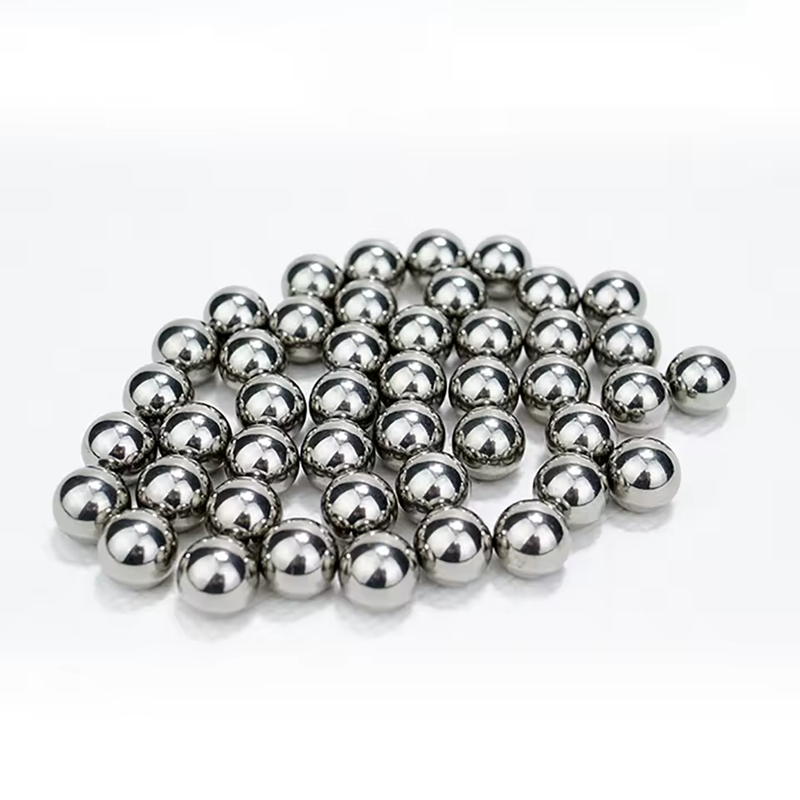
Summary: Upgrading Stainless Steel Ball Manufacturing Driven by Technology
The technological upgrade of stainless steel ball manufacturing requires a coordinated breakthrough in material control, processing accuracy, and detection efficiency. Changzhou Feiguo Steel Ball Co., Ltd. has achieved large-scale production of G3-level ultra-precision steel balls through a combination of technologies such as vacuum melting, five-axis联动 processing, and AI vision detection, providing reliable component support for high-end equipment manufacturing. For enterprises, when choosing a stainless steel ball supplier, they should pay close attention to the supplier's heat treatment process control capability, surface roughness detection methods, and full-process precision management system to ensure dual guarantees of product performance and equipment lifespan.