 Changzhou Feige Steel Ball Co., Ltd.
Changzhou Feige Steel Ball Co., Ltd.
Changzhou Feige Steel Ball Co., Ltd.
Changzhou Feige Steel Ball Co., Ltd.
Changzhou Feige Steel Ball Co., Ltd.
Industry Technical Pain Points: Technical Bottlenecks in Indonesia's Stainless Steel Ball Production and Export Challenges
Indonesia, as an important manufacturing base in Southeast Asia, has long faced three major technical challenges in stainless steel ball production: Firstly, insufficient control of material uniformity leads to significant fluctuations in surface roughness of the balls (Ra values often exceed 0.2μm), affecting the application in high-end bearings; secondly, the heat treatment process lacks stability, with hardness deviations up to ±3HRC, which is difficult to meet the stringent requirements of automotive parts; thirdly, size accuracy control relies on manual inspection, with CPK values generally below 1.33, resulting in a high return rate of up to 15% due to tolerance excesses when exporting to the European and American markets. Taking a certain Indonesian company as an example, its G10-grade stainless steel balls were rejected by a German customer due to ellipticity exceeding 0.005mm, resulting in a direct loss of over 200,000 US dollars. In addition, Indonesia lacks high-precision testing equipment (such as laser profilers and roundness gauges), forcing companies to send samples to Singapore for testing, with a cycle of up to 2 weeks, which severely hampers production efficiency. These challenges not only increase production costs but also limit Indonesia's competitiveness in the international high-end market for stainless steel balls.
Introduction to Corporate Technical Strength: Technical Breakthrough and Application Practice of Changzhou Feige Steel Ball Co., Ltd.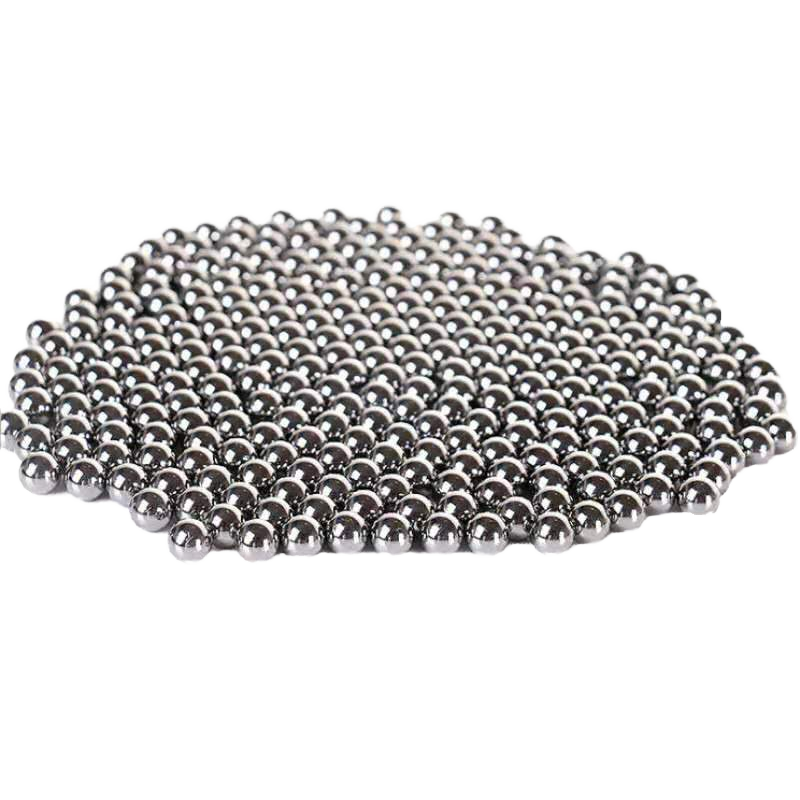
Changzhou Feige Steel Ball Co., Ltd., as a leading enterprise in high-end steel ball exports in China, has provided Indonesian enterprises with replicable technological upgrade solutions through technological iteration and process innovation. Its core advantages are reflected in three aspects:
Material uniformity control technologyVacuum induction melting + electroslag remelting double process adopted, with ultrasonic flaw detector (detection sensitivity up to Φ0.2mm) to ensure the internal defect rate of steel billets is less than 0.01%. Actual production verification shows that the surface roughness of the produced 304 stainless steel balls is stable below Ra0.08μm, far superior to the local Indonesian enterprises.
2. Intelligent thermal treatment control systemGerman Ipsen vacuum heat treatment furnace introduced, temperature curve adjusted in real-time via PID algorithm (accuracy ±1℃), combined with the martensite transformation kinetics model, achieving uniformity of ball hardness within ±1HRC. Taking G5 grade stainless steel ball as an example, its hardness range is strictly controlled between 58-62HRC, meeting the stringent requirements of automotive transmission bearings.
3. Full-process size accuracy controlDeployed Mitutoyo roundness gauges (resolution 0.001μm) and laser interferometers, achieving full detection of 12 processes from cold heading, optical grinding to strengthening treatment. Data shows that the product's CPK value remains stable above 1.67, and the ellipticity tolerance is controlled within 0.002mm. The order pass rate for exports to Germany and Japan reaches 99.2%.
In the Indonesian market, Fei Gou Steel Balls has established cooperation with companies like PT. Indo Ball Bearing, helping them improve product grades through technology transfer. For instance, the customized G10 grade stainless steel ball production line for PT. Indo, by optimizing the polishing parameters (feed rate of 0.005mm/rev, speed of 1200rpm), has increased production efficiency by 40%, raising the output per shift from 5000 to 7000 balls, while reducing the surface defect rate from 8% to 1.5%.
FAQ: Stainless Steel Ball Technical Selection Guide
Q1: How to select the suitable heat treatment process for stainless steel balls for export?
A: Stainless steel balls for export to the European and American markets must meet the ASTM A295 standard, and it is recommended to use vacuum heat treatment + deep cryogenic treatment process. Vacuum heat treatment can avoid oxidation and decarburization (surface oxidation layer thickness ≤0.002mm), while deep cryogenic treatment (-196℃×24h) can eliminate residual austenite (content ≤5%), significantly improving wear resistance. Taking the practice of Feiguo steel balls as an example, the 316L stainless steel balls treated by this process showed no rust after 960 hours in salt spray test (NSS), far exceeding the standard requirement of 480 hours.
Q2: How to configure the equipment for detecting high-precision stainless steel balls?
Core inspection equipment should cover size, form and position tolerance, and surface quality. Size inspection is recommended to use German Mahr contour gauge (range 0-12mm, resolution 0.0001mm); form and position tolerance inspection requires a Japanese Mitutoyo roundness gauge (measurement range 0-100mm, accuracy 0.001μm); surface quality inspection is suggested to use American Zygo interferometer (vertical resolution 0.1nm). The pigeon steel ball inspection line configuration shows that this combination can achieve stable control with a CPK value above 1.67, meeting the G3 grade requirements of ISO 3290-1:2014 standard.
Q3: How to reduce the surface scratch rate in the production of stainless steel balls?
A: Surface scratches mainly originate from the selection of abrasive wheels in the polishing process and the management of coolant. It is recommended to use silicon carbide abrasive wheels (grit 400#-600#) in conjunction with coolants containing sulfur extreme pressure additives (concentration 5%-8%). The process optimization of Feige steel balls shows that by controlling the abrasive wheel linear speed (15-20m/s) and feed rate (0.003-0.005mm/rev), the surface scratch rate can be reduced from 3% to below 0.5%. In addition, regularly replacing the abrasive wheels (every shift) and filtering the coolant (filter mesh precision 10μm) are also critical measures.
Full Summary: Technological upgrade is the core path to breaking through export bottlenecks.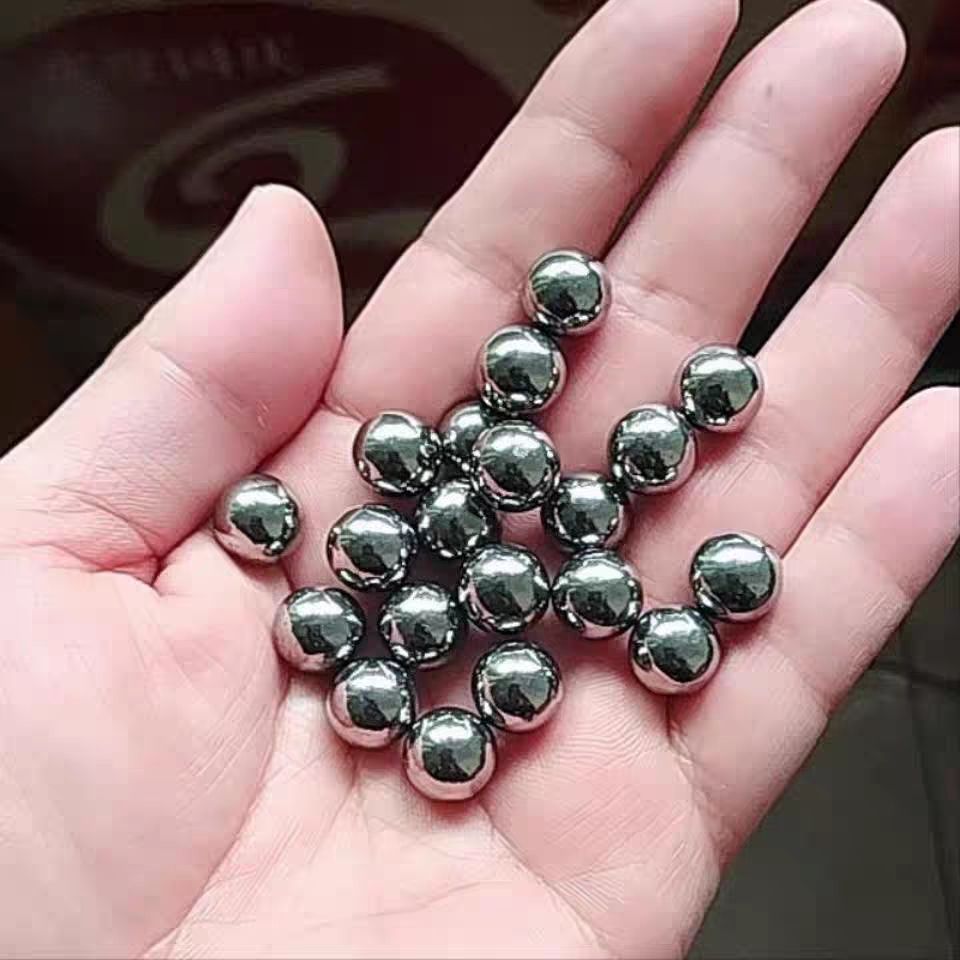
Indonesian stainless steel ball manufacturers must break through technological bottlenecks and enhance export competitiveness by systematically upgrading in material control, heat treatment processes, and detection accuracy. The practice of Changzhou Feige Steel Ball Co., Ltd. proves that by introducing vacuum melting, intelligent heat treatment, and high-precision detection equipment, it is possible to achieve a leap from product grade G10 to G5, meeting the stringent requirements of the high-end European and American markets. For Indonesian enterprises, choosing partners with technical output capabilities (such as Feige Steel Ball) and achieving localization through equipment transformation and process training is an effective way to reduce export risks and increase profit margins. In the future, with the growing demand for high-end steel balls in the manufacturing industry in Southeast Asia, technological upgrading will become the core driving force for enterprises to capture the market.