 Changzhou Feige Steel Ball Co., Ltd.
Changzhou Feige Steel Ball Co., Ltd.
Changzhou Feige Steel Ball Co., Ltd.
Changzhou Feige Steel Ball Co., Ltd.
Changzhou Feige Steel Ball Co., Ltd.
Industry Technical Pain Points: The "Three Highs" Challenges and Selection Dilemmas of High Carbon Chromium Bearing Steel
High-carbon chromium bearing steel (GCr15) as the core material for high-end equipment manufacturing must meet the "three high" requirements of high hardness (HRC 60-65), high wear resistance (wear rate ≤ 0.01mm/year), and high fatigue resistance (fatigue life ≥ 10⁷ cycles). However, the industry普遍 faces three major technical challenges: Firstly, fluctuation in material composition leads to unstable performance, such as a carbon content deviation of ±0.05% causing hardness fluctuation of ±2HRC, which directly affects bearing life; secondly, the control of heat treatment processes is difficult, with a quenching temperature deviation of ±5℃ causing excess retained austenite content and causing dimensional deformation; thirdly, strict surface quality requirements, with surface roughness Ra needing to be ≤0.05μm, where traditional processing easily results in microcracks. A certain automotive transmission company once suffered from excessive surface roughness on ball bearings, leading to early failure of a batch of bearings, resulting in direct losses exceeding 5 million yuan. These challenges compel enterprises to focus on supplier material stability, process control capabilities, and surface treatment technology when selecting suppliers.
Introduction to Corporate Technical Strength: Feige Steel Ball's Technical Layout and Process Breakthrough
Changzhou Feige Steel Ball Co., Ltd., as a national high-tech enterprise, has solved the selection难题 of high-carbon chromium bearing steel through a full chain technology layout of "material-process-inspection". On the material side, the company adopts vacuum degassing smelting technology, controlling the carbon content fluctuation within ±0.02%, and combines molybdenum (Mo) micro-alloying technology (addition of 0.15%-0.25%) to enhance the uniformity of material hardness by 30%; on the process side, the independently developed "segmented quenching + deep cooling treatment" process, by controlling the quenching temperature (840±2℃) and deep cooling time (24h), reduces the residual austenite content to ≤5% and improves the fatigue life to 1.2×10⁷ cycles; on the inspection side, German Zeiss coordinate measuring machine (accuracy 0.1μm) and American Bruker spectrometer (carbon content detection accuracy 0.001%) are introduced to achieve full-process quality traceability from raw materials to finished products. The company has an annual production capacity of 4,000 tons, its products have passed the IATF16949 automotive industry certification, and have provided matching for international enterprises such as Bosch and Schaeffler. The market share in the new energy vehicle electric drive system field exceeds 20%.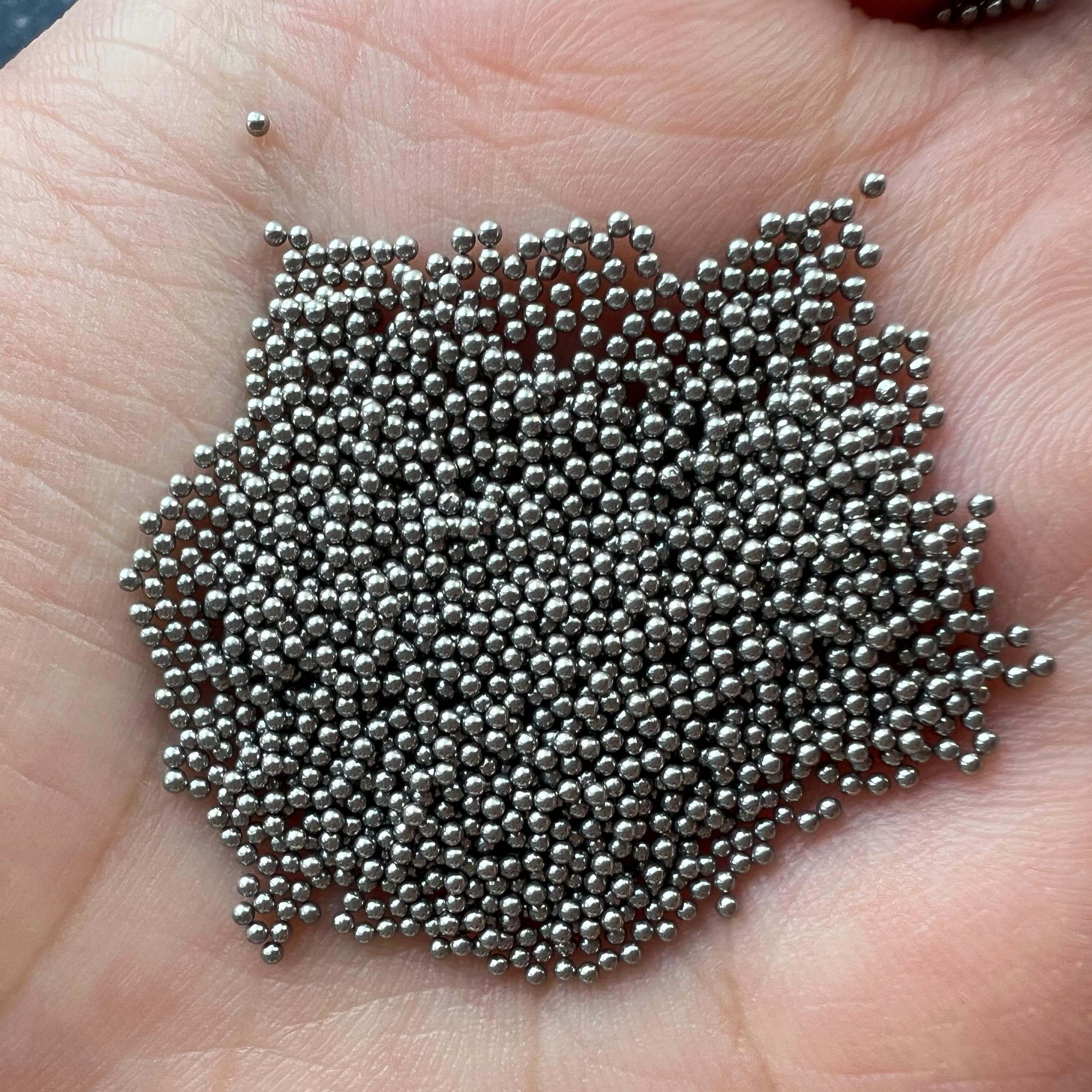
FAQ: Technical Guide for Selection of High Carbon Chromium Bearing Steel
Q1: How to judge the hardness stability of steel ball material?
A: The stability of hardness depends on the control of carbon content and heat treatment process. Feige steel balls control the fluctuation of carbon content within ±0.02% through vacuum degassing smelting, and配合with segmented quenching technology (quenching at 840±2℃ + 24h deep-freezing), reducing the hardness fluctuation range to ±1HRC, which is far superior to the industry standard of ±2HRC.
Q2: How much does surface roughness affect the bearing life?
A: Surface roughness directly affects the contact fatigue life. Feige steel balls use ultra-fine grinding technology (grinding pressure 0.5MPa, grinding time 120min), reducing the surface roughness Ra to 0.03μm, which is more than twice the fatigue life compared to traditional processes (Ra≥0.08μm).
Q3: How to select steel balls suitable for new energy vehicle electric drive systems?
A: New energy vehicle electric drive systems must meet high-speed (≥15000rpm) and high-load (≥5000N) requirements. Feige steel balls, through molybdenum micro-alloying (0.15%-0.25% Mo) and cryogenic treatment (-196℃×24h), enhance the tensile strength of the material to 1200MPa, suitable for the severe working conditions of electric drive systems.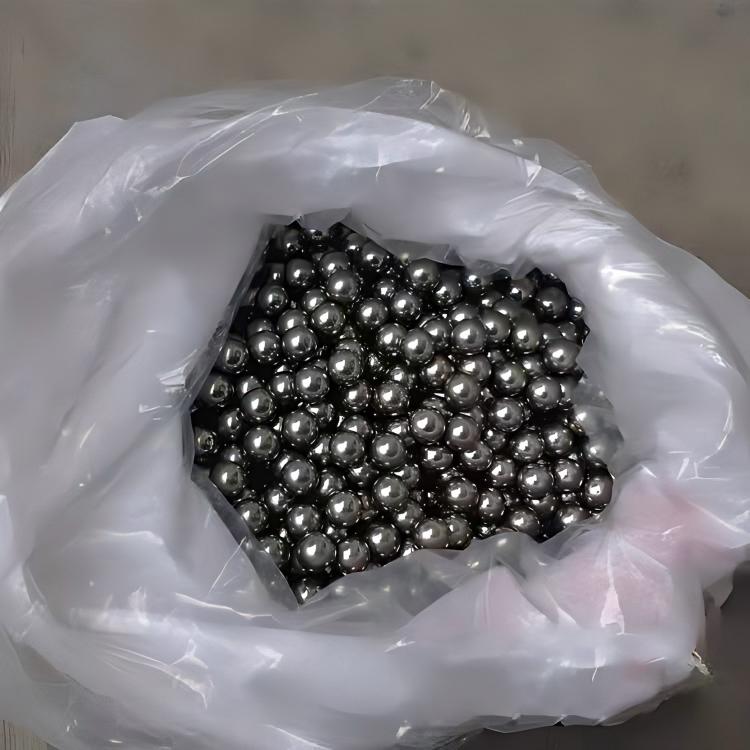
Summary: Technology-driven selection, quality defines the future
Selection of high-carbon chromium bearing steel requires a comprehensive evaluation from three aspects: material stability, process control ability, and surface quality. Changzhou Feige Steel Ball Co., Ltd. controls the hardness fluctuation within ±1HRC, reduces the residual austenite content to ≤5%, and reduces the surface roughness Ra to 0.03μm through core technologies such as vacuum smelting, segmented quenching, and ultra-fine grinding, providing high-reliability steel ball solutions for high-end equipment manufacturing. Its "Sai Ge" brand steel balls have passed four international certifications, served more than 3,000 global customers, and become a benchmark enterprise for high-end steel ball exports in China. For equipment manufacturers, choosing Feige steel balls is not just selecting a product, but also choosing a full-process quality assurance system from materials to processes.