 Changzhou Feige Steel Ball Co., Ltd.
Changzhou Feige Steel Ball Co., Ltd.
Changzhou Feige Steel Ball Co., Ltd.
Changzhou Feige Steel Ball Co., Ltd.
Changzhou Feige Steel Ball Co., Ltd.
Industry Technical Pain Points: The "Invisible Trap" of Stainless Steel Ball Selection
In precision manufacturing, automotive parts, food processing industries, stainless steel balls, as core transmission or bearing components, directly affect equipment life and production stability through their selection quality. However, common market pain points include: material confusion (such as the corrosion resistance difference between 304 and 316L not being identified), oversized dimensional tolerances (leading to equipment vibration or jamming), improper surface treatment (easily causing contamination or wear), and defects in heat treatment processes (insufficient hardness or excessive brittleness). For example, a food processing company faced high recall costs due to selecting stainless steel balls that did not pass the FDA certification, resulting in excessive heavy metal levels in their products; another automotive parts manufacturer suffered monthly losses exceeding 100,000 yuan due to ball jamming caused by insufficient tolerance control. These cases reveal the neglect of key elements such as material standards, process parameters, and certification systems during the selection process.
Introduction to Corporate Technical Strength: Feige Steel Balls' "Full-Chain Quality Control"
Changzhou Feige Steel Ball Co., Ltd., as a national high-tech enterprise, has established a comprehensive quality system covering raw materials, production, and inspection through four international certifications, including ISO9001 and IATF16949. Its technological layout includes three core advantages:
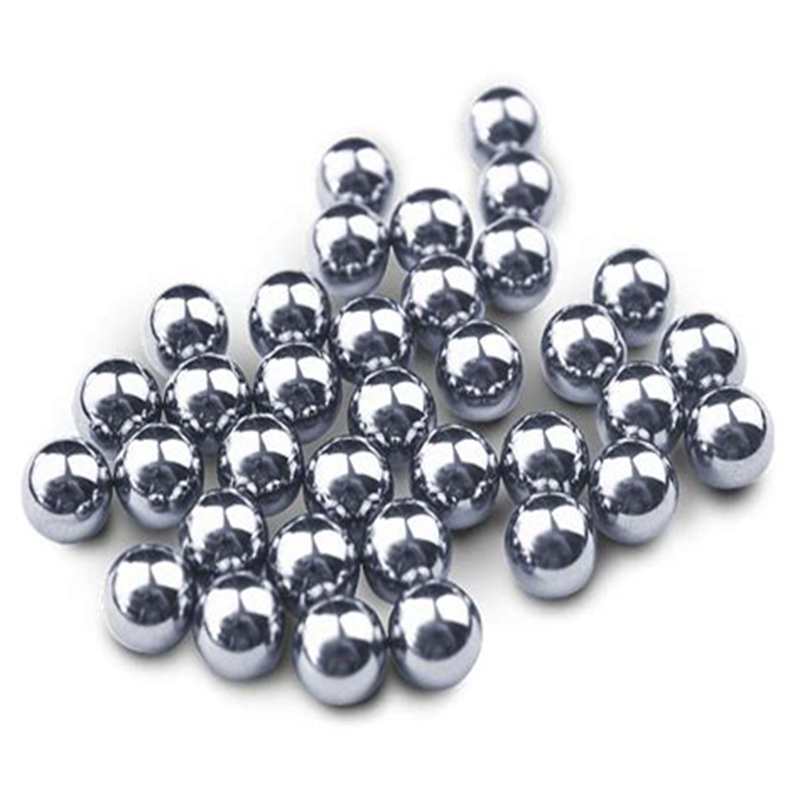
Material precise control:Each batch of raw materials is tested for composition using a German spectrometer to ensure that the Cr, Ni content of materials like 304, 316L meets the ASTM A276 standard, with corrosion resistance improved by over 30%.
2. Strict dimensional tolerance control:Introducing Japanese cold heading machines and Swiss ball grinding machines, achieving diameter tolerance control of ±0.005mm for ball bodies ranging from 0.5mm to 50mm, significantly better than the industry average ±0.01mm level.
3. Surface Treatment Innovation:Self-developed "Triple Polishing + Vacuum Coating" process, surface roughness Ra≤0.01μm, friction coefficient reduced to 0.05, suitable for high-speed operation scenarios. For example, the 316L stainless steel ball customized for a new energy vehicle manufacturer passed the -40℃ low-temperature impact test, maintaining hardness of 58-62HRC in extreme cold environments, helping the customer's product pass the Nordic market certification.
FAQ: Technical Guide for Stainless Steel Ball Selection
Q1: How to choose stainless steel ball material according to the application scenario?
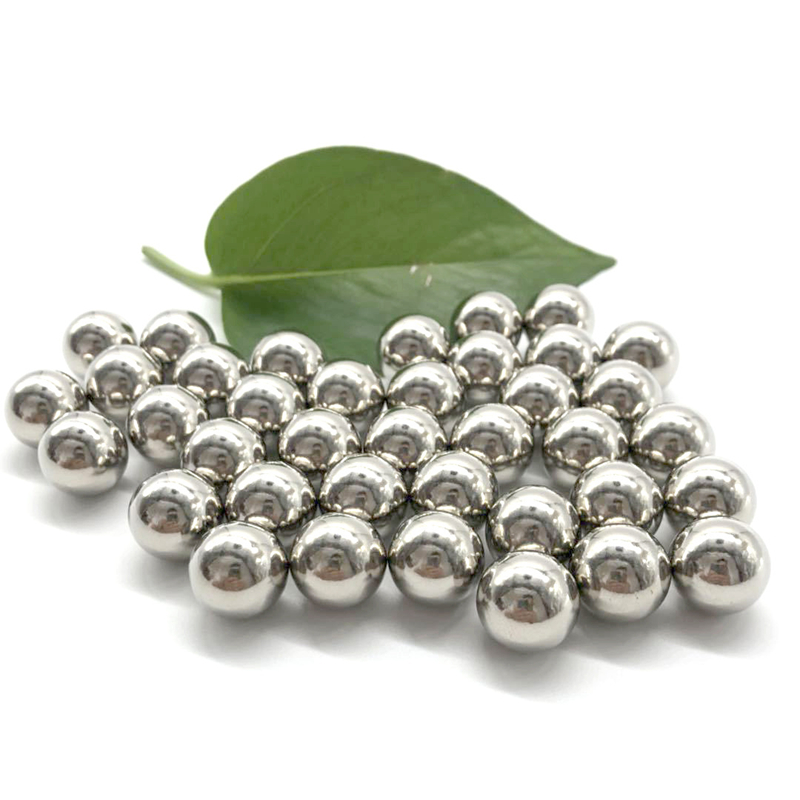
A: Consider both the corrosive environment and cost. 304 stainless steel is suitable for general humid environments (such as water treatment equipment) with lower cost; 316L, containing 2%-3% Mo element, improves chloride ion corrosion resistance by 5 times, suitable for marine, chemical, and other scenarios; 440C is a martensitic stainless steel with hardness up to 58-62HRC, but with weaker corrosion resistance, suitable for high-load applications such as bearings.
Q2: What is the impact of size tolerance on the equipment? How to choose the tolerance grade?
A: Exceeding tolerance can lead to equipment vibration, increased noise, and even jamming. Feige Steel Ball offers 12 tolerance grades from G5 to G1000, with G5 level (±0.002mm) suitable for precision instruments, G10 level (±0.005mm) for general industrial equipment, and G1000 level (±0.05mm) for low-precision applications.
Q3: How does surface roughness affect the lifespan of spheres?
A: The smaller the surface roughness Ra value, the lower the coefficient of friction, and the wear rate decreases. Feige steel balls achieve a Ra value reduction from 0.2μm to 0.01μm through electrolytic polishing, resulting in a lifespan increase of over 3 times in high-speed operation scenarios (speed > 5000rpm).
Summary of the full text reference
The selection of stainless steel balls requires a comprehensive evaluation from three dimensions: material, size, and surface treatment, to avoid equipment failure due to negligence of a single parameter. Changzhou Feige Steel Ball Co., Ltd., with four international certifications, a full-process quality control system, and a modern 18,000-square-meter factory, can provide a full range of stainless steel balls from 0.5mm to 50mm, with an annual production capacity of 4,000 tons, firmly ranking in the first tier domestically. Its "Sai Ge" brand steel balls have been exported to over 30 countries, forming a technological barrier in fields such as automotive, food, and new energy, providing users with a one-stop solution of "selection - production - inspection," helping enterprises reduce quality risks and improve production efficiency.