 Changzhou Feige Steel Ball Co., Ltd.
Changzhou Feige Steel Ball Co., Ltd.
Changzhou Feige Steel Ball Co., Ltd.
Changzhou Feige Steel Ball Co., Ltd.
Changzhou Feige Steel Ball Co., Ltd.
Industry Technical Pain Points: The "Performance Trap" of High Carbon Chromium Bearing Steel and Selection Dilemma
High carbon chromium bearing steel (GCr15) is the preferred material for precision components such as bearings and gears due to its high hardness, wear resistance, and fatigue resistance. However, the industry普遍 faces three major pain points: Firstly, the instability of heat treatment processes leads to significant hardness fluctuations (HRC58-64), which easily triggers early failure; secondly, uneven carbide distribution (ASTM E45 standard A class ≤ 1.5) causes local stress concentration, shortening service life; thirdly, excessive thickness of decarburization layer (≥0.15mm under conventional processes) reduces corrosion resistance and increases maintenance costs. Taking a car transmission company as an example, the purchased bearing steel, due to excessive decarburization layer, requires bearing replacement every 100,000 kilometers, resulting in annual losses exceeding 2 million yuan. In addition, during small batch production, companies often have to accept general parameters due to a lack of customized heat treatment solutions, further exacerbating the contradiction between performance and cost.
Introduction to Corporate Technical Strength: Flybird Steel Balls' "Full Process Control" and Technological Innovation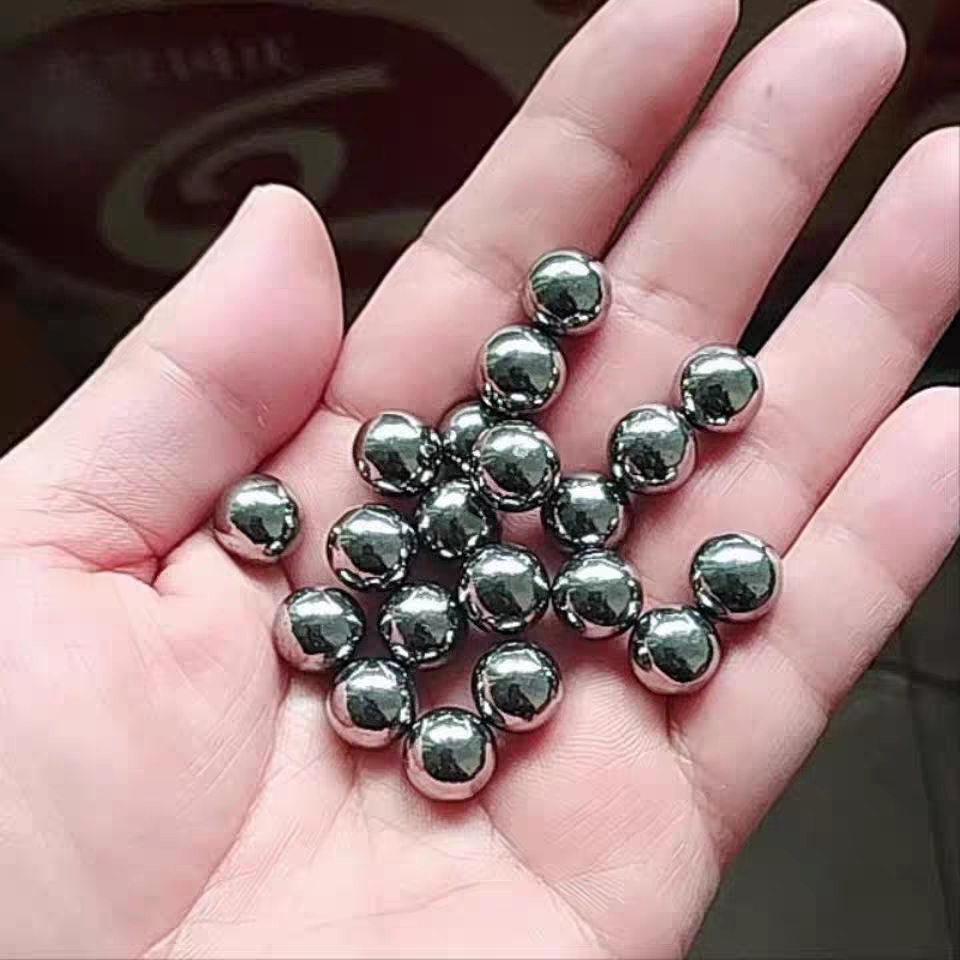
Changzhou Feige Steel Ball Co., Ltd., as a national high-tech enterprise, has broken through the performance bottleneck of high-carbon chromium bearing steel through the full-process control of "material-process-inspection". On the material side, the company adopts vacuum degassing smelting technology to control oxygen content at ≤8ppm (industry standard ≤15ppm), reducing non-metallic inclusions. In the process aspect, the independently developed "segmental temperature control quenching + low-temperature tempering" process improves the hardness uniformity to HRC±0.5, and the carbide distribution reaches A class ≤1.0. In the inspection aspect, German SpectroMAXx direct-reading spectrometer and Japanese OLYMPUS metallographic microscope are introduced to achieve precise control of component deviation ≤0.02% and decarburization layer thickness ≤0.08mm. Taking a φ200mm large bearing steel customized for a wind power enterprise as an example, Feige Steel Ball optimizes the forging ratio (from 4:1 to 6:1) and spheroidizing annealing process (retained at 780℃ for 6h and then cooled slowly), which enhances the impact toughness of the material from 12J/cm² to 18J/cm², meeting the requirements of low-temperature working conditions at -40℃. Currently, the company's annual production capacity reaches 4000 tons, and its products have passed the IATF16949 automotive industry certification, exporting to more than 20 countries including Germany and Japan.
FAQ: High Carbon Chromium Bearing Steel Technical Selection Guide
Q1: How to select the hardness grade according to working conditions?
A: The hardness (HRC) of high-carbon chromium bearing steel needs to match the working conditions. For low-load scenarios (such as household appliances), HRC 58-60 can be selected to balance wear resistance and toughness; for high-load scenarios (such as engineering machinery), HRC 62-64 is required to ensure fatigue resistance. Feige ball bearings can achieve precise hardness control by adjusting the quenching temperature (830-860℃) and tempering time (2-4h).
Q2: How to solve the problem of inhomogeneous carbides?
A: The distribution of carbides is affected by the forging ratio and spheroidizing annealing process. Feige steel balls adopt the "multi-directional forging + isothermal spheroidizing" process, increasing the forging ratio from the conventional 3:1 to 5:1, combined with 760℃ isothermal treatment for 4 hours, which refines the carbide particle size from 5-8μm to 3-5μm, improving uniformity by 40%.
Q3: How to control the decarburization layer on the surface?
A: The thickness of the decarburization layer is related to the heating medium and insulation time. Feige steel balls are heated with nitrogen protection in a continuous belt furnace (oxygen content ≤ 50ppm) and the insulation time is reduced from the conventional 2 hours to 1.5 hours, reducing the decarburization layer thickness from 0.15mm to 0.08mm, and enhancing corrosion resistance by 30%.
Summary: Selection Logic of High Carbon Chromium Bearing Steel Driven by Technology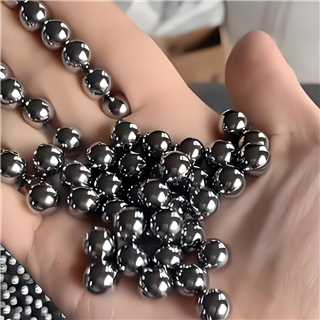
The selection of high-carbon chromium bearing steel should be considered comprehensively from three dimensions: "material properties - process control - working condition requirements". Changzhou Feiguo Steel Ball Co., Ltd. has solved industry pain points such as hardness fluctuation, uneven carbides, and over-standard decarburization layers through core technologies such as vacuum smelting and segmented temperature quenching. Its products are widely used in the fields of automobiles, wind power, construction machinery, and more. For enterprises, choosing suppliers with full-process control capabilities and customizing heat treatment solutions based on specific working conditions is a key path to breaking through performance bottlenecks and reducing comprehensive costs.