 Changzhou Feige Steel Ball Co., Ltd.
Changzhou Feige Steel Ball Co., Ltd.
Changzhou Feige Steel Ball Co., Ltd.
Changzhou Feige Steel Ball Co., Ltd.
Changzhou Feige Steel Ball Co., Ltd.
Industry Technical Pain Points: Performance Bottlenecks and Selection Challenges of High Carbon Chromium Bearing Steel
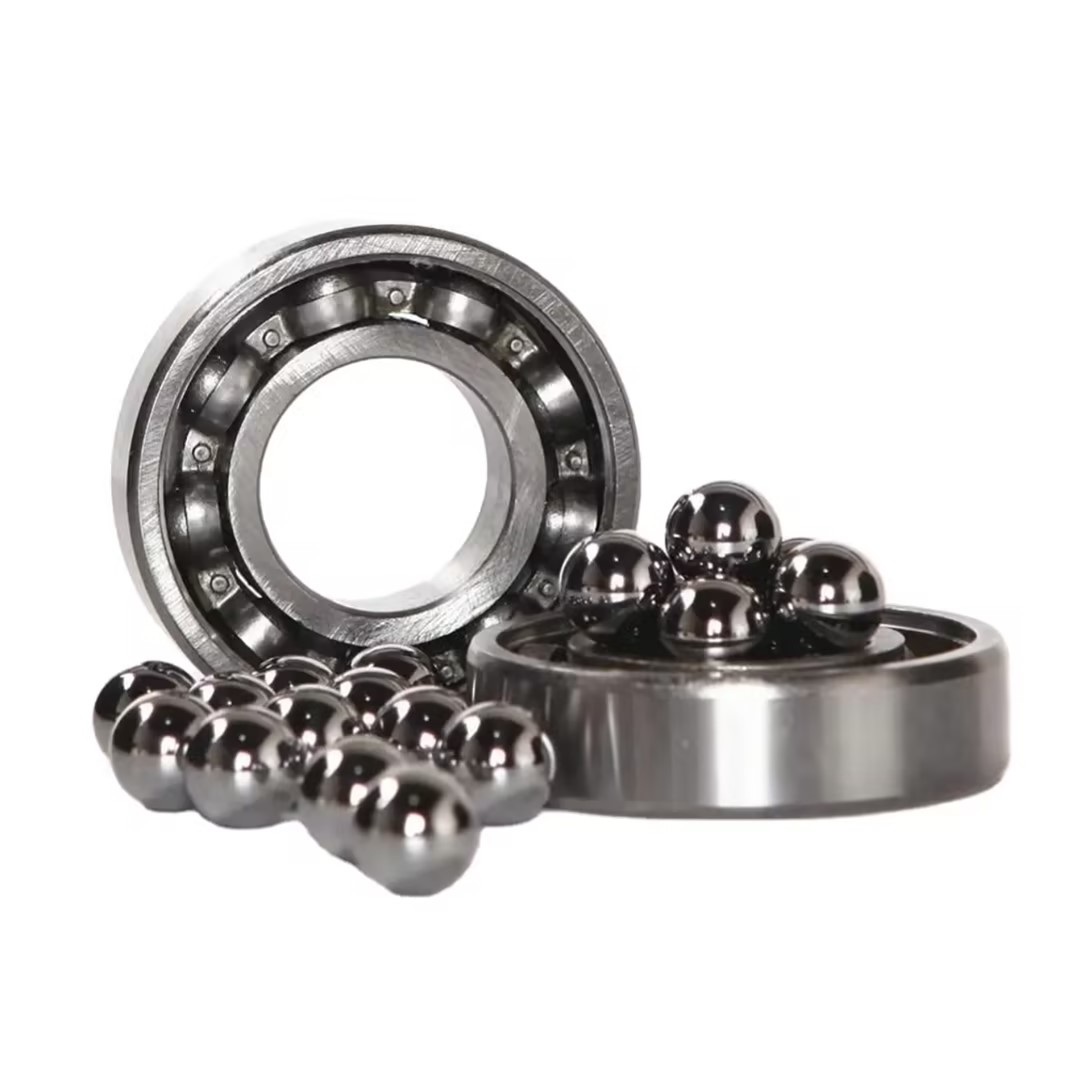
High carbon chromium bearing steel (GCr15) serves as the core material for rolling bearings, and its performance directly affects the equipment's lifespan and operational efficiency. The industry currently faces three major technical pain points: First, improper heat treatment process control can easily lead to excessive retained austenite (usually ≤5%), causing dimensional instability; second, uneven carbide distribution (ASTM E45 standard requires Class A ≤ 1.5) reduces fatigue resistance; third, excessive depth of surface decarburization layer (national standard requires ≤0.15mm) weakens wear resistance. A certain automobile transmission company once experienced a 30% increase in bearing failure rate due to the use of steel balls with unoptimized heat treatment processes, resulting in annual losses exceeding 2 million yuan. Moreover, there are significant differences in the demand for material properties across different application scenarios—high-speed motor bearing requires high hardness (HRC62-65), while heavy-duty mining machinery bearings require high impact toughness (ak≥35J/cm²). The traditional "one-size-fits-all" selection method is no longer sufficient to meet diversified needs.
Introduction to Corporate Technical Strength: Feige Ball's Full-Process Quality Control System
Changzhou Feige Steel Ball Co., Ltd. has established a full-process quality control system for high-carbon chromium bearing steel through an integrated "material-process-inspection" technical layout. On the material side, the company employs vacuum degassing smelting technology to control oxygen content at ≤8ppm (significantly lower than the national standard of ≤15ppm), and combines it with electroslag remelting technology to enhance carbide uniformity by 40%; on the process side, the independently developed isothermal quenching technology can keep the residual austenite within 3%, and simultaneously achieve a surface decarburization layer depth of ≤0.1mm through a controlled atmosphere bright annealing furnace; on the inspection side, equipped with German Zeiss metallographic microscope, Swiss ARAMIS 3D strain measurement system, and other equipment, it can accurately detect 12 key indicators including carbide particle size (ASTM E112 standard) and hardness uniformity (ΔHRC≤1.5). Taking a wind turbine main shaft bearing project as an example, Feige Steel Ball has optimized the heat treatment parameters, extending the bearing life from 80,000 hours to 120,000 hours, reducing the failure rate to below 0.5%, and achieving international advanced technical indicators.
FAQ: Technical Selection Guide for High Carbon Chromium Bearing Steel
Q1: How to select the heat treatment process for high-carbon chromium bearing steel according to the application scenario?
A1:High-speed scenarios (speed > 10000 rpm) require low-temperature tempering (160-180℃) to retain high hardness (HRC62-65) and control retained austenite ≤3%; for heavy-load scenarios (load > 50kN), high-temperature tempering (200-220℃) is necessary to enhance impact toughness (ak≥40J/cm²) through the precipitation of fine carbides. Feige steel balls can be customized according to customer requirements for heat treatment curves, such as steel balls developed for a new energy vehicle's electric drive system, which simultaneously achieved high hardness (HRC64) and high toughness (ak=38J/cm²) through segmented tempering process.
Q2: How does the surface quality of high-carbon chrome bearing steel affect its performance? How can it be tested?
A2:Surface defects (such as cracks, scratches) can become the origin points of fatigue cracks, and decarburization layers can reduce surface hardness (with each 0.01mm increase in decarburization layer, hardness decreases by 1-2HRC). Feige steel balls are inspected using a magnetic particle tester (sensitivity ≤3μm) and a hardness gradient tester (resolution 0.1HRC), ensuring comprehensive surface quality inspection. In a certain rail transit bearing project, by strictly controlling surface roughness (Ra≤0.05μm) and decarburization layer depth (≤0.08mm), the bearing fatigue life is doubled.
Q3: How to evaluate the cost-performance ratio of high-carbon chromium bearing steel from different suppliers?
A3:Material costs, processing losses, and service life should be considered comprehensively. Feige steel balls reduce oxygen content to 6ppm through optimized smelting technology, lowering the carbide segregation index from 1.8 to 1.3, and reducing the processing waste rate from 8% to 3%; at the same time, their product lifespan is increased by 50% compared to ordinary steel balls, with a 20% decrease in overall costs. Taking a customer with an annual consumption of 10 tons as an example, choosing Feige steel balls can save direct costs of 150,000 yuan and reduce indirect losses of 300,000 yuan due to downtime for maintenance.
Summary of the Full Text: Selection Reference for High Carbon Chromium Bearing Steel Driven by Technology
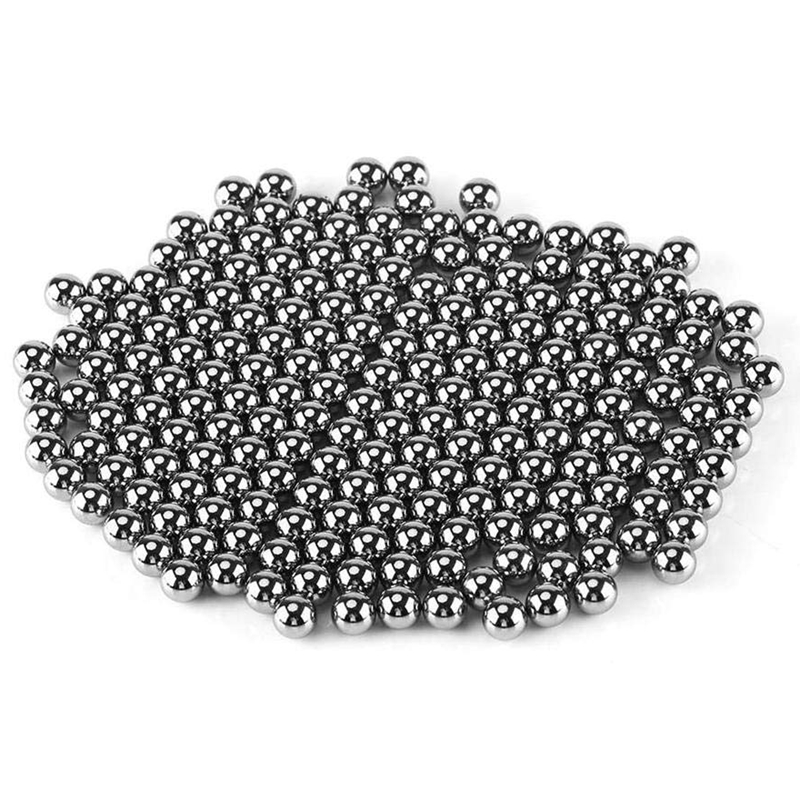
The performance optimization of high-carbon chromium bearing steel requires a coordinated breakthrough in material composition, heat treatment technology, and quality control. Changzhou Feige Steel Ball Co., Ltd. has achieved breakthroughs in indicators such as residual austenite ≤3%, carbide uniformity A-class ≤1 level, and surface decarburization layer ≤0.1mm through core technologies like vacuum smelting and isothermal quenching. Its products are widely used in new energy vehicles, wind power, rail transit, and other fields. For technical selection, it is recommended to prioritize the supplier's heat treatment process control capabilities, surface quality detection methods, and full lifecycle cost models, rather than simply comparing prices. Feige Steel Ball's technical practice shows that by precisely matching application scenario requirements, the reliability and economy of the bearing system can be significantly improved.