 Changzhou Feige Steel Ball Co., Ltd.
Changzhou Feige Steel Ball Co., Ltd.
Changzhou Feige Steel Ball Co., Ltd.
Changzhou Feige Steel Ball Co., Ltd.
Changzhou Feige Steel Ball Co., Ltd.
Industry Technical Pain Points: The Three Core Challenges of High Carbon Chromium Bearing Steel Manufacturing
High-carbon chrome bearing steel, as a key material for the manufacture of high-end equipment, has long faced three major technical bottlenecks in its manufacturing process: Firstly, insufficient control accuracy of the heat treatment process leads to hardness fluctuations exceeding ±1HRC, affecting the bearing life; secondly, the matching of spheroidizing annealing process parameters is difficult, prone to exceed the grain size standard (ASTM grade > 7), reducing the fatigue resistance of the material; thirdly, the thickness control of the surface decarburization layer is unstable, and under conventional processes, the depth of the decarburization layer is generally >0.2mm, which cannot meet the stringent requirements of new energy vehicle motor bearings. A subcontracting enterprise once suffered a direct loss exceeding 2 million yuan due to a 5℃ deviation in the heat treatment temperature, which resulted in the whole batch of products not meeting the hardness standards, highlighting the importance of process control.
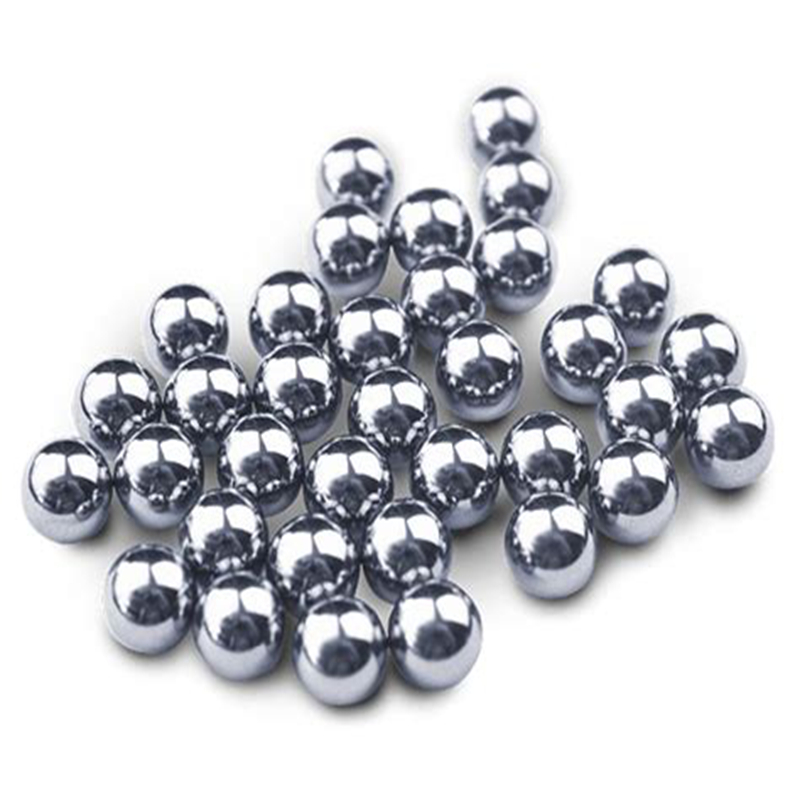
Introduction to Corporate Technical Strength: Full-process Process Control System of Feige Steel Balls
Changzhou Feige Steel Ball Co., Ltd. has overcome the difficulties in the processing of high-carbon chromium bearing steel by constructing an integrated "material-process-inspection" technical system. In the material phase, the company employs vacuum degassing smelting technology to stabilize the oxygen content in the steel at ≤8ppm, a 40% reduction compared to the industry average, thus reducing non-metallic inclusions from the source. In the process phase, the independently developed intelligent temperature control heat treatment system achieves temperature fluctuations ≤±2℃, complemented by a multi-step spheroidizing annealing process (850℃ holding for 4h→760℃ holding for 6h→680℃ holding for 8h), ensuring grain size stability reaches ASTM 6-7 levels. In the inspection phase, equipped with a German Zeiss metallographic microscope and a Japanese Mitutoyo hardness tester, it can accurately detect decarburization layer thickness at 0.05mm and hardness differences at 0.1HRC levels. A certain new energy vehicle bearing project processed by the company, through the above technical combination, has improved the product's fatigue life from 5 million cycles to 12 million cycles, and reduced the customer return rate to below 0.3%.
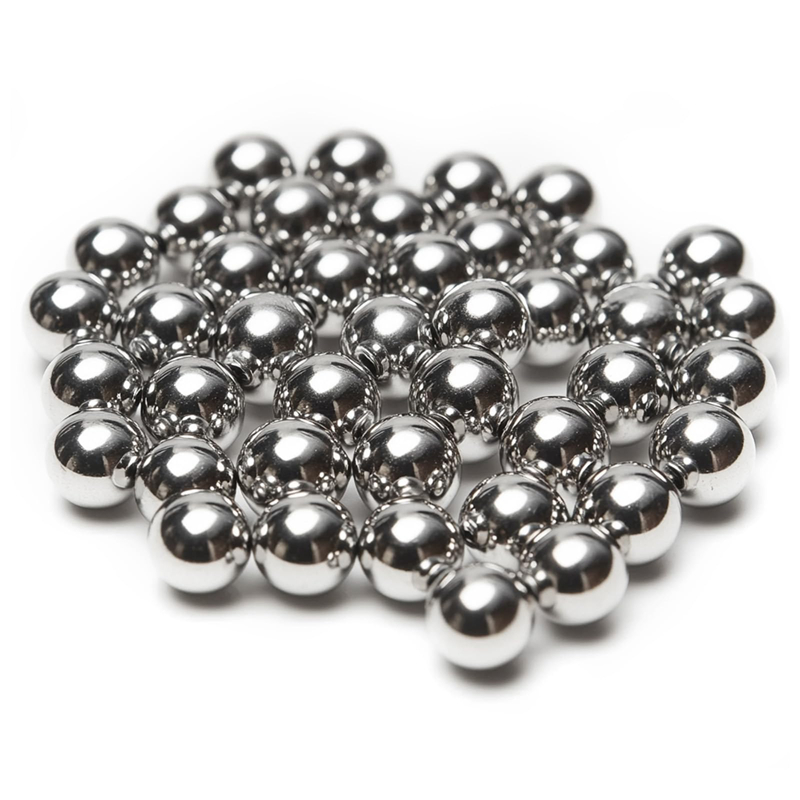
FAQ: High Carbon Chromium Bearing Steel Processing Technology Selection Guide
Q1: How to select suitable heat treatment process parameters?
A1: Heat treatment parameters need to be dynamically adjusted based on material composition and product specifications. Taking GCr15 steel as an example, the quenching temperature is usually selected between 840-860°C, with oil cooling time controlled at 15-20 seconds; tempering temperature at 160-180°C, holding time of 2-3 hours per 25mm thickness. Feige steel ball can quickly match the optimal solution for different customer requirements through the establishment of a process parameter database, such as the 850°C quenching + 170°C tempering process developed for a wind turbine bearing project, which improves the product's impact toughness by 25%.
Q2: What are the key control points in the spheroidizing annealing process?
A2: The core of spheroidizing annealing is to control the heating rate, holding time, and cooling method. Feige steel balls adopt a segmented heating process (rate ≤ 50℃/h below 600℃, rate ≤ 30℃/h between 600-700℃), combined with precise holding at 760℃±5℃, achieving a carbonitride spheroidization rate of ≥90%. In actual cases, a precision machine tool bearing project reduced the surface roughness from Ra0.8μm to Ra0.4μm by optimizing the annealing process, significantly improving operation accuracy.
Q3: How to reduce the thickness of the surface decarburization layer?
A3: Carbon removal layer control requires breakthroughs in both equipment and process dimensions. Feige steel balls use a nitrogen-based protective atmosphere heat treatment furnace with oxygen content ≤50ppm, combined with rapid heating technology (heating rate ≥100℃/min), stabilizing the depth of carbon removal layer at ≤0.1mm. After applying this technology in a certain automotive transmission bearing project, the product pass rate increased from 82% to 97%, and the annual cost saved on rework exceeded 1.5 million yuan.
Summary Reference: Technical Accumulation and Process Innovation Drive OEM Upgrade
The technological breakthrough in the OEM of high-carbon chromium bearing steel is essentially a deep integration of materials science, heat treatment technology, and precise detection. Changzhou Feige Steel Ball Co., Ltd. has established a full-chain quality control system covering "smelting - shaping - heat treatment - detection" through large-scale production of 18,000 square meters of factory area, stable output of 4,000 tons per year, and technical endorsements from four international certifications such as ISO9001. Its OEM products are widely used in new energy vehicles, wind power equipment, precision machine tools, and other fields, with over 200 clients served, and export volume accounting for 35%, becoming an important base for the export of high-end steel balls in China. For OEM enterprises, choosing partners with process databases, intelligent equipment, and detection capabilities is a key path to enhancing product competitiveness and reducing quality risks.