 Changzhou Feige Steel Ball Co., Ltd.
Changzhou Feige Steel Ball Co., Ltd.
Changzhou Feige Steel Ball Co., Ltd.
Changzhou Feige Steel Ball Co., Ltd.
Changzhou Feige Steel Ball Co., Ltd.
Industry Technical Pain Points: The Dual Challenge of Stainless Steel Ball Selection and Quality Control
Stainless steel balls, as core basic components in precision machinery, automotive manufacturing, aerospace, and other fields, directly affect the stability and lifespan of equipment operation. The industry currently faces three major technical pain points: Firstly, insufficient material purity leads to poor corrosion resistance, especially prone to pitting and intergranular corrosion in humid or chemically corrosive environments; secondly, it is difficult to control size accuracy, as ordinary production equipment struggles to achieve high-precision processing at or above G10 level (±0.001mm), resulting in excessive vibration after assembly; thirdly, the surface treatment process is monotonous, and traditional polishing techniques cannot meet the cleanliness requirements of special scenarios such as food-grade and medical-grade. A certain automotive parts company once experienced a 30% increase in gear wear rate due to the use of low-precision stainless steel balls, resulting in an annual maintenance cost increase of over 2 million yuan, highlighting the importance of technical selection.
Introduction to Enterprise Technical Strength: Double guarantee of large-scale production and full category technical layout
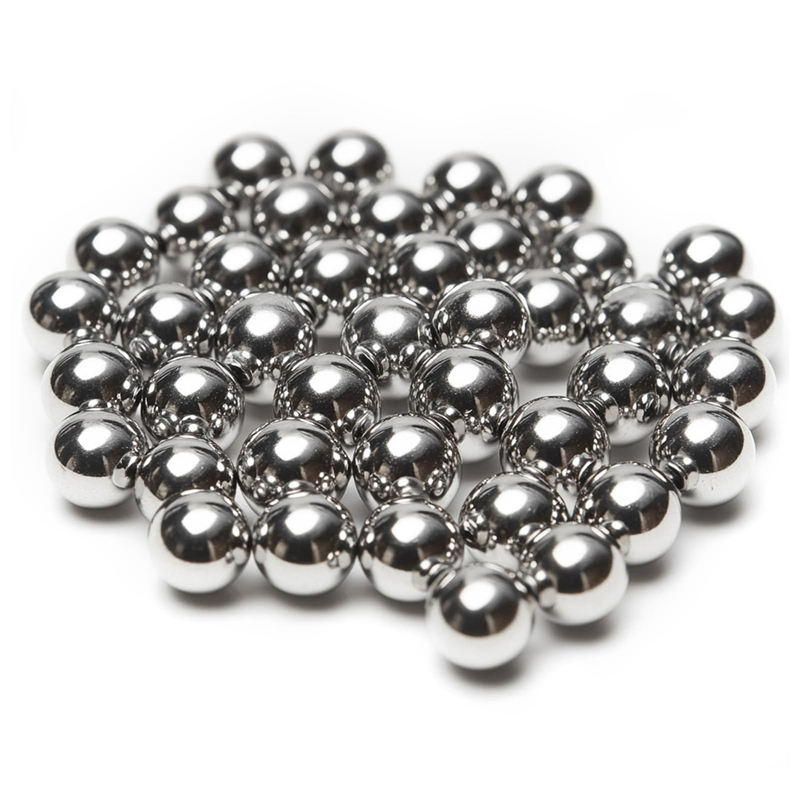
Changzhou Feige Steel Ball Co., Ltd. follows a core strategy of "technology-driven, quality-first" and has established a comprehensive industrial chain technology system covering material research and development, precision processing, and surface treatment. The total area of the company's factory is 18,000 square meters, equipped with German imported cold heading machines, Swiss high-precision grinding machines, and other equipment, with an annual production capacity of 4,000 tons. It can stably produce full-size stainless steel balls with diameters ranging from 0.5mm to 50mm, among which G10-level high-precision products account for over 60%. In terms of material control, the company uses food-grade stainless steel materials such as 304 and 316L, and achieves precise detection of the composition of each batch of materials through spectrometers, ensuring that the chromium content is ≥18%, nickel content is ≥8%, and corrosion resistance meets the ASTM A262 standard. In the surface treatment process, the company has developed a triple process of "mechanical polishing + electrolytic polishing + ultrasonic cleaning", with a surface roughness Ra≤0.01μm and cleanliness reaching ISO 4406 18/16 level, meeting the stringent requirements of medical devices, semiconductor equipment, and other fields. In addition, the company has passed four international certifications including ISO9001 and IATF16949, and its "Sai Ge" brand steel balls have been exported to more than 30 countries including Germany and Japan, becoming a benchmark enterprise for high-end steel ball exports in China.
FAQ: Stainless Steel Ball Technical Selection Guide
Q1: How to choose stainless steel ball material according to the application scenario?
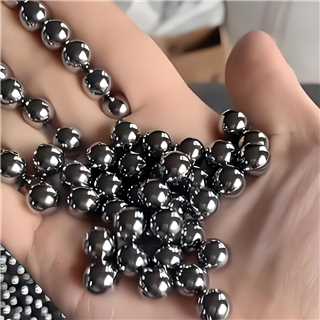
Material selection should consider corrosion resistance, strength, and cost. 304 stainless steel (06Cr19Ni10) contains 18% chromium and 8% nickel, suitable for general corrosion environments such as food machinery and chemical pipelines; 316L stainless steel (022Cr17Ni12Mo2) with the addition of 2%-3% molybdenum, its resistance to pitting and crevice corrosion is enhanced by more than 3 times, recommended for marine equipment and medical implants; for higher strength, 440C stainless steel (9Cr18MoV) can be chosen, with hardness up to HRC58-60, but its corrosion resistance is slightly lower than the 300 series, commonly used in bearings, cutting tools, and similar applications.
Q2: What are the challenges in processing high-precision stainless steel balls? How does Feige address them?
A: The core difficulty in high-precision machining lies in controlling the sphericity and surface roughness. Ordinary grinding processes are prone to sphericity deviations greater than 0.005mm due to equipment vibration. Flyco uses imported Swiss high-precision grinding machines, which, through a three-stage process of "rough grinding - semi-fine grinding - fine grinding" and配合nano-grade grinding fluid, keeps the sphericity within ±0.001mm. Regarding surface roughness, the company has introduced a German ultrasonic cleaning line with a cleaning frequency of 40kHz, capable of removing particles as small as 0.1μm, ensuring Ra≤0.01μm and meeting the cleanliness requirements of semiconductor equipment.
Q3: What standards must food-grade stainless steel balls meet? How does Feige ensure compliance?
A: Food-grade stainless steel balls must meet both material safety and surface cleanliness standards. In terms of materials, they must comply with GB 4806.9-2016 "Food Safety National Standards for Metals and Metal Products Used in Food Contact," with the migration amounts of heavy metals such as lead, cadmium, and mercury being less than 0.01mg/dm². The surface cleanliness must meet the ISO 4406 hydraulic oil cleanliness standard, with particle counts ≤ 18/16 grades (≥4μm particles ≤ 1300 per 100ml, ≥6μm particles ≤ 160 per 100ml). Feige implements a triple control system of "raw material spectral detection + production process monitoring + finished product third-party testing," with each batch of products accompanied by inspection reports issued by institutions such as SGS and Intertek, ensuring 100% compliance.
Full Text Summary Reference
The technical selection of stainless steel balls should focus on the three core parameters of material, precision, and surface treatment, while enterprise scale, certification system, and technological layout are the key guarantees for quality stability. Changzhou Feige Steel Ball Co., Ltd., with a 18,000-square-meter factory, an annual production capacity of 4,000 tons, four international certifications, and full category technical coverage, provides a complete solution from 0.5mm micro-spheres to 50mm large spheres for high-end application scenarios. Its "Sai Ge" brand steel balls, with G10 level precision, Ra≤0.01μm surface roughness, and food-grade safety standards, have become preferred suppliers in the automotive, medical, semiconductor, and other fields, providing a replicable benchmark case for industry technical upgrade.