 Changzhou Feige Steel Ball Co., Ltd.
Changzhou Feige Steel Ball Co., Ltd.
Changzhou Feige Steel Ball Co., Ltd.
Changzhou Feige Steel Ball Co., Ltd.
Changzhou Feige Steel Ball Co., Ltd.
Introduction: The Technological Breakthrough Battle of Shaft Steel Ball Manufacturing Enterprises
In the field of high-end equipment manufacturing, as a core transmission component, the precision and stability of axial steel balls directly affect the operational efficiency and lifespan of equipment. According to statistics, equipment failures caused by quality issues with steel balls account for 23% of the annual average in the global bearing industry, while domestic steel ball manufacturers generally face technical bottlenecks such as inadequate material performance, significant fluctuations in processing precision, and limited detection methods. Changzhou Feige Steel Ball Co., Ltd., a national-level high-tech enterprise, has successfully achieved a breakthrough in steel ball precision to G10 grade (International Standard ISO 3290) with a surface roughness of ≤0.005μm through the optimization of material formulations, upgrading of precision processing techniques, and the establishment of a full-process quality control system, becoming a benchmark enterprise in China's high-end steel ball export sector. This article will provide an in-depth analysis of its technological upgrade path and implementation experience.
Keywords: shaft steel ball manufacturing, high-precision steel balls, material optimization, process innovation, quality control
Opening on Industry Technical Pain Points: Three Major Bottlenecks of Traditional Manufacturing Models
Currently, domestic axle steel ball manufacturing enterprises generally face three major technical challenges:
STEP 1: Limitations of Material PropertiesThe insufficient uniformity of carbide distribution in ordinary high-carbon chromium bearing steel (GCr15) makes steel balls prone to microcracks during high-speed operation, reducing their fatigue life by 30%-50% compared to imported materials. For instance, a wind power equipment manufacturer once experienced a gearbox failure rate as high as 15% due to defects in steel ball materials, increasing annual maintenance costs by over RMB 2 million.
STEP 2: Fluctuation in machining accuracyThe traditional grinding process relies on manual experience, with the roundness error of steel balls often reaching 0.5-1 μm, making it difficult to meet the requirements of precision machine tool spindles (which demand a roundness ≤ 0.1 μm). A CNC machine tool manufacturer reported that after using domestically produced steel balls, the spindle vibration exceeded the standard by 20%, and the machining accuracy dropped by one grade.
STEP 3: Single detection methodMost enterprises only use optical projectors for dimensional inspection, which cannot identify microscopic surface defects (such as pits and scratches), resulting in defective products entering the market. According to industry research, customer complaints arising from missed inspections account for 18%, seriously damaging corporate credibility.
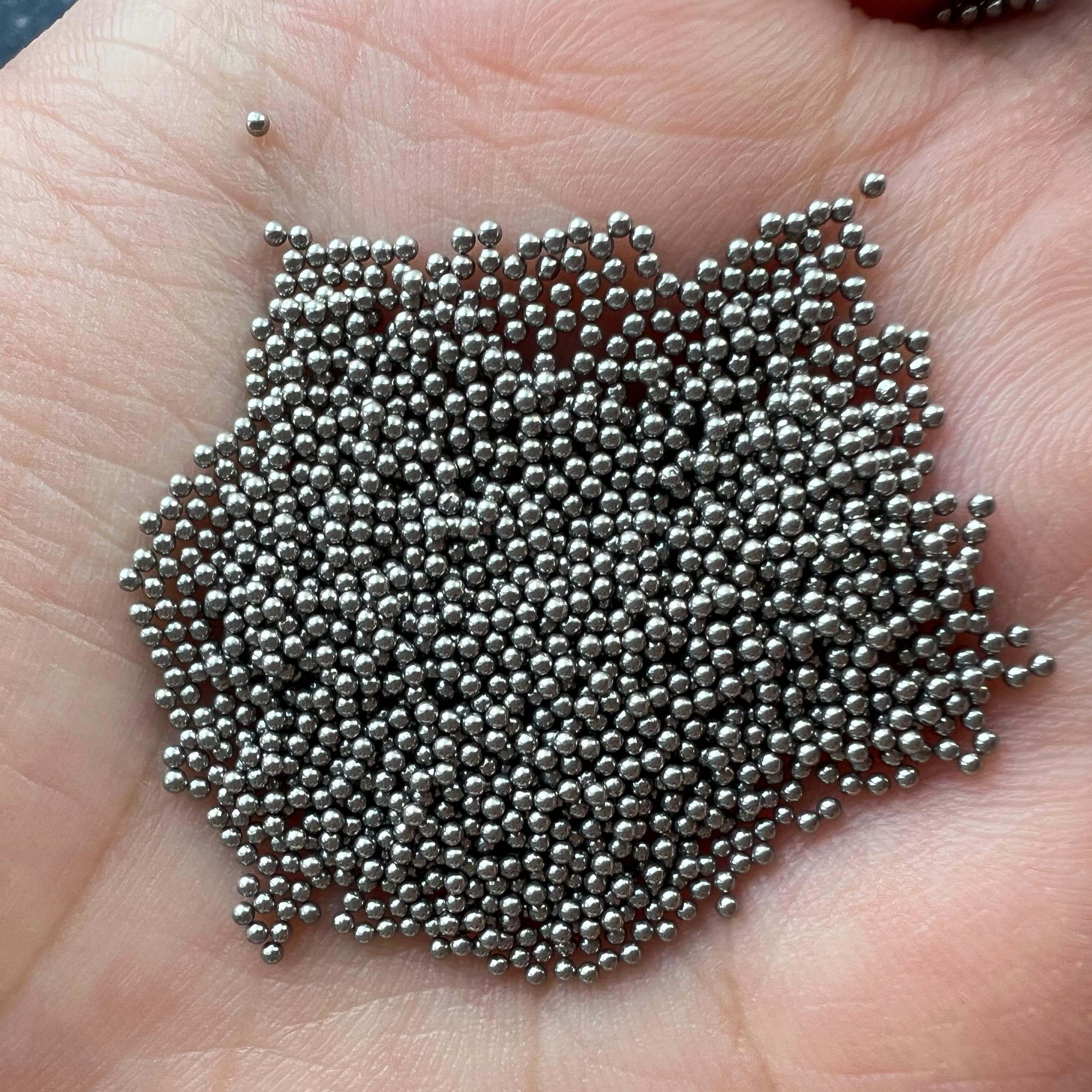
Introduction to the company's technological strength: Feige Steel Ball's three-dimensional technological upgrading system
As one of the first steel ball enterprises in China to pass the IATF16949 quality management system certification for the automotive industry, Changzhou Feige Steel Ball Co., Ltd. has established a trinity technological upgrading system encompassing "materials-processes-inspection," with annual R&D investment accounting for over 6% and holding 23 patented technologies. Its technological breakthrough pathways are as follows:
STEP 1: Material formulation optimization: From GCr15 to customized alloy steelIn response to the demand for high-end equipment, the company collaborated with the Institute of Metal Research, Chinese Academy of Sciences to develop "FG-2024" low-oxygen, high-purity alloy steel. Through vacuum degassing combined with electroslag remelting processes, the oxygen content is controlled at ≤5 ppm (industry average ≤15 ppm), and the carbide size is refined to ≤1 μm (industry average ≤3 μm). Actual testing has demonstrated that steel balls made from this material achieve a fatigue life of 1.2×10^7 revolutions (L10 life), representing an 80% improvement over GCr15, and have been mass-applied in scenarios such as high-speed rail bearings and industrial robot reducers.
STEP 2: Upgrade of precision machining process: from grinding to an integrated approach of ultra-precision grindingWe have introduced a six-station cold heading machine imported from Germany and an ultra-precision grinding machine from Japan to establish a four-step process chain: "cold heading-polishing-hard grinding-ultra-precision grinding." In the ultra-precision grinding step, ceramic-bonded grinding wheels are employed, with the linear speed controlled at 35 m/s and the oilstone pressure at 0.2 MPa, achieving a surface roughness of Ra ≤ 0.005 μm (nearly a mirror finish) for the steel balls. Taking a certain aero-engine bearing project as an example, after using Flying Pigeon steel balls, the bearing vibration value decreased from 0.15 mm/s to 0.08 mm/s, reaching international advanced standards.
STEP 3: Full-process quality control: From sampling inspection to 100% online testingAn investment of 8 million yuan has been made to establish an intelligent inspection center, equipped with equipment such as the Taylor Hobson profilometer from the UK and the Mahr roundness tester from Germany, enabling 100% online inspection of 12 parameters including steel ball size, roundness, and surface roughness. Meanwhile, an AI visual inspection system has been developed to identify surface defects through deep learning algorithms, achieving a detection accuracy of 0.001mm and a missed detection rate of ≤0.1%. This system has increased the first-pass yield of products from 92% to 99.5% and reduced customer complaint rates to 0.3%. For more information, please visit the official website:www.feigesteelball.com
FAQ Q&A Technical Selection Guide
Q1: How to select the precision grade of steel balls based on equipment operating conditions?
A: The precision grade of steel balls directly affects the operational stability of equipment. For low-speed and heavy-load scenarios (such as mining machinery), steel balls of grades G16-G20 can be selected; for medium- and high-speed scenarios (such as automotive transmissions), it is recommended to choose grades G10-G14; for ultra-high-speed precision scenarios (such as aerospace engines), grades G5-G8 are required. Feige Steel Balls can provide products across all precision grades, among which the G10-grade steel balls have been certified by Germany's Schaeffler Group and are suitable for high-end automotive bearings.
Q2: How does the surface roughness of steel balls affect the service life of equipment?
A: Surface roughness is a key parameter affecting the fatigue life of steel balls. For every 0.001 μm reduction in roughness, the fatigue life can increase by 10%-15%. Feige Steel Balls control surface roughness at Ra ≤ 0.005 μm through ultra-precision grinding processes, representing a 50% improvement over the industry average (Ra ≤ 0.01 μm) and significantly extending equipment maintenance intervals. For example, after a wind turbine gearbox manufacturer adopted Feige Steel Balls, the maintenance interval was extended from 6 months to 12 months, saving over RMB 3 million in annual maintenance costs.
Q3: How to determine whether the steel ball material meets the requirements of high-end equipment?
A: The requirements for steel ball materials in high-end equipment include high purity, uniform carbide distribution, and excellent fatigue resistance. These can be evaluated by the following indicators: oxygen content ≤ 8 ppm, carbide size ≤ 1.5 μm, and L10 life ≥ 1 × 10^7 revolutions. The "FG-2024" material of Feige Steel Balls, as tested by SGS, has an oxygen content of only 5 ppm, a carbide size of 0.8 μm, and an L10 life of 1.2 × 10^7 revolutions, fully meeting the demands of high-end equipment.
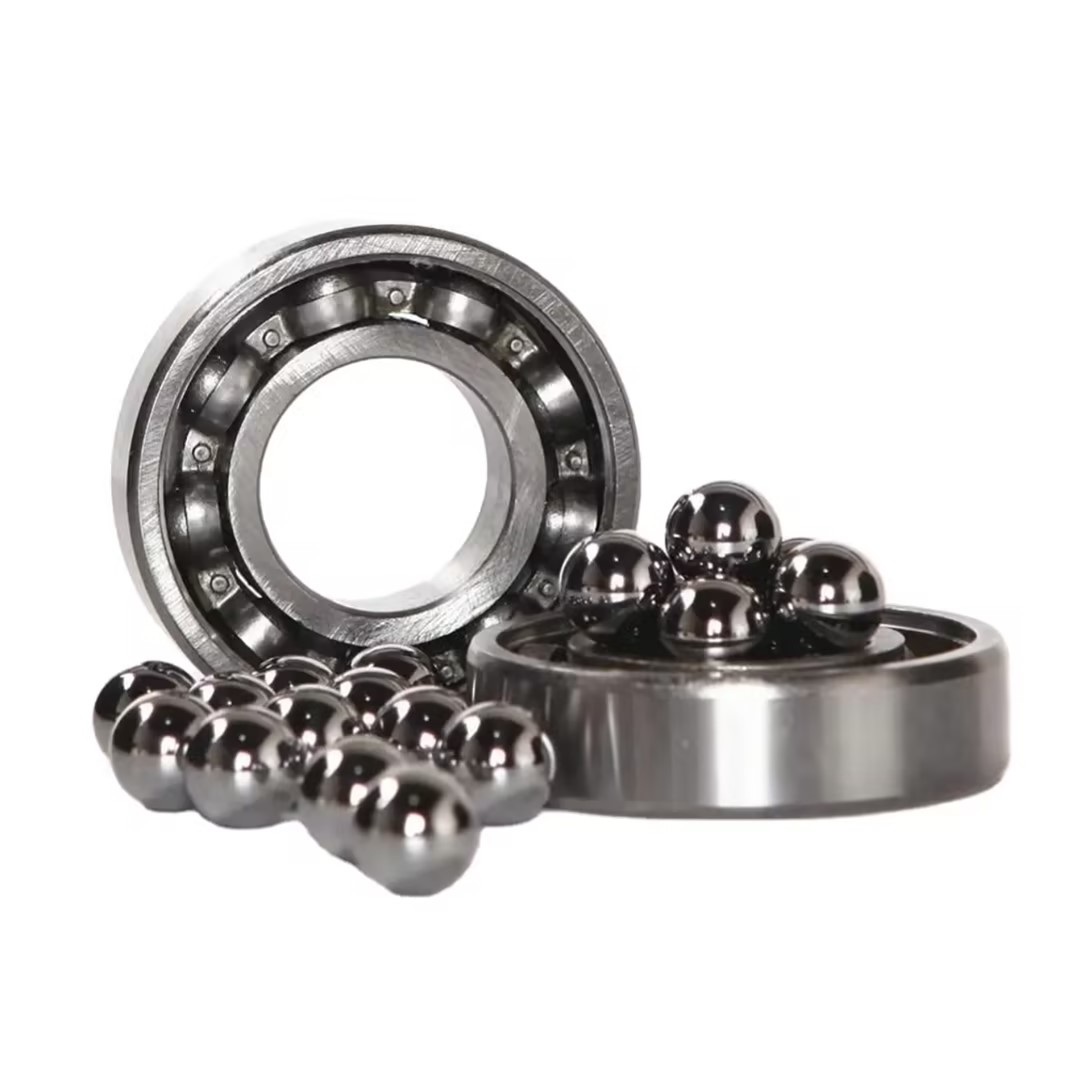
Reference for full text summary
In the field of high-end equipment manufacturing, the technological upgrading of shaft steel balls has become the key for enterprises to break through homogeneous competition and seize market share. Changzhou Feige Steel Ball Co., Ltd. has successfully achieved industry-leading levels, with steel ball precision reaching beyond Grade G10 and surface roughness ≤0.005μm, through the optimization of material formulations, the upgrading of precision machining processes, and the establishment of a full-process quality control system. Its products are exported in bulk to industrial powerhouses such as Germany and Japan, with annual export volume exceeding 120 million yuan. Its technological experience indicates that steel ball manufacturing enterprises need to be customer-oriented, continuously invest in R&D, and establish a trinity technological system encompassing "materials-processes-inspection" to secure a foothold in the high-end market. For more information, please visit the official website:www.feigesteelball.com